
How to Build a Casual Wardrobe from Scratch (The Lazy Man’s Guide)
Most men don’t have a wardrobe problem — they have a system problem. The closet is full but nothing seems to go together.
Getting dressed takes longer than it should. You end up wearing the same three things on rotation while everything else collects dust. If that sounds familiar, this guide is for you.
Building a casual wardrobe from scratch doesn’t require a big budget, a personal stylist, or hours of research. It requires a clear starting point, a short list of the right pieces, and a simple logic that makes everything work together.
That’s exactly what this guide gives you — no fluff, no overwhelming lists, just a practical roadmap from empty closet to effortlessly dressed.
By the end of this, you’ll know exactly what to buy first, what to avoid, how to make everything mix and match, and how to look put-together without thinking about it.
Why Most Men’s Wardrobes Fail
Before you buy a single item, it’s worth understanding why the average guy’s closet is a mess even when it’s packed with clothes.
The main culprit is impulse buying. A cool graphic tee here, a statement jacket there, a pair of shoes that were on sale. None of it was chosen with a full outfit in mind — and none of it connects to anything else. The result is a wardrobe full of standalone pieces with nowhere to go.
The second problem is holding onto the wrong things. Clothes that don’t fit, colors that don’t work with anything else, pieces bought for one occasion that never came. Dead weight creates the illusion of a full wardrobe when you actually have nothing to wear.
The fix isn’t buying more. It’s buying smarter — with a clear framework from the start.
The Core Philosophy: Fewer Pieces, More Outfits
The entire strategy for building a casual wardrobe from scratch rests on one idea: every piece should work with at least three other pieces you own.
That’s it. If something only works with one specific outfit, it’s a costume, not a wardrobe staple. The goal is a tight collection of versatile pieces in compatible colors that you can combine in dozens of ways without thinking.
This is why neutrals form the foundation. Black, white, grey, navy, and camel don’t fight each other. They mix freely, they pair with almost anything, and they never go out of style. Once you have a neutral base, adding a few accent colors gives your wardrobe personality without breaking the mix-and-match logic.
Think of it like a capsule wardrobe — but without the rigid minimalism. You’re not trying to own as few clothes as possible. You’re trying to own the right clothes.
Step 1 — Start With Neutral Basics
The foundation of any casual wardrobe is your top half — specifically, your everyday T-shirts and shirts.
This is where most men either get it right or waste money. The temptation is to buy interesting pieces — printed tees, bold shirts, logos. Resist that. In the beginning, boring is better.
What to buy:
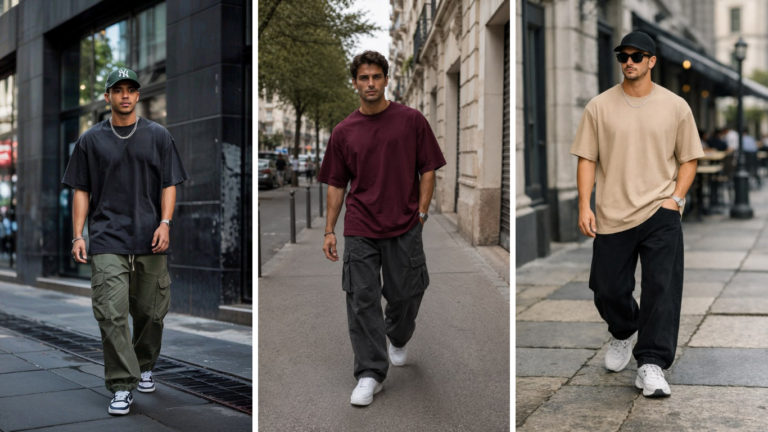
- 3–4 plain T-shirts in neutral colors: White, black, grey (mid and dark), and navy. These pair with everything and form the base layer of most casual outfits.
- 2 Oxford shirts: One white, one mid-blue. An Oxford shirt is the single most versatile men’s casual piece — it works tucked, untucked, over a tee, under a jacket, with chinos, with jeans.
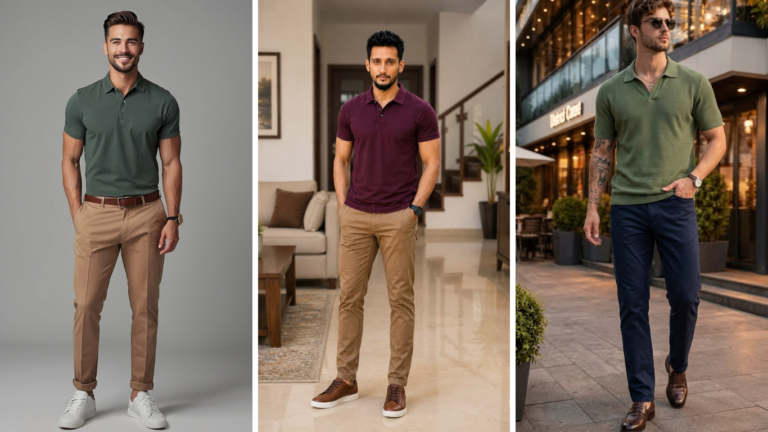
- 1 POLO shirt: A well-fitting polo in navy, grey, or white adds a slightly smarter casual option for days when a T-shirt feels too relaxed.
What to avoid at this stage:
- Graphic tees (unless you already know your aesthetic well)
- Loud colors or busy patterns
- Slim-fit cuts that are so tight they can’t be layered
Who this step is for: Everyone. Whether your casual style leans sporty, preppy, or minimal, neutral basics are the non-negotiable starting point.
Read also: 15 Hoodie Outfit Ideas for Men That Still Look Put-Together
Step 2 — Build Your Bottom Half First
Most men think about tops first — but your trousers and jeans dictate more about how your outfits look and feel than your shirts do. Get the bottom half right and the rest is easy.
The core casual bottoms:
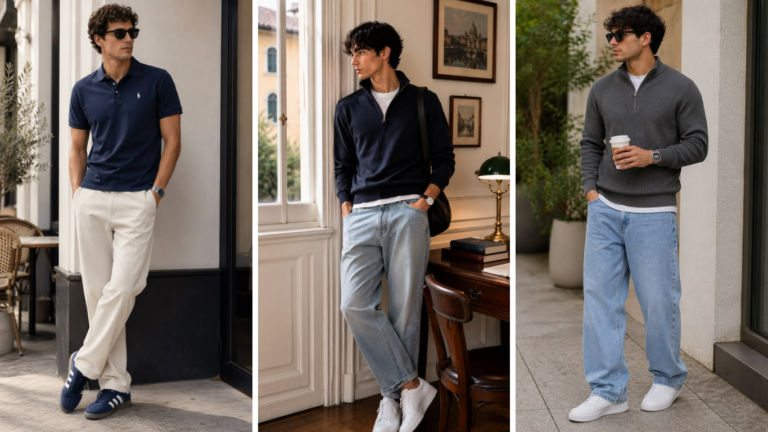
1. Dark Wash Slim Jeans One pair of well-fitting dark wash jeans is arguably the most important item in a casual wardrobe. Dark denim dresses up or down easily — it works with a plain tee and trainers on the weekend, or with a button-down shirt and clean sneakers for something smarter. Slim or straight fit is the safest starting point.
2. Chinos in Khaki or Stone Chinos offer a step up from jeans in formality without crossing into dressed-up territory. A khaki or stone pair works with almost every neutral top and most shoes. Add navy chinos as a second pair when you can — navy chinos with a white Oxford shirt is one of the easiest smart-casual combinations there is.
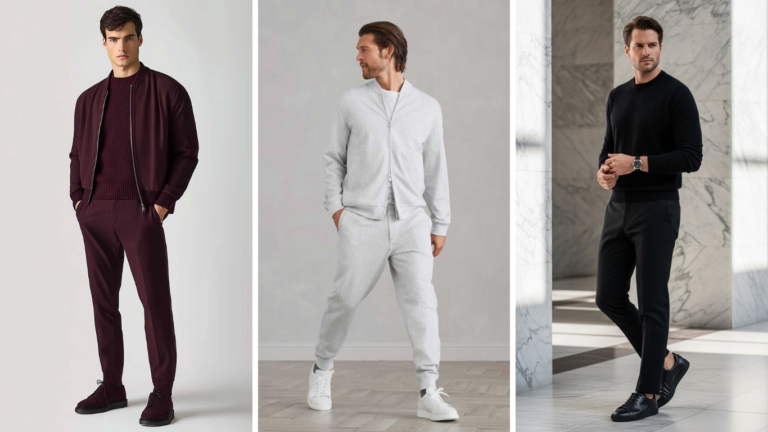
3. Grey Sweatpants or Joggers (one quality pair) For genuinely lazy days, one pair of well-cut grey joggers in a quality cotton fabric is worth owning. The difference between joggers that look sloppy and joggers that look intentional is mostly fit and fabric — avoid oversized, pilling cotton blends and go for a tapered cut in a heavier fabric.
- Best season: Jeans and chinos year-round; joggers for autumn and winter
- Pro tip: Get jeans and chinos hemmed to the right length if needed. Proper hem length transforms how an outfit looks.
Step 3 — Add Layering Pieces
Once you have basics and bottoms sorted, layering pieces are what take your outfits from flat to finished. They’re also what make your wardrobe weather-appropriate across different seasons.
The essential layering pieces:
1. A Plain Crewneck Sweatshirt A mid-weight crewneck in grey, navy, or charcoal is a workhorse piece. It goes over any T-shirt, under any jacket, and pairs with jeans or chinos equally well. Avoid logos and branding at this stage — plain is more versatile.
2. A Zip-Up or Button-Through Overshirt An overshirt (a shirt worn open as a light jacket layer) in flannel, twill, or cotton in olive, grey, or navy dramatically expands what you can build from your basic tees underneath. It’s a casual jacket alternative that requires zero effort.
3. A Simple Bomber or Coach Jacket For spring and autumn, a basic bomber in black, olive, or navy adds a pulled-together layer to any casual outfit. It’s less formal than a blazer but smarter than a hoodie — which makes it the perfect casual jacket for most situations.
4. A Winter Coat One proper coat is worth investing in. An overcoat in camel, charcoal, or navy works over everything and immediately elevates any outfit underneath. Alternatively, a wool-blend parka with minimal branding covers the practicality side for colder climates.
Step 4 — Get Your Footwear Right
Shoes are where casual outfits are made or broken. You don’t need many pairs — you need the right pairs.
The three pairs every casual wardrobe needs:
1. Clean White Leather Sneakers The single most versatile casual shoe a man can own. White leather sneakers (think minimalist, low-profile silhouettes — not chunky runners) work with jeans, chinos, shorts, and even casual trousers. Clean and simple is the key word. Keep them clean.
2. A Chelsea Boot in Tan or Brown Suede For when trainers are too casual, a clean pair of tan or brown suede Chelsea boots pulls the whole outfit together. They work with dark jeans, chinos, and even smart trousers. They’re comfortable, easy to put on, and make you look like you put effort in even when you didn’t.
3. A Sports or Running Shoe (your actual comfortable pair) This is the shoe you wear when you don’t care how it looks — but still want to. A clean, understated running shoe in grey, navy, or black (no loud colorways) gives you the comfort of a trainer without looking like you’re heading to the gym.
What to avoid:
- Overly branded trainers with busy designs that limit what they pair with
- Sandals unless you’re at the beach (and even then, sparingly)
- Dress shoes in a casual wardrobe — they look out of place and reduce outfit options
Step 5 — Introduce One or Two Accent Colors
Once your neutral foundation is in place — basics, bottoms, layers, and shoes — you can start adding personality through color.
The rule here is simple: choose one or two accent colors that you genuinely like and that complement your existing neutrals. Then add a couple of pieces in those colors.
Good accent colors for a neutral-based casual wardrobe:
- Burgundy — works with navy, grey, white, and camel
- Olive green — pairs naturally with khaki, tan, and black
- Rust or terracotta — warm, autumnal, works well with grey and camel
- Mid-blue — a slightly brighter blue as an accent against charcoal or white
An accent color piece could be a crewneck sweatshirt, a polo, a light jacket, or even just a cap or bag. The goal is to inject personality without disrupting your mix-and-match system.
The Complete Casual Wardrobe Checklist
Here’s everything you need, in the order to buy it:
Tops (start here)
- [ ] 3–4 plain T-shirts (white, black, grey, navy)
- [ ] 2 Oxford shirts (white, blue)
- [ ] 1 polo shirt (navy or grey)
Bottoms
- [ ] 1 pair dark wash slim/straight jeans
- [ ] 1–2 pairs chinos (khaki, stone, or navy)
- [ ] 1 pair quality grey joggers
Layers
- [ ] 1 plain crewneck sweatshirt
- [ ] 1 overshirt or flannel shirt jacket
- [ ] 1 bomber or coach jacket
- [ ] 1 winter coat or overcoat
Footwear
- [ ] White leather sneakers
- [ ] Tan or brown suede Chelsea boots
- [ ] Clean, understated running shoes
Accent pieces (add last)
- [ ] 1–2 tops or layers in your chosen accent color(s)
Styling Tips That Make Everything Easier
Tuck in when in doubt. A half-tuck or full tuck of a plain T-shirt or Oxford shirt instantly makes a casual outfit look more intentional. It defines your waist, creates visual structure, and costs zero extra effort.
Match your metals. Watch, belt buckle, and any other hardware should all be the same metal tone — silver or gold. Mixing the two reads as unintentional.
Fit beats everything. A $20 T-shirt that fits your body correctly looks better than a $100 one that doesn’t. This is the single highest-return investment in menswear. Learn your measurements and buy accordingly.
Dress for the occasion + one level up. In casual settings, aim to be slightly better dressed than the average person there. Not overdressed — just intentional. It signals self-awareness, which is the bedrock of good style.
Repeat your best outfits. When you find a combination that works, wear it again. Great personal style isn’t about constantly rotating new looks — it’s about knowing what works for you and repeating it with confidence.
Mistakes to Avoid
- Buying too much too fast. Start with basics and let your wardrobe grow slowly. Impulse buying kills the mix-and-match system before it forms.
- Ignoring fit. Nothing on this list will work if it doesn’t fit. Baggy basics look sloppy. Too-tight basics look forced. Find your fit.
- Keeping clothes you never wear. Dead weight in your wardrobe creates visual noise. If you haven’t worn it in six months, it probably needs to go.
- Buying too many statement pieces early. Bold prints and logos should come after your foundation is solid, not before.
- Skimping on shoes. Cheap, worn-out shoes undermine even a great outfit. Shoes last for years if you care for them — it’s worth spending a little more here.
- Overlooking basics because they’re “boring.” The most stylish men in the world wear plain T-shirts and jeans regularly. Basics done well are never boring.
How to Shop Smart on Any Budget
You don’t need to spend a lot to build a great casual wardrobe — but you do need to spend wisely.
On a tight budget: Focus on the basics and bottoms first. A plain white tee, black tee, dark jeans, and white trainers is a complete casual outfit. Brands like Uniqlo, H&M Basics, and ASOS own-label are genuinely reliable for basics without the price tag. Save on graphic pieces and logos (you don’t need them) and spend a little more on shoes and one good layering piece.
With a medium budget: Add quality where it shows — a well-constructed Oxford shirt, a properly lined bomber jacket, a good pair of Chelsea boots. Brands like Cos, Reiss, and Arket hit a solid middle ground of quality and price. One mid-range purchase you’ll wear constantly beats three cheap ones you’ll replace in a season.
With a higher budget: Invest in your coat, your boots, and one excellent cashmere or merino crewneck. These are the pieces that get daily use in colder months and last for years. Brands like Norse Projects, A.P.C., and Oliver Spencer produce casual wardrobe staples built for longevity.
Regardless of budget:
- Buy in the sale where possible, especially for basics and layering pieces
- Shop end-of-season for the best price on coats and jackets
- Avoid fast fashion for shoes and outerwear — the quality drop-off is severe
Frequently Asked Questions
1. How many clothes do I actually need for a casual wardrobe? More than you think — but less than you probably own. A functional casual wardrobe can be built with around 20–25 pieces: 8–10 tops, 3–4 bottoms, 3–4 layering pieces, and 3 pairs of shoes. That’s enough to create weeks’ worth of distinct outfits without repeating.
2. What’s the first thing I should buy when building a wardrobe from scratch? Start with three plain T-shirts (white, black, and grey) and one pair of well-fitting dark wash jeans. That’s a complete casual outfit right there, and everything else you buy should build around it. Resist the urge to buy interesting or statement pieces before your neutral foundation is in place.
3. How do I build a casual wardrobe on a tight budget? Prioritize fit and neutrals. Spend your limited budget on well-fitting basics in white, black, and grey — not on brands or trends. Uniqlo is exceptional value for plain T-shirts, Oxford shirts, and chinos. One good pair of white leather sneakers and dark jeans gets you surprisingly far.
4. What’s the difference between a casual wardrobe and a capsule wardrobe? A capsule wardrobe is a minimalist approach that typically limits you to 30–40 items total, often with very strict color coordination. A casual wardrobe has the same mix-and-match philosophy but is less rigid in quantity and allows for more personality. This guide leans toward building a functional casual wardrobe rather than a strictly minimal one.
5. How often should I update or refresh my casual wardrobe? Seasonally assess what you actually wear. At the start of each season, pull out everything and be honest — if you haven’t reached for it in six months, it probably needs to go. Then identify the gaps. You shouldn’t need to make major wardrobe purchases more than once or twice a year if your foundation is solid.
Conclusion
Building a casual wardrobe from scratch isn’t complicated — it just requires a bit of intentionality up front. Start with neutral basics, get your fit right, build a small collection of genuinely versatile pieces, and resist the urge to buy things that don’t connect to what you already own.
The lazy man’s approach to style isn’t about putting in no effort — it’s about putting in the right effort once so that getting dressed becomes effortless every day after. A well-built wardrobe does the thinking for you.
Start with the checklist. Wear it. Refine as you go. That’s really all there is to it.
Read also: