12 Streetwear Outfits for Men Under $100 (Affordable Fits)
Streetwear has a reputation problem. Walk into any hype store or scroll a curated Instagram grid long enough, and you’ll start thinking you need a $300 hoodie, a $180 tee, and a pair of sneakers that cost more than your rent. That’s just not true — and honestly, some of the cleanest fits you’ll ever see come from guys working with a tight budget and a sharp eye.
The reality is that streetwear has always been rooted in accessibility. It grew out of skate parks, basketball courts, and city blocks where fashion wasn’t a luxury — it was self-expression on whatever budget you had. The style was never really about the price tag. It was about how you put things together, how your clothes fit your body, and how confidently you wear them.
This guide covers 12 complete streetwear outfits for men that you can build for under $100 total. Not $100 per piece — $100 per outfit. Each one is designed to be actually wearable: for running errands, heading to class, meeting friends, or just existing in public looking like you know what you’re doing.
You’ll find variety here — different color palettes, different silhouettes, different vibes — because not every man’s streetwear should look the same. And with each outfit, you’ll get the full breakdown: what to buy, why it works, what shoes to wear, and the small mistakes that most guys make without realizing it.
Let’s get into it.
1. The Classic Cargo and Graphic Tee Combo
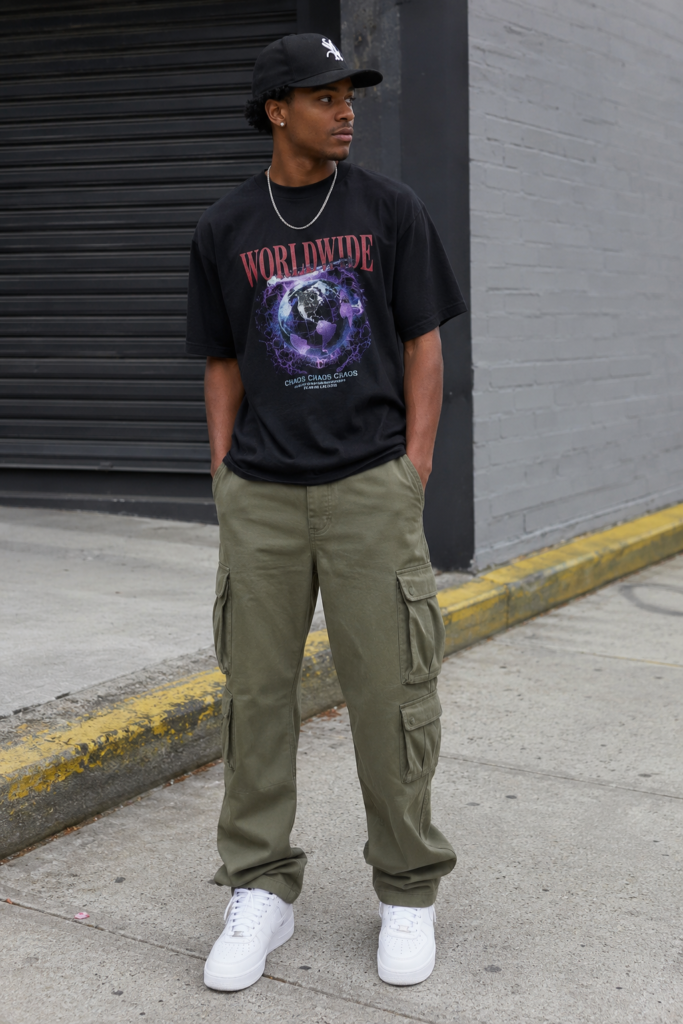
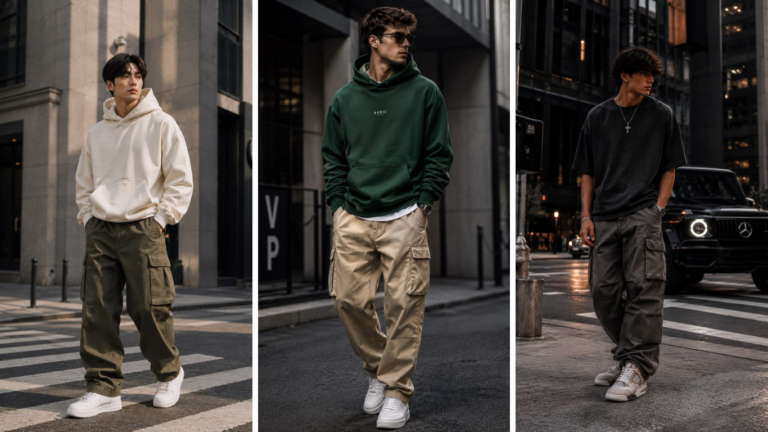
Few combinations in streetwear have more staying power than cargo pants paired with a graphic tee. It’s been a staple since the late ’90s, and it keeps coming back because the formula genuinely works: relaxed bottoms, a statement on top, and enough pocket utility to skip the bag entirely.
For this outfit, go with olive or stone-colored cargo pants — straight or slightly relaxed leg, nothing too baggy or too tapered. Pair with a black or white graphic tee featuring bold, minimal artwork. Think oversized fit, dropped shoulders, and hem sitting at the hip. The contrast between the utility of the cargos and the graphic element on the tee creates visual interest without requiring any real effort.
Why it works: The muted tone of olive or stone cargos lets the graphic tee breathe. You’re not competing for attention between the top and the bottom — the cargos play a supporting role and let the tee do the talking.
Best colors: Olive cargos with a washed black tee. Stone cargos with an off-white tee. Both combos feel intentional without looking overdone.
Shoes: Chunky skate shoes in black or white — think Vans Old Skool or ES Accel Slim. Alternatively, a low-profile retro runner in neutral tones keeps the fit clean and cohesive.
Accessories: A simple black canvas tote bag works better here than a backpack. Add a fitted cap in black or olive, worn forward or slightly back. Skip the jewelry unless it’s minimal — a thin chain or a single ring maximum.
Season: Spring through early fall. If you’re pushing it into cooler months, layer a zip-up hoodie in black or charcoal over the tee.
Common mistake: Over-pocketing the cargo pants. Keep the side pockets empty or minimally stuffed. Bulging cargo pockets make the silhouette look messy and kill the clean lines of the fit.
Budget breakdown: Cargo pants ($25–$35 from ASOS or H&M), graphic tee ($15–$25 from Uniqlo or a local artist), canvas shoes ($40–$50). Well within $100.
2. The Oversized Hoodie and Track Pants Fit
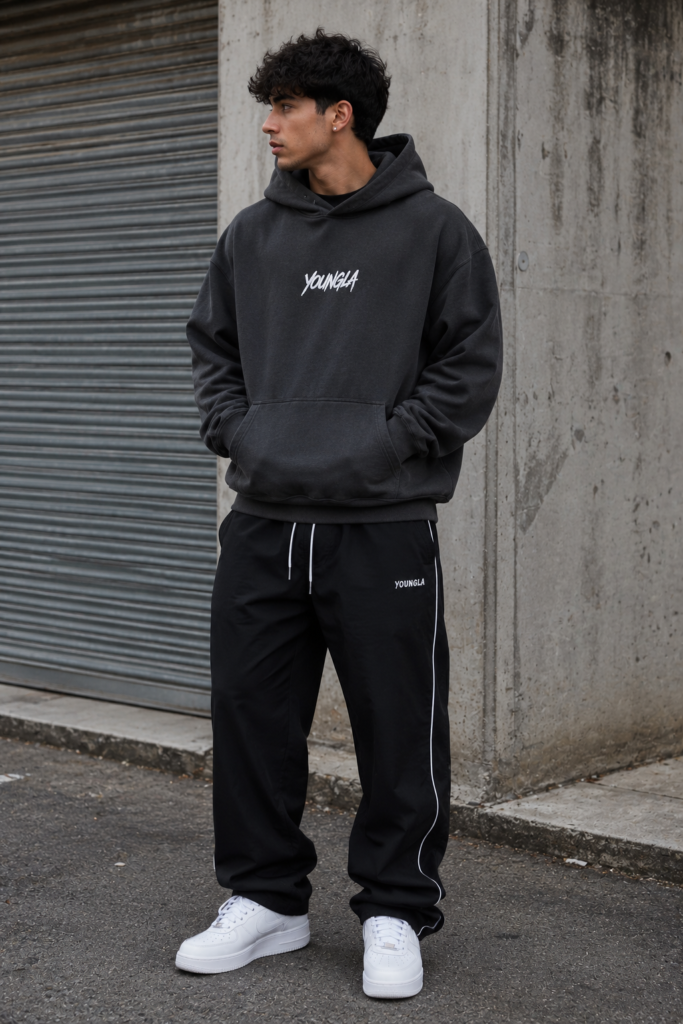
If there’s one outfit that sits at the exact intersection of comfort and cool, it’s an oversized hoodie paired with track pants. Done right, it looks deliberate and stylish. Done wrong, it looks like you forgot to get dressed. The difference is in the details.
Choose a heavyweight hoodie in a muted or earthy tone — burgundy, forest green, slate blue, or classic grey. It should be genuinely oversized, not just a large version of a regular hoodie. The sleeves should be slightly long, the chest full, and the hem low. For the track pants, match energy rather than color — go with a complementary neutral or a coordinating tone. Black track pants with a burgundy hoodie. Slate blue hoodie with charcoal grey tracks.
Why it works: Both pieces are relaxed in fit, so they create a unified, intentional silhouette rather than a mismatched one. The key is that neither piece is fighting the other for structure.
Best colors: Burgundy and black are always reliable. Moss green and cream work beautifully if you can find the right track pants. Earth tones generally play well together in this format.
Shoes: Clean running sneakers in white, grey, or matching tones elevate the sportswear feel without overcooking it. New Balance 327 or 574 in grey or cream — both widely available under $80 — are excellent choices.
Accessories: A small crossbody bag adds utility without breaking the relaxed vibe. Minimal jewelry — a thin bracelet or small stud earrings if that’s your thing. Skip the cap here unless it’s a clean-fitted or a tonal beanie in colder weather.
Season: Fall and winter primarily, though a lighter cotton hoodie version works for spring evenings.
Common mistake: Wearing the hoodie too small. The oversized proportion is part of why this outfit reads as streetwear rather than loungewear. If the hoodie fits your shoulders exactly, it’s not doing its job.
Budget breakdown: Heavyweight hoodie ($25–$40 from H&M, Primark, or secondhand), track pants ($15–$25), sneakers (secondhand New Balance or budget runners, $30–$40).
Read also: 15 Hoodie Outfit Ideas for Men That Still Look Put-Together
3. The Varsity Jacket and Straight-Leg Denim Look
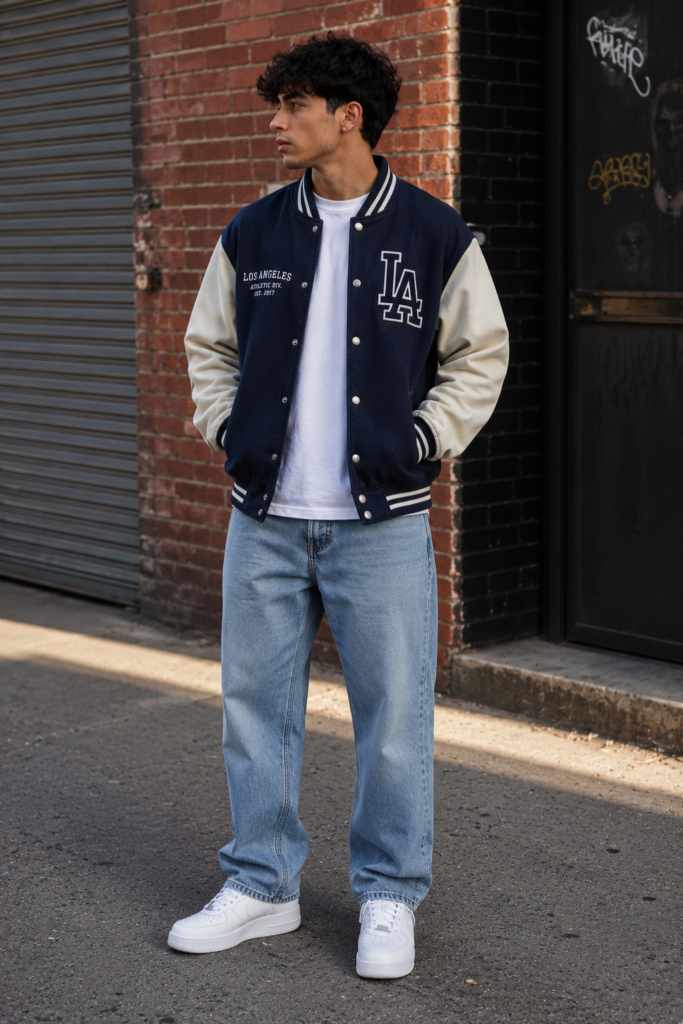
The varsity jacket is one of the most underutilized pieces in affordable streetwear. Most men assume it skews too preppy or too costume-like, but when paired with clean straight-leg denim and the right sneaker, it hits that sweet spot between sporty and sharp that defines a lot of the best streetwear right now.
Look for a varsity in black with white or cream sleeves, or navy with tan. The classic colorblock keeps it versatile. Underneath, wear a plain white or black crewneck tee — keep the underlayer simple because the jacket is doing most of the work. Pair with straight-leg dark wash denim, not skinny, not wide-leg, just straight. It balances the structured-shoulder silhouette of the varsity without the bottom half competing.
Why it works: The varsity jacket brings structure and a retro-athletic aesthetic. The straight denim grounds it. The clean underlayer gives the eye somewhere neutral to land. Three pieces working together without any of them trying too hard.
Best colors: Black jacket, white tee, dark indigo denim. Or navy varsity, cream tee, grey or black denim. Either way, keep it tight in color range — too many competing tones and the outfit loses focus.
Shoes: Retro low-top sneakers are ideal here. Converse Chuck 70 in black or white, or a clean leather low-top. Don’t go chunky — the varsity already adds visual weight up top. A low, slim sneaker keeps the proportion balanced.
Accessories: This outfit can actually handle a little more — a small pendant necklace or a simple watch works well. A beanie in fall, or nothing on the head at all. Let the jacket be the star.
Season: Fall and early spring. Layer a lightweight crewneck sweater underneath in winter if you need warmth.
Common mistake: Wearing the varsity over a hoodie. It almost never works unless both pieces are intentionally thin. A hoodie underneath makes the jacket pull awkwardly and ruins the shoulder structure.
Budget breakdown: Varsity jacket ($30–$45 secondhand or from H&M / Target), plain tee ($10–$15), straight-leg denim ($20–$30 from thrift or ASOS basics), Converse ($55, often on sale).
4. The Earth Tone Knit Polo and Wide-Leg Trouser Outfit
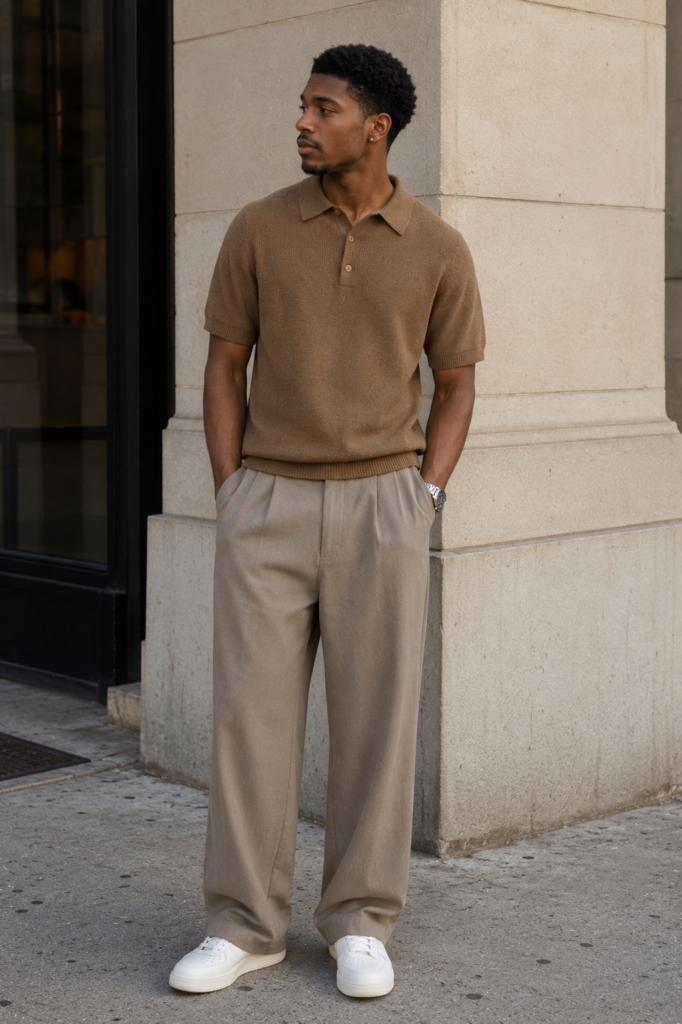
This one’s for the guy who wants streetwear with a bit more sophistication — something that looks intentional rather than casual-by-accident. A knit polo in a muted earth tone paired with wide-leg trousers is the kind of outfit that turns heads without looking like it tried to.
Go for a knit polo in caramel, rust, olive, or cream. Polo shirts in these tones — especially slightly textured knit versions — feel elevated in a way that a regular cotton tee doesn’t. Tuck it in halfway (the French tuck, where the front is loosely tucked and the sides hang free) for a relaxed but intentional silhouette. Wide-leg trousers in a coordinating or contrasting neutral — black, grey, or dark olive — complete the look.
Why it works: The wide-leg trousers and the knit polo occupy opposite ends of the formality spectrum but meet in the middle at a kind of cool casualness. Together they read fashion-forward without being try-hard.
Best colors: Rust polo with charcoal wide-leg trousers. Cream knit polo with olive trousers. Caramel with grey. Any of these combinations has warmth and depth without looking overdone.
Shoes: Loafers in tan or black leather for a clean, elevated look — you can find simple leather loafers from ASOS or even Primark for under $30. Or go with clean white low-tops if you want to keep it more accessible.
Accessories: A simple leather belt if you’re tucking the polo. A minimal watch — nothing flashy, just a clean face with a simple strap. No cap here. Let the outfit speak for itself.
Season: Spring and fall, particularly. In summer, swap the knit polo for a cotton version. In winter, layer a zip-up track jacket over it.
Common mistake: Wearing the polo fully untucked over wide-leg trousers. The excess fabric at the waist with wide-leg trousers creates a shapeless block that obscures your entire silhouette. The partial tuck is what saves this combination.
Budget breakdown: Knit polo ($20–$30 from ASOS, Uniqlo, or thrift), wide-leg trousers ($20–$35), loafers ($25–$35 secondhand or budget brand).
5. The Denim Jacket Over Hoodie Layering Fit
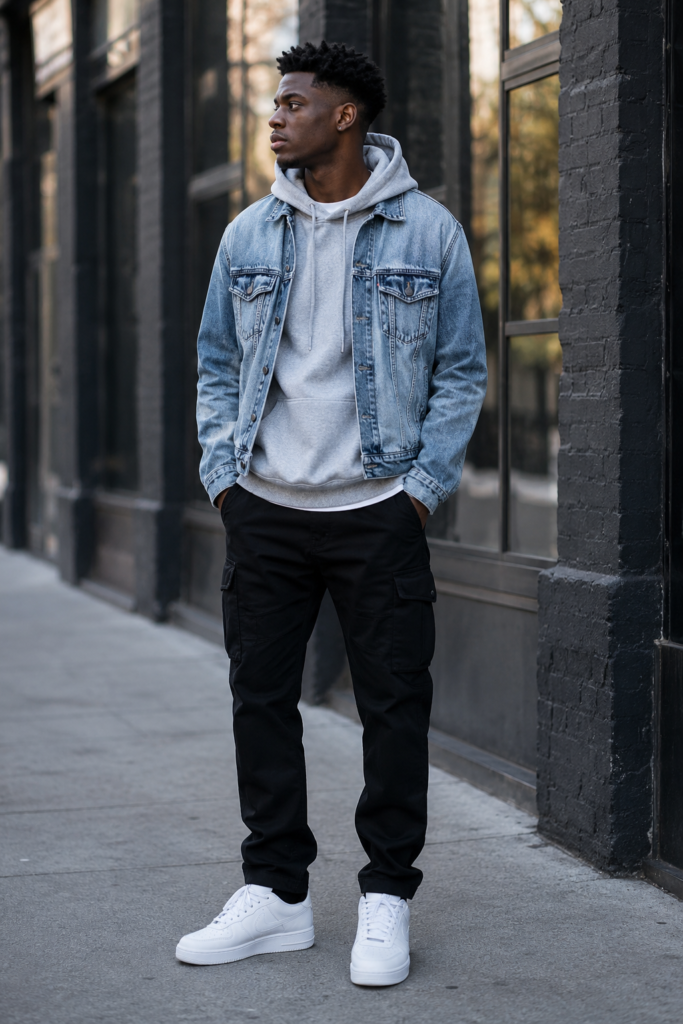
Layering is one of the most powerful tools in streetwear. Done well, it adds depth, texture, and dimension to a fit. The denim jacket over hoodie combination is a layering classic — and when you work with the right tones, it never looks bulky or forced.
Start with a midweight hoodie in a solid, muted color — grey, black, or navy. The hoodie should have a slim-to-regular fit because you’re adding another layer on top. Over it, wear a classic denim jacket — light wash, medium wash, or black denim. The contrast between the soft cotton of the hoodie and the structured denim of the jacket is part of what makes this layering combination work visually. Underneath both, you can wear a basic crew-neck tee, letting the collar peek out slightly.
Pair with straight-cut black jeans or dark navy denim. Keep the bottoms simple — the layering on top is doing all the visual work.
Why it works: The three-layer stack (tee, hoodie, denim jacket) creates visual texture and a casual effortlessness that reads as genuinely stylish rather than just warm. It also gives you flexibility — as the day heats up, you can peel back layers.
Best colors: Light wash denim jacket over a navy hoodie and dark jeans. Or black denim jacket over a charcoal hoodie — a more monochromatic, streamlined version. Avoid matching the jacket and jean wash too closely unless you’re intentionally going for a denim-on-denim look, in which case the tones should be noticeably different.
Shoes: A slightly chunkier sneaker works here — a skate shoe or a retro runner with some sole height balances the visual weight of the layers on top.
Accessories: This outfit naturally creates a “no accessories needed” feel, but a simple woven or canvas tote is practical and in-theme.
Season: Fall and winter primarily. The beauty of layering is that you can adjust to the temperature without sacrificing the look.
Common mistake: Using a hoodie that’s too thick or oversized under the denim jacket. If it’s puffing out underneath and the jacket is straining at the buttons, scale down the hoodie. Fit is still important even when you’re layering.
Budget breakdown: Secondhand denim jacket ($10–$25 from thrift), hoodie ($20–$30), basic tee ($10), dark jeans ($15–$25 secondhand or budget retailer).
6. The Monochrome Streetwear Look
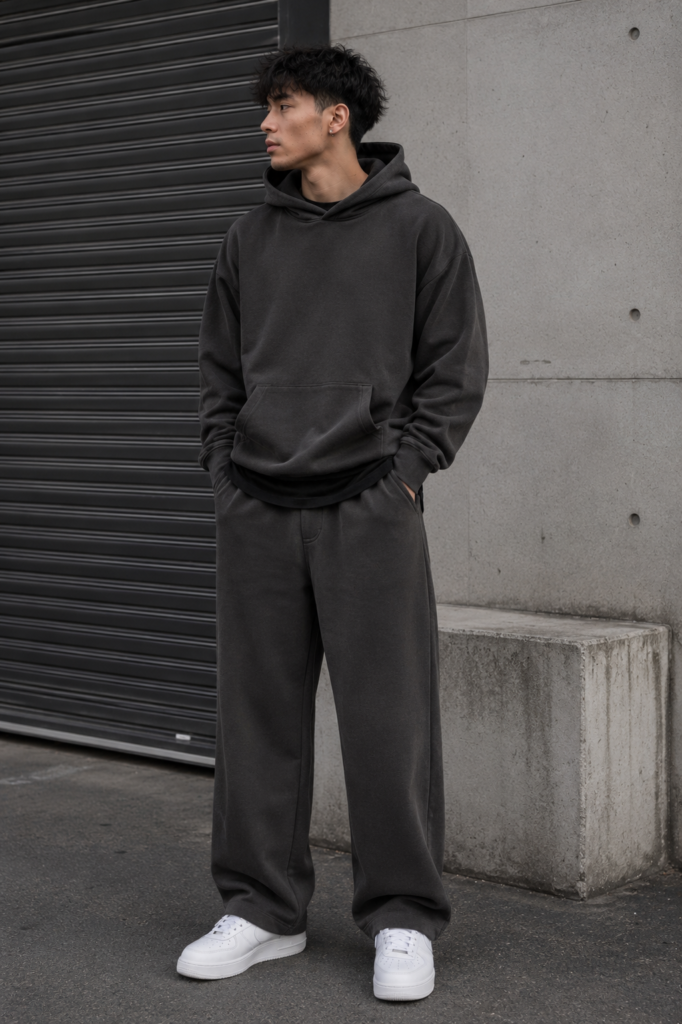
One of the easiest ways to look put-together without a lot of effort is dressing in one color family from head to toe. The monochrome approach is used by some of the most stylish men alive, and it works in streetwear as well as it does in any other style category.
Pick a color — grey, black, caramel, olive, or navy — and build your entire outfit around it. For a grey monochrome fit: grey oversized crewneck sweatshirt, mid-grey track pants or straight-leg trousers, and grey or white sneakers. The trick is to vary the shade and texture across pieces. Different shades of grey — heathered grey sweatshirt, darker grey pants, light grey shoes — create visual interest within the palette.
Why it works: Monochrome dressing creates a long, unbroken vertical line from shoulder to foot that makes you look taller and leaner. It also signals intentionality — you clearly dressed that way on purpose, which reads as confident and considered.
Best colors: Grey, black, and navy are the safest entries. Olive monochrome is slightly more adventurous but incredibly stylish when it lands. Avoid trying monochrome in very bright tones — red-on-red or yellow-on-yellow is harder to execute without looking like a uniform.
Shoes: Tonal sneakers are the right move here. White sneakers work with grey or black monochrome. For olive or caramel, find a sneaker with earthy tones in the colorway.
Accessories: Minimal and tonal. A grey beanie with a grey outfit. A black cap with a black outfit. Keep everything in the same family. One contrast piece — maybe a white cord on earphones or a silver watch face — adds just enough contrast to break the visual monotony.
Season: Year-round. The fabrics change (lighter cotton in summer, heavier fleece in winter) but the approach works in every season.
Common mistake: Mixing too many competing textures. A shiny nylon tracksuit top with a matte cotton bottom and a ribbed knit accessory starts to look chaotic. Keep textures complementary.
Budget breakdown: All pieces from budget retailers (Primark, H&M, ASOS, thrift) in the same color family — full outfit easily under $60–$80.
7. The Bomber Jacket and Parachute Pant Combo
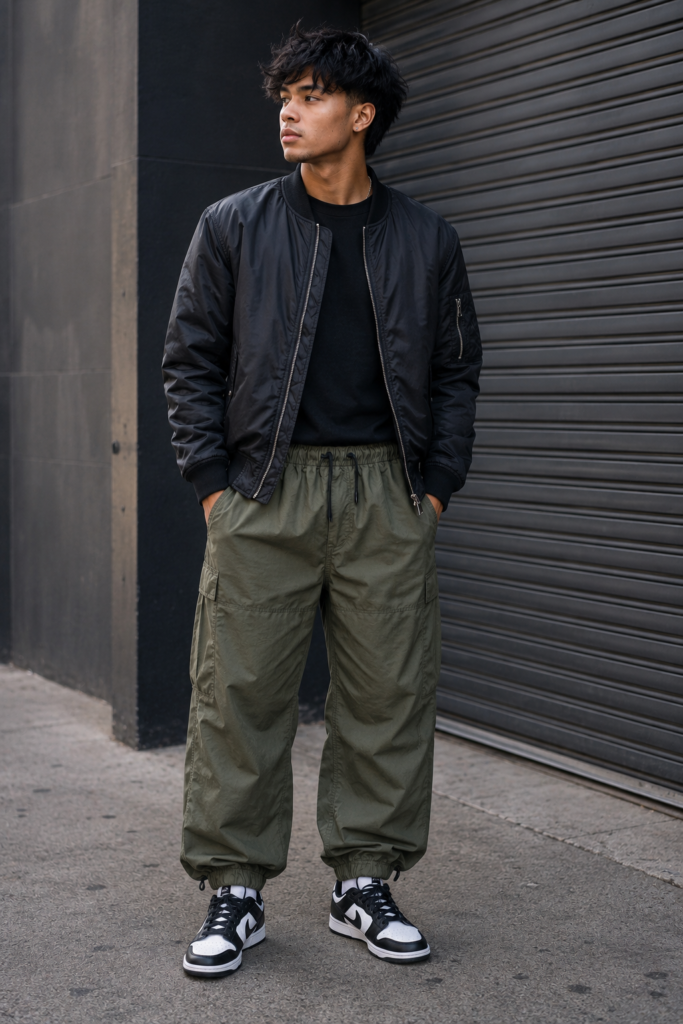
The parachute pant has been one of the most talked-about streetwear trends of the last two years, and for good reason: it offers the utility of a cargo pant with a cleaner, more streamlined silhouette. Pair one with a bomber jacket and you’ve got a fit that feels current, versatile, and distinctly streetwear.
Choose parachute pants in black, beige, or olive — the three most wearable colorways for this silhouette. They should be relaxed through the thigh and taper slightly toward the ankle, sitting cleanly over a mid-cut sneaker. For the bomber, go classic: a satin or nylon bomber in black, navy, or army green. Keep the underlayer simple — a plain ribbed vest or a thin fitted tee in a matching or complementary tone.
Why it works: Both pieces are lightweight and technical-looking, which creates a unified athletic-utility aesthetic. The bomber’s clean lines complement the structured fall of parachute pants better than, say, a hoodie or a heavier jacket would.
Best colors: Black bomber, black parachute pants, white tee underneath — clean, streamlined, slightly monochromatic but not flat. Or army green bomber, beige parachute pants, and a cream tee — a warm, earthy palette with strong layering contrast.
Shoes: A mid-top sneaker or a simple running shoe with a clean profile works best. Avoid anything too chunky — the parachute pants already have some visual weight in the leg area.
Accessories: A small nylon crossbody bag ties into the technical aesthetic without overdoing it. Minimal jewelry — this outfit is already doing a lot stylistically.
Season: Spring and fall. Parachute fabric is light, so this doesn’t work in winter without a base layer. In summer, the pants alone can work paired with a simple tee.
Common mistake: Wearing the bomber fully zipped. Leave it unzipped or half-open — it adds a casual confidence and lets the underlayer show, which breaks up the outfit and adds visual layering.
Budget breakdown: Parachute pants ($25–$40 from H&M, SHEIN, or ASOS), bomber jacket ($25–$40 secondhand or from budget retailers), tee ($10–$15). Comfortably under $100.
8. The Overshirt and Relaxed Denim Fit
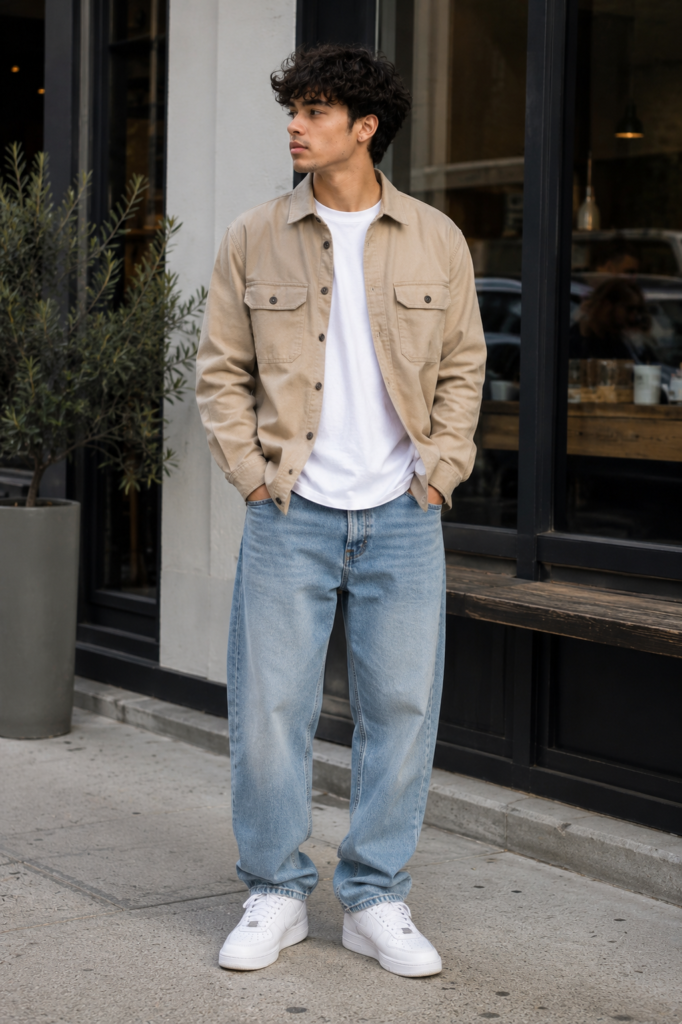
The overshirt — also called a shirt jacket or shacket — is one of the most underrated pieces in budget streetwear. It bridges the gap between a casual shirt and a light jacket, and when worn open over a simple tee with relaxed denim, it creates an effortlessly cool layered look with minimal effort.
Go for a flannel overshirt in a plaid pattern — navy and red, olive and black, or rust and cream are all strong choices — or a solid twill overshirt in olive, caramel, or terracotta. Wear it open over a plain white or black crew-neck tee. Underneath, wear relaxed-fit denim in a medium wash — not light enough to look washed-out, not dark enough to look overly formal.
Why it works: The open overshirt creates a structured middle layer that frames the tee underneath without closing off the silhouette. The relaxed denim balances the casual energy. Together they hit that very specific sweet spot of “I got dressed this morning and it happened to look good.”
Best colors: Plaid flannel in warm tones (rust, navy, cream) over a white tee and medium-wash denim is the most classic execution. Solid olive overshirt over black tee and dark denim is cleaner and more monochromatic.
Shoes: Work boots, chunky lug-sole sneakers, or even suede desert boots all fit this outfit depending on how elevated you want to go.
Accessories: A canvas or leather tote works. A fitted cap or nothing at all. This outfit suits a simple canvas backpack if you need to carry gear.
Season: This is a fall outfit through and through. The flannel and relaxed denim combination has perfect autumnal energy. In spring, go with a lighter cotton or linen overshirt.
Common mistake: Wearing the overshirt buttoned up. Once you close the buttons, it becomes a regular shirt and the layering effect disappears entirely. Wear it open — always.
Budget breakdown: Flannel overshirt ($20–$30 from thrift stores, H&M, or Target), plain tee ($10–$15), relaxed denim ($20–$35 from ASOS or thrift), sneakers or boots already owned.
9. The Graphic Hoodie and Straight Shorts Summer Fit
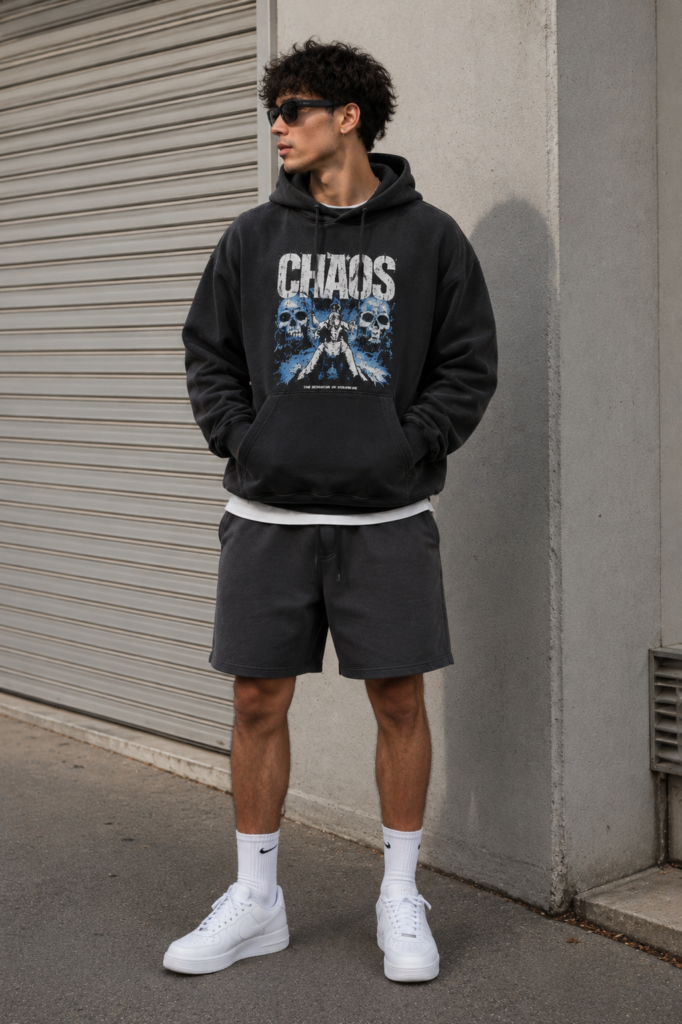
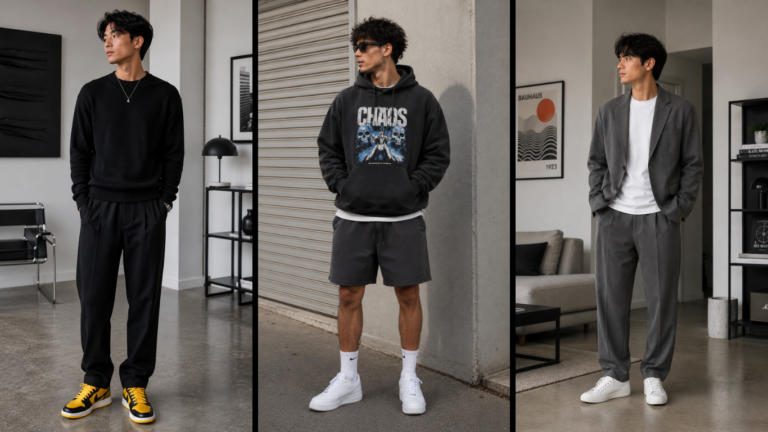
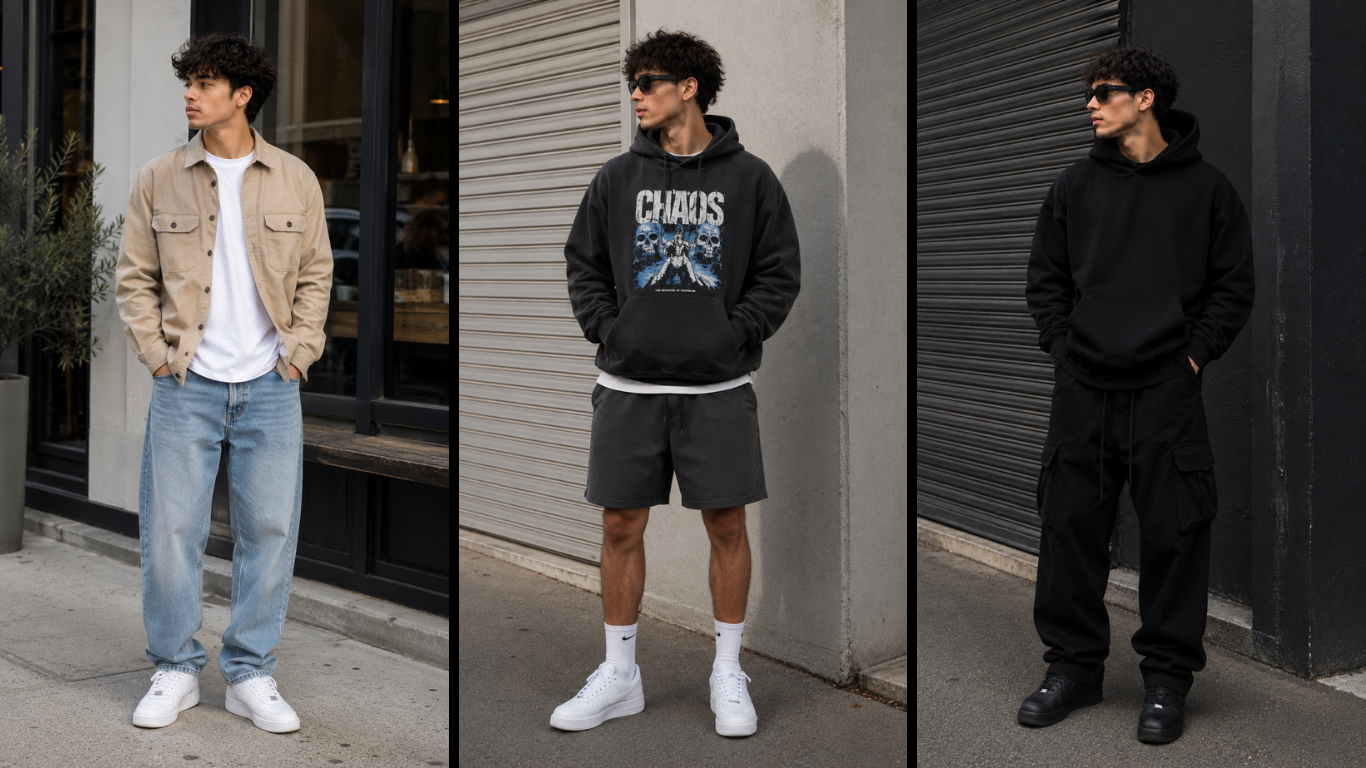
Not every streetwear outfit needs pants. In warm weather, the graphic hoodie and straight-cut shorts combination is a summer staple — comfortable, visual, and distinctly streetwear in its DNA.
Go with a graphic hoodie in a bold colorway — something with a strong print, typography, or artistic element. Pair with straight-cut shorts in a solid neutral that picks up one tone from the hoodie’s graphic. If the hoodie has orange elements, go with a deep tan or rust short. If it’s primarily black with a white graphic, black or grey shorts keep it tight and intentional.
The shorts should sit at or just above the knee — not basketball shorts length, not tailored chino length. The middle ground is where you want to be for streetwear proportions.
Why it works: The graphic hoodie is a statement piece. The solid shorts let it be. By picking a short color that echoes something in the graphic, you create a subtle connection that makes the outfit look more pulled-together than it actually is.
Best colors: The graphic hoodie dictates everything here. Pull one tone from it and build the rest around that.
Shoes: Low-top canvas shoes or a simple running sneaker. Nothing heavy or bulky — keep the footwear proportionate to the relaxed, warm-weather energy.
Accessories: Minimal. Sunglasses are appropriate and functional. A small waist bag or crossbody in a neutral tone adds utility without adding visual clutter.
Season: Summer. On a cool summer evening, this is perfect as-is. If it’s genuinely hot, swap the hoodie for an oversized graphic tee and the look still functions.
Common mistake: Wearing shorts that are too long. Shorts that drop to mid-shin with a hoodie make the silhouette look bottom-heavy and proportionally off. Keep them above the knee.
Budget breakdown: Graphic hoodie ($20–$35), straight-cut shorts ($15–$25 from H&M or ASOS), canvas sneakers ($35–$45). Well under $100.
10. The All-Black Everything Streetwear Fit
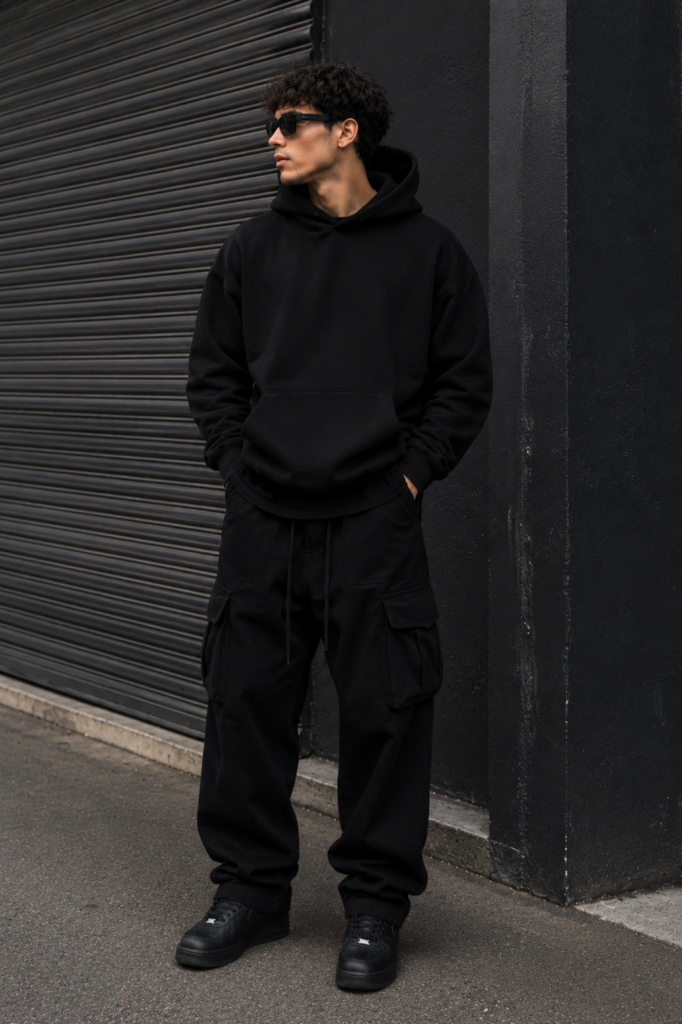
An all-black outfit is not the same as a boring outfit. When you approach it with thought — mixing textures, silhouettes, and finishes — an all-black streetwear fit can be among the sharpest looks in your rotation. It’s also one of the most forgiving: difficult to go wrong, easy to look intentional.
Build from the bottom up: black jogger pants or slim-fit cargo pants. Over that, a black graphic tee or a black crewneck sweatshirt. A black bomber or lightweight zip-up jacket completes the layer. The key is not to make every piece the same shade or finish — a matte sweatshirt, a slightly shinier bomber, and flat-finish trousers create subtle contrast that keeps the eye moving even without color variation.
Why it works: The absence of color competition means every eye goes to fit, silhouette, and texture. When everything fits well, and the textures are interesting, an all-black outfit reads as deliberately stylish rather than lazily monochromatic.
Best colors: Well, black. But textures matter: matte cotton, shiny nylon, ribbed knit, and woven fabric can all coexist in an all-black outfit if they’re the right pieces.
Shoes: Black sneakers are the obvious call, but a black boot with a lug sole adds an unexpected edge. Alternatively, a white sneaker works against the all-black to create contrast and “ground” the outfit visually.
Accessories: Silver jewelry pops against all-black more than gold does. A thin silver chain, a sleek silver watch, or a silver ring detail adds dimensionality without breaking the color scheme. A black beanie in fall.
Season: Year-round, with fabric weight adjusting for the season.
Common mistake: Combining too many baggy pieces in all-black. Because there’s no color variation to create depth, the silhouette becomes everything. Mix proportions — relaxed on top, slimmer on bottom, or vice versa — to avoid looking shapeless.
Budget breakdown: Black pieces from any budget retailer, thrift store, or existing wardrobe. This outfit is genuinely achievable under $60 if you shop smart.
11. The Retro Sportswear and Corduroy Outfit
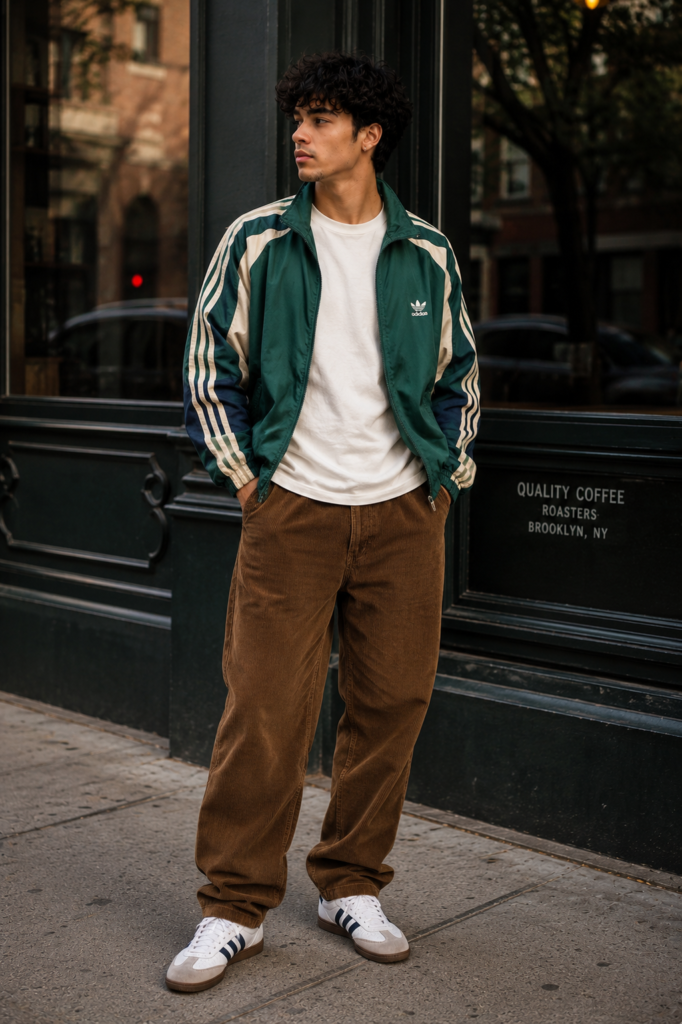
This combination looks more expensive than it costs and more intentional than it takes to put together. A retro-style athletic jacket — think an ’80s or ’90s inspired nylon track jacket or windbreaker in a two-tone colorway — over corduroy trousers in a warm earth tone creates a smart contrast between sporty and textured.
Find a vintage or vintage-inspired track jacket in a two-tone colorway: navy and white, red and black, or green and cream all work well. Pair with corduroy trousers in rust, tan, or dark green — the ribbed texture of the corduroy provides welcome contrast against the smooth nylon of the jacket. A plain tee underneath in a tone that appears somewhere in the jacket’s colorway ties it all together.
Why it works: The visual contrast between the sporty athletic jacket and the textured, slightly vintage feel of corduroy is unexpected but deeply satisfying. It’s the kind of outfit that looks like it required more styling knowledge than it actually did.
Best colors: Navy and cream track jacket, rust corduroy trousers, cream tee. Or red and black windbreaker, dark forest green corduroy, black tee. Both are rich, seasonal, and visually interesting.
Shoes: Suede sneakers or low-top leather trainers in a complementary tone. Think a tan or beige suede sneaker with the rust corduroy, or a simple white leather trainer with the darker palette.
Accessories: A cord or suede crossbody bag in a matching earth tone. No cap needed — the outfit already has enough visual texture.
Season: Fall. This is a quintessential autumn outfit — the corduroy, the warm tones, the light nylon jacket. On colder days, layer a crew-neck sweater under the track jacket.
Common mistake: Buying corduroy trousers that are too stiff or wide in the wale. A medium-wale corduroy (not ultra-thick, not ultra-thin) looks more modern and drapes better. Wide-wale cord can look costume-like rather than contemporary.
Budget breakdown: Vintage track jacket ($10–$20 from thrift), corduroy trousers ($20–$35), tee ($10–$15), suede budget sneakers ($25–$35). Easily under $100.
12. The Clean and Minimal Streetwear Fit
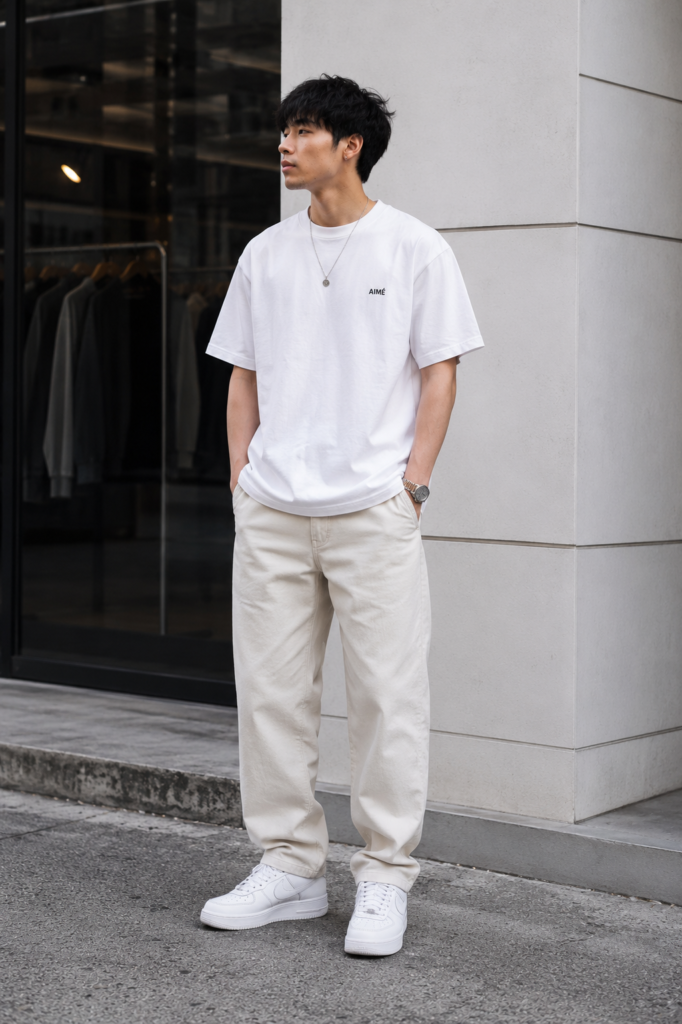
Not every streetwear outfit needs graphics, bold prints, or heavy layering. The clean-minimal approach to streetwear — where every piece is simple, every silhouette is precise, and nothing is competing for attention — is arguably the hardest to execute and the most rewarding when it works.
Start with a plain, well-fitted crewneck sweatshirt in a single solid color: sage green, dusty pink, navy, or charcoal. Pair with straight-fit chino-style trousers in a complementary or contrasting neutral. The key here is fit precision — everything needs to be clean. No pilling, no wrinkles, nothing stretched or worn. Even budget pieces look expensive when they’re well-maintained and properly fitted.
Why it works: Minimalism in streetwear is a power move. It signals that you don’t need logos, graphics, or accessories to look good. The confidence required to wear clean, simple pieces well is exactly what minimal streetwear communicates.
Best colors: Sage green sweatshirt with stone or beige trousers. Dusty pink crewneck with grey trousers. Charcoal sweatshirt with black trousers for a near-monochromatic minimal look. All of these combinations have quiet sophistication without trying.
Shoes: This is where you can add personality. A simple, clean leather sneaker — common projects aesthetic, but budget-friendly — in white or beige. Or a minimalist runner in a matching tone.
Accessories: A single piece of quality-looking jewelry: a pendant, a bracelet, or a watch. Not all three. One. Let the simplicity of the outfit enhance the chosen accessory rather than diluting it.
Season: Year-round. Change the fabric weight, and you’ve got a minimal fit for every season.
Common mistake: Choosing pieces that are “fine” rather than “right.” Minimal outfits have no hiding places. A slightly off-fitting sweatshirt or trousers with bad drape ruin the whole thing. In minimal dressing, every single piece has to earn its place.
Budget breakdown: Plain crewneck ($20–$30 from Uniqlo or H&M), straight chinos ($20–$30), clean sneakers ($30–$45 from budget brands or secondhand). Comfortably under $100.
Final Thoughts
There’s a version of this topic that just tells you to buy the cheapest stuff and call it streetwear. This isn’t that. Dressing well on a tight budget requires more intentionality, not less — and the 12 outfits here are proof that $100 is more than enough to put together something genuinely stylish.
A few principles worth carrying with you from here: fit always matters more than brand. Thrift stores are arguably the best place to build a streetwear wardrobe — the pieces already have character, and the prices are unbeatable. Earth tones and neutrals are your safest foundation because they mix and match more naturally than bright or patterned pieces. And layering — even just one extra piece over a basic outfit — is the single easiest way to make any fit look more considered.
The guys who dress best on a budget don’t buy more. They buy smarter, care for what they own, and wear everything with the quiet confidence that comes from knowing they put actual thought into what they’re wearing. That’s the real edge. You now have the tools.
Frequently Asked Questions
Can you really build a good streetwear outfit for under $100? Absolutely. The biggest misconception in streetwear is that price equals style. It doesn’t. Many of the most iconic streetwear fits in history were assembled from thrift stores, secondhand shops, and affordable retailers. The secret is prioritizing fit, color coordination, and intentional pairing over brand names. With $100 and a clear idea of what you’re going for, you can put together 10 to 12 wearable, stylish outfits.
What are the best budget streetwear brands to shop? For new pieces, Uniqlo is arguably the best value-to-quality ratio in affordable fashion — particularly for basics, graphic tees, and outerwear. H&M and ASOS offer decent trend-forward pieces at low prices, though quality can vary. Primark is excellent for basics that won’t break the bank. For the best deals overall, though, thrift stores and secondhand platforms like Depop, ThredUp, or Poshmark are hard to beat — you can find genuine vintage and barely-worn branded pieces for a fraction of the retail price.
What shoes work best with budget streetwear outfits? Your footwear doesn’t need to be expensive to look good. Vans Old Skool and Converse Chuck Taylors are both under $70 and work with the vast majority of streetwear fits. New Balance 327 or 574 are frequently on sale and have strong retro-runner energy. Skate shoes in black or white are universally versatile. The key is to keep them clean — dirty or beat-up sneakers undermine an otherwise solid outfit unless the “worn-in” look is intentional.
How do I make cheap streetwear look expensive? The biggest upgrades have nothing to do with price: proper fit is the first lever. A well-fitting $20 sweatshirt looks better than a poorly fitting $200 one. Second, take care of your clothes — wash them properly, fold or hang them, remove lint and pilling. Third, keep your shoes clean. Fourth, wear minimal, simple pieces rather than layering too many logos or graphics. Fifth, invest any extra budget in one quality accessory — a clean watch, a simple chain — rather than more clothing.
What’s the best way to find cheap streetwear pieces? Thrift stores are genuinely the best answer. Charity shops, Goodwill, and secondhand stores regularly stock oversized hoodies, denim jackets, track pants, cargo pants, and graphic tees — all staples of streetwear — for $5 to $20. Secondhand apps like Depop and Vinted let you search specific items and sizes. For new pieces, end-of-season sales at H&M, ASOS, and Uniqlo can cut prices by 50–70%. Following budget streetwear communities on Reddit (r/streetwear, r/frugalmalefashion) also surfaces great deals.
What body types suit streetwear best? Streetwear is one of the most inclusive style categories precisely because it’s built around loose fits, relaxed silhouettes, and self-expression over conventional body ideals. Taller guys can lean into wide-leg and oversized proportions more easily. Shorter or more compact guys often look best in straight-leg bottoms and moderately oversized (rather than extremely oversized) tops, to avoid the fit overwhelming the frame. Athletic builds have the flexibility to go either way. The honest answer is that confidence and intentionality matter more than body type in streetwear.
How do I start building a budget streetwear wardrobe from scratch? Start with a foundation of versatile basics: two or three plain tees in neutral tones, a pair of black or dark straight-leg jeans, a go-to hoodie in a muted color, and a reliable sneaker in white or grey. Once those are in place, add character pieces: a graphic tee with a strong design, a denim or bomber jacket, and a pair of cargo pants or track pants. Accessories come last — a simple cap, a minimal chain or bracelet, and a tote or crossbody bag. This foundation covers most of the outfits in this guide and gives you the flexibility to mix and match indefinitely.
Is it okay to mix thrifted and new pieces? Not only is it okay — it’s actually the ideal approach. Thrifted pieces often have better construction, better fabric weight, and more character than budget new pieces at the same price point. Mixing a vintage denim jacket from the thrift store with a new tee from Uniqlo and a pair of new cargo pants from H&M is exactly how most stylish guys on a budget actually dress. The “all thrifted” or “all new” approach is less practical than combining both intelligently.
Read also: