Men’s Summer Wardrobe Essentials Checklist (15 Items)
Most men don’t have a summer clothing problem — they have a summer clothing overload problem. Closets fill up with tank tops that never get worn, novelty shorts bought for one trip, and three near-identical polos that all fit slightly wrong.
Meanwhile, the pieces that actually get reached for every week — a good pair of shorts, a shirt that breathes, shoes that work with everything — are often missing or worn out.
This is a men’s summer wardrobe essentials checklist built around a different idea: buy fewer things, buy them right, and make sure every piece pulls its weight across multiple outfits.
Below are the 15 items worth owning, why each one earns its spot, and what to actually look for when you’re shopping — fit, fabric, and construction details that separate a piece that lasts all season from one that’s in the donation pile by August.
1. A Linen or Linen-Blend Short-Sleeve Shirt
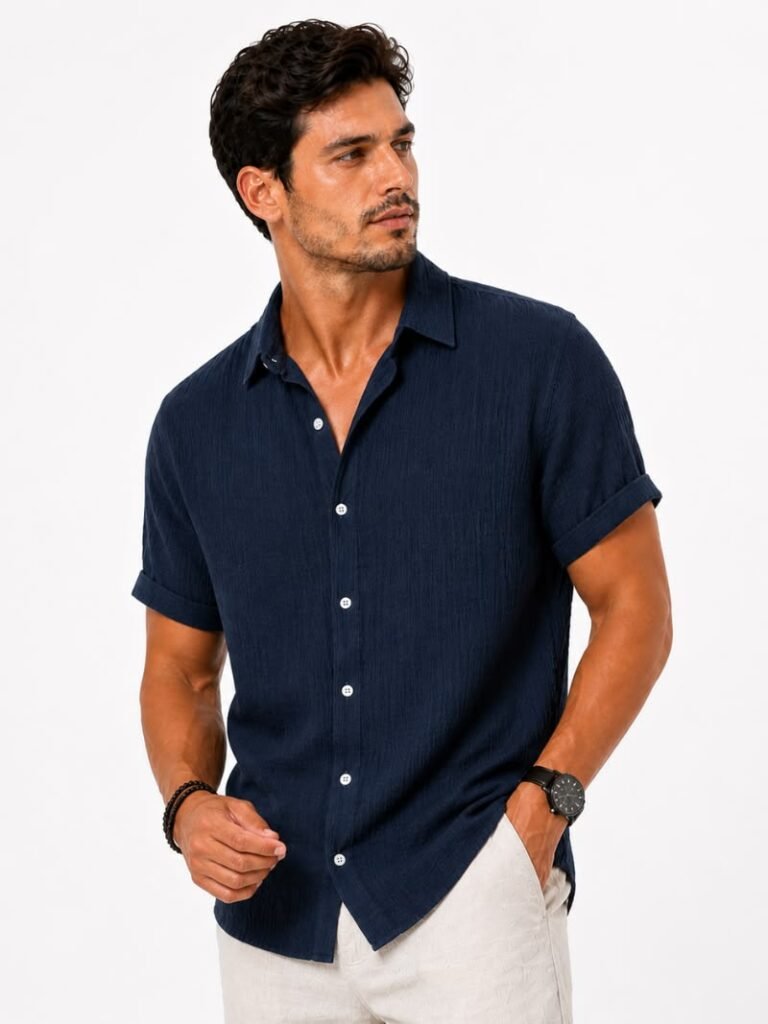
This is the single highest-value piece in a summer wardrobe. Linen’s loosely woven fibers let air pass through the fabric itself, which is why it feels noticeably cooler than cotton in direct heat — it’s not just a texture preference, it’s a structural difference in how the fabric is woven.
Look for a shirt with at least some cotton blended in if you want fewer wrinkles; 100% linen wrinkles fast; a linen-cotton blend (roughly 55/45 or 70/30) holds a slightly cleaner look through a full day while keeping most of linen’s breathability.
Fit check: it should sit close enough at the shoulders that the seam lands right at your shoulder bone, with room to move through the chest and torso. A linen shirt that’s too tight loses the airflow which is the entire point of the fabric.
Budget note: linen-blend shirts from mid-range retailers are often nearly indistinguishable from premium versions once worn a few times and softened by washing — spend more on fit than on brand name here.
2. Two or Three Quality Plain Tees, in Different Weights
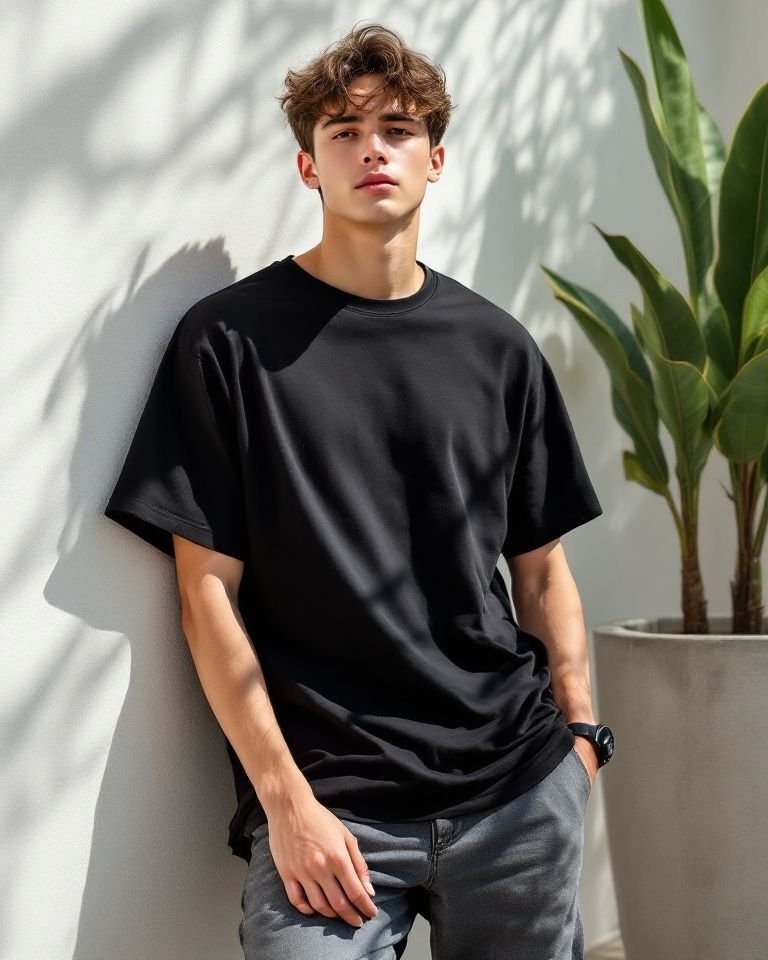
A single “good white tee” isn’t enough — you actually need a couple of different weights. A lighter, thinner tee (around 140-160 gsm) works as a standalone piece in extreme heat, while a slightly heavier tee (180-200 gsm) holds its shape better under an open shirt or overshirt and doesn’t go see-through as easily.
Fabric weight is measured in grams per square meter (gsm), and it’s a more reliable quality signal than price. A heavier-weight cotton tee drapes better, resists pilling longer, and keeps its shape wash after wash — thin, low-gsm tees are usually the ones that stretch out at the collar within a month.
Common mistake: buying tees a size too big to feel “relaxed.” An oversized tee in thin cotton just looks like it’s wearing you, and it loses shape fast. If you want a looser fit, buy a shirt actually cut with a boxier pattern rather than sizing up in a fitted style.
Read also: Spring-to-Summer Transition Outfits for Men (18 Ideas)
3. A Well-Tailored Pair of Chino Shorts
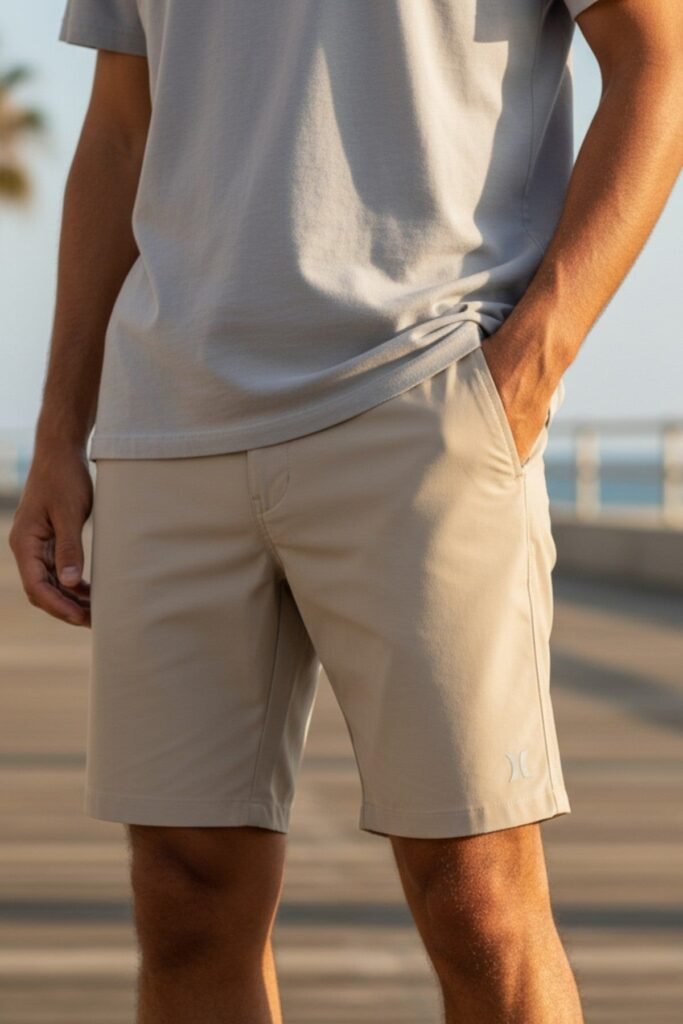
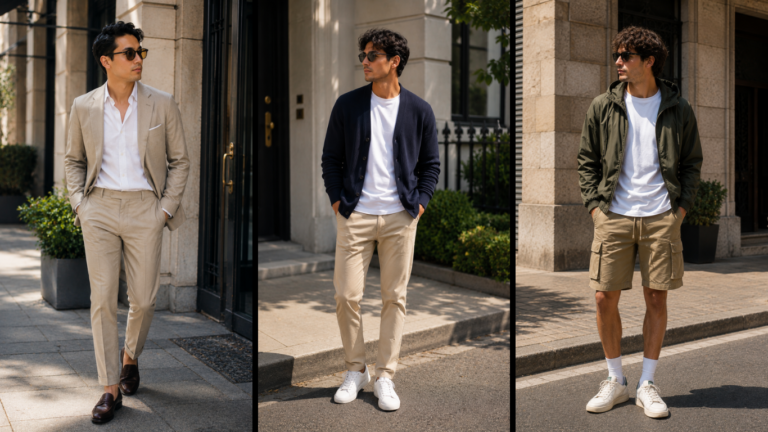
Chino shorts are the most versatile bottoms in a summer wardrobe because they sit right between denim and dress trousers in formality — casual enough for a barbecue, clean enough for a casual dinner out.
Length matters more than most men think: shorts that hit right at or just above the knee flatter almost every leg shape, while shorts that end mid-thigh can look dated or overly casual, and ones that hit below the knee start reading as cargo pants without the pockets. A slightly tapered leg (not skinny, not baggy) is the safest, most flattering cut for most body types.
Fabric note: a cotton with a small percentage of elastane (2-3%) moves better and resists the “boxy” stiffness of pure cotton twill, without looking or feeling like athletic wear.
4. A Pair of Lightweight, Breathable Trousers
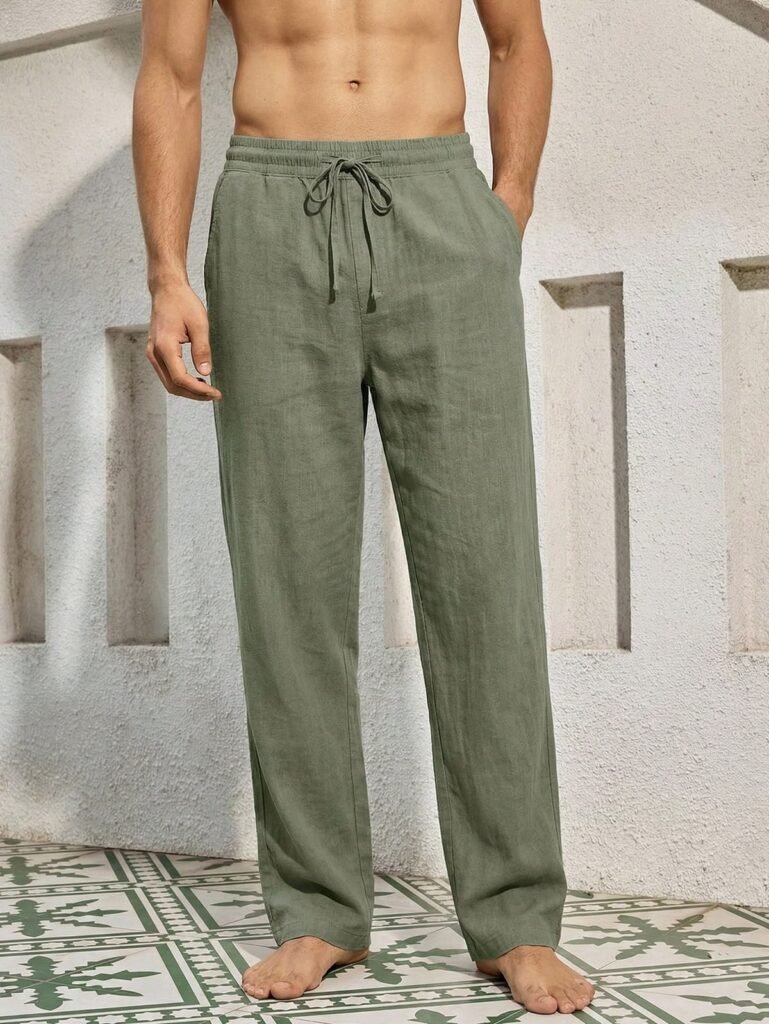
Not every summer occasion calls for shorts. A pair of lightweight trousers — cotton, linen-cotton blend, or a technical warm-weather fabric — covers dinners, travel days, and any setting where shorts read as too casual.
The fabric weight is the whole game here: a trouser in a heavy wool or thick cotton twill will be uncomfortable by mid-morning in real summer heat, while a lighter weave (often labeled as a “summer weight” fabric, typically under 200 gsm) moves and breathes closer to how a dress shirt does.
Fit note: a slightly tapered, mid-rise trouser in a neutral color (navy, stone, olive) pairs with nearly everything else on this list, which is exactly what you want from a single pair of trousers doing a lot of wardrobe work.
5. A Piqué Cotton Polo
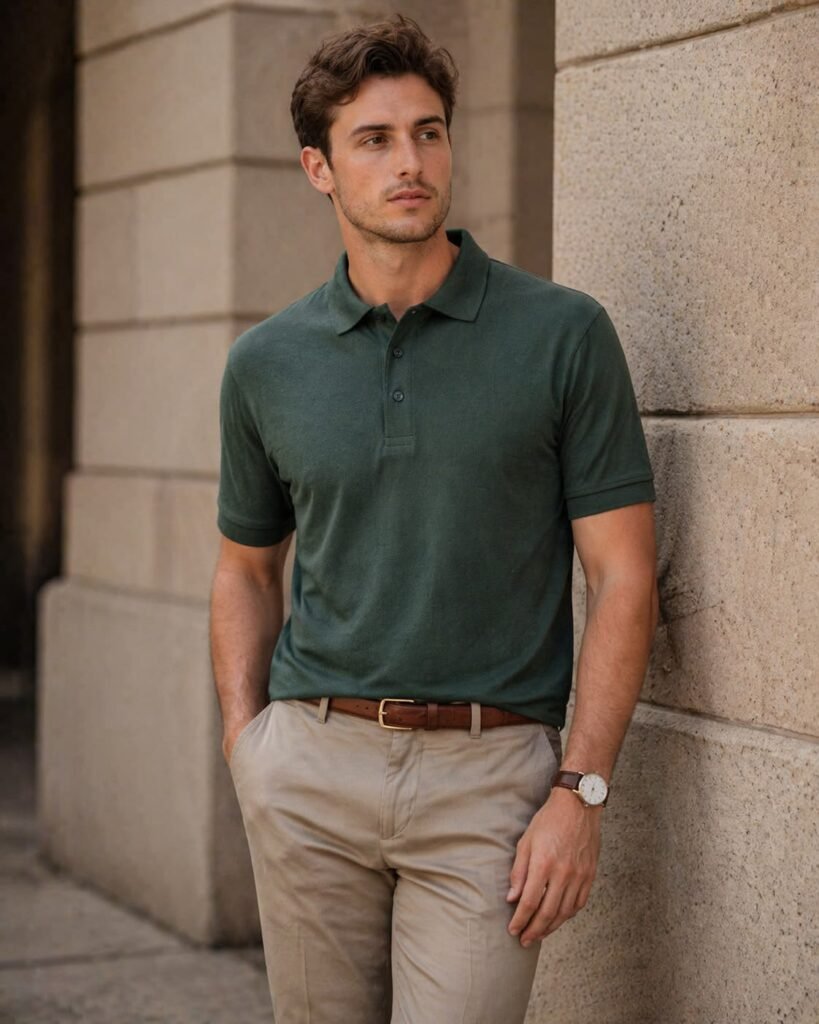
The polo shirt earns its spot because it sits at the exact intersection of comfort and polish — dressier than a plain tee, far more breathable than a button-down in real heat.
Piqué is a specific knit construction with a slightly raised, textured surface, and that texture is functional, not decorative: the small ridges hold the fabric slightly away from your skin, improving airflow compared to a flat knit. A polo made from a flat jersey knit will cling and show sweat more visibly than one in genuine piqué cotton.
Common mistake: buying a polo with a too-long placket (the buttoned section at the collar). A placket that runs too far down the chest can make the shirt look cheap regardless of fabric quality — look for one that ends a few inches below the collar.
6. Quick-Dry Swim Trunks in a Tailored Length
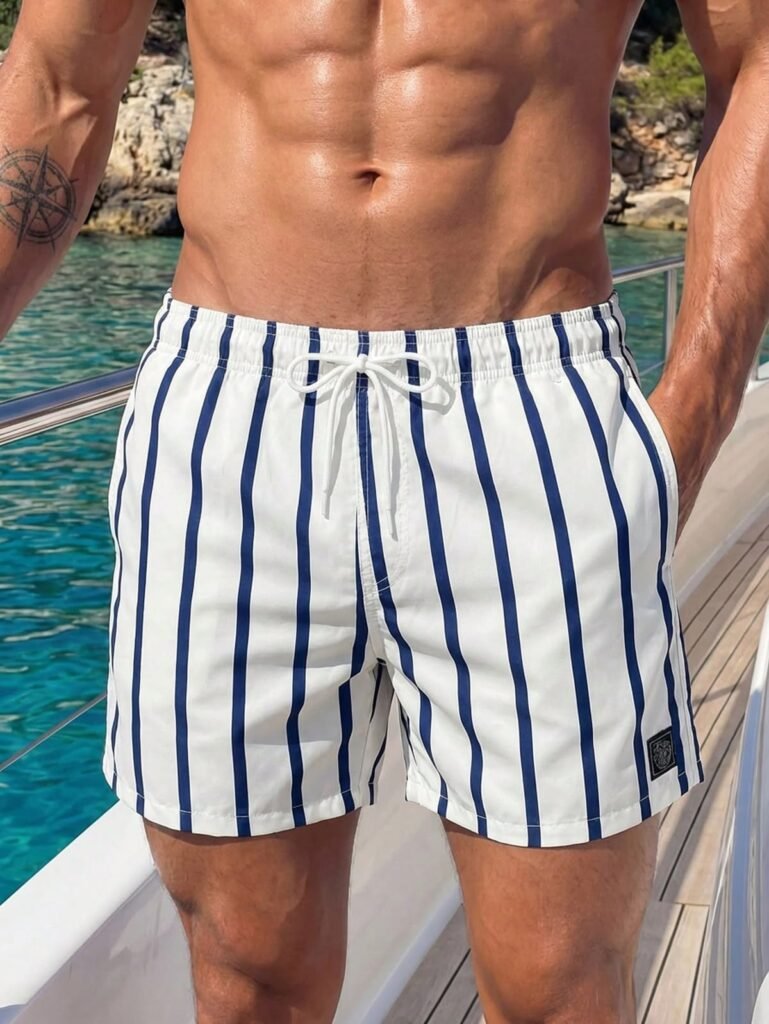
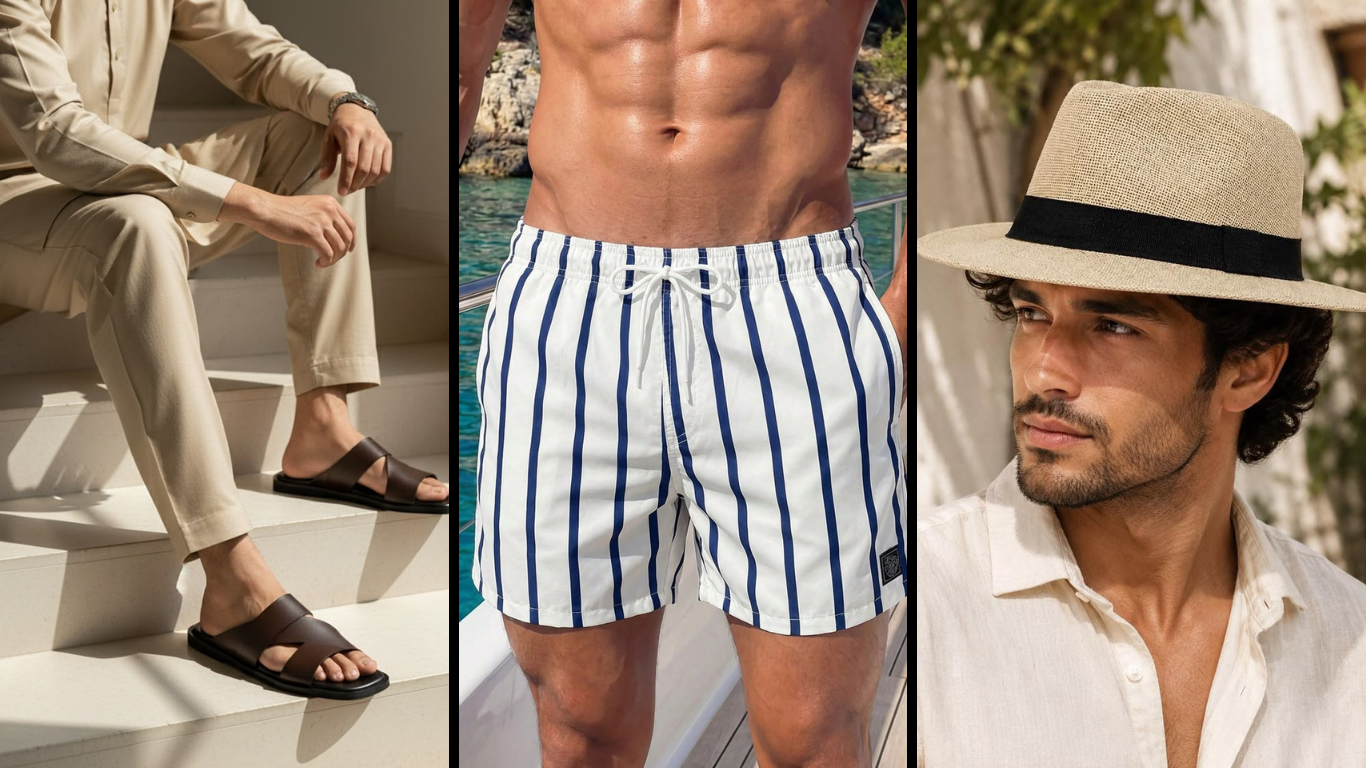
Board shorts that hit mid-calf are a relic of an earlier trend cycle. A shorter, tailored swim trunk — landing at or just above the knee — reads as more current and, practically, dries faster and creates less drag in the water.
Quick-dry synthetic fabrics (usually polyester or a poly blend with a mesh liner) matter beyond convenience: cotton swim trunks absorb water and stay heavy and damp for hours, which is uncomfortable and can also lead to chafing over a full pool or beach day.
Versatility tip: a swim trunk in a solid, muted color (navy, olive, faded red) can double as a casual short off the beach in a pinch, while a loud tropical print usually can’t make that transition as easily.
7. A Pair of Minimalist Canvas or Leather Sneakers
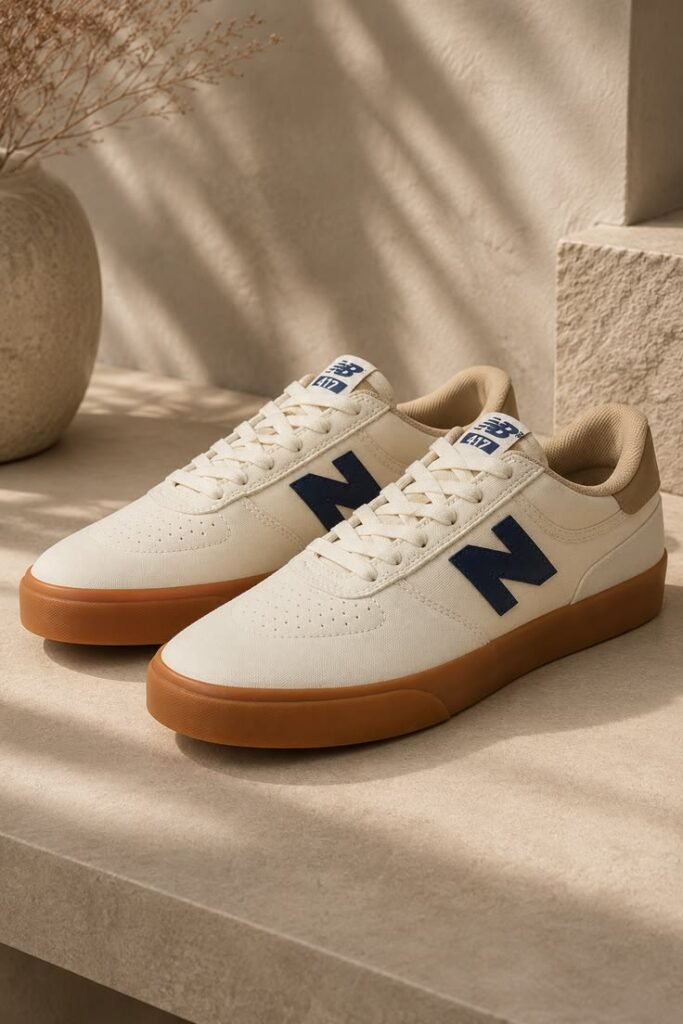
One clean, low-profile sneaker in white, off-white, or a neutral tone is the hardest-working shoe in a summer wardrobe. It pairs with shorts, chinos, and lightweight trousers without looking overdressed or underdressed in any of those contexts.
The keyword here is minimalist: a sneaker with heavy branding, thick soles, or multiple color blocks limits what it can be worn with. A clean silhouette with minimal stitching detail and a single sole color goes with nearly everything else on this list, which is exactly the point of an “essentials” piece.
Material note: canvas breathes better than leather in heat but shows dirt and stains faster; leather or leather-look synthetic holds up better to spills and daily wear but runs slightly warmer. Choose based on how much time you’re spending outdoors versus in air-conditioned settings.
8. Leather Sandals or Slides
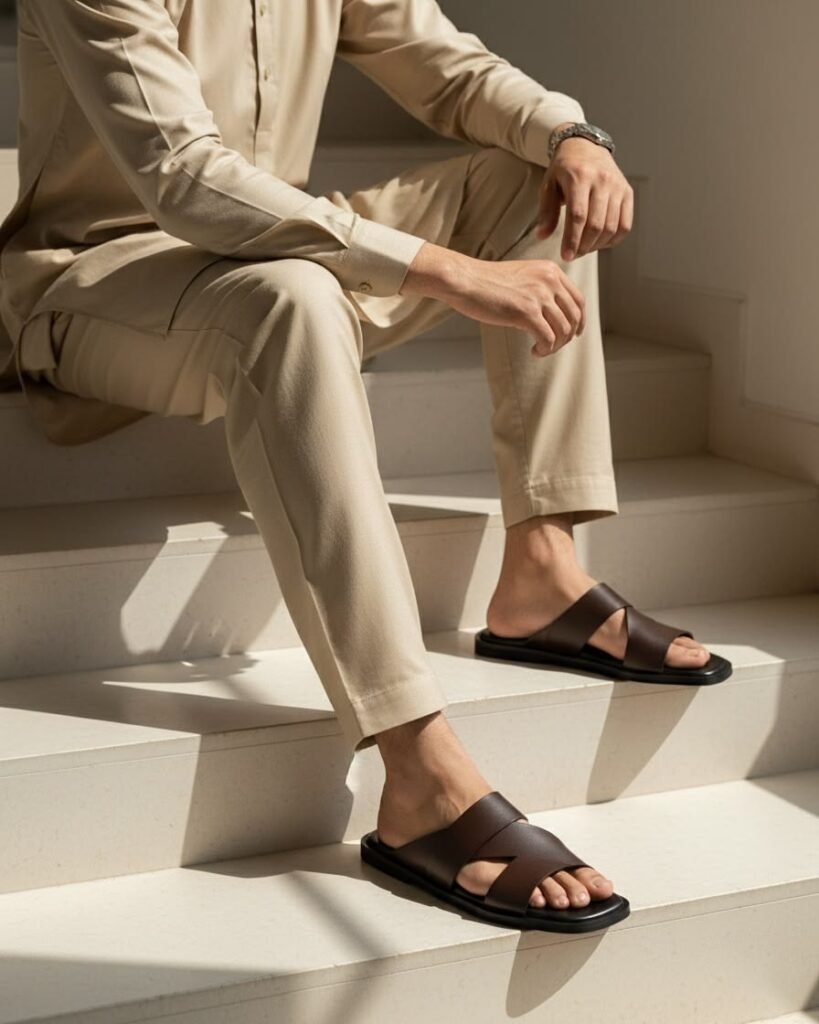
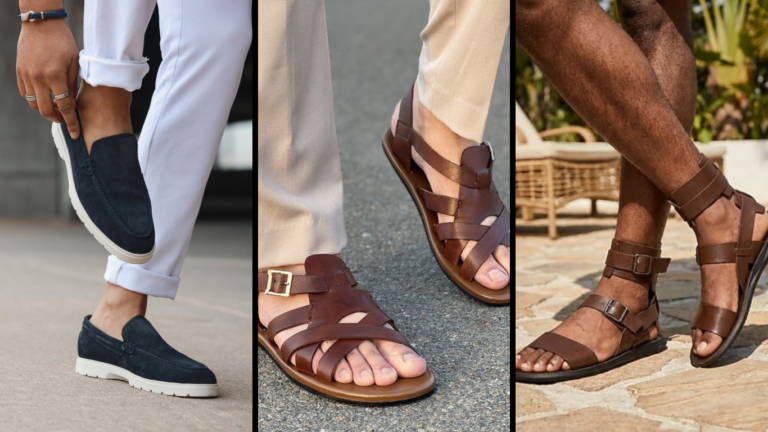
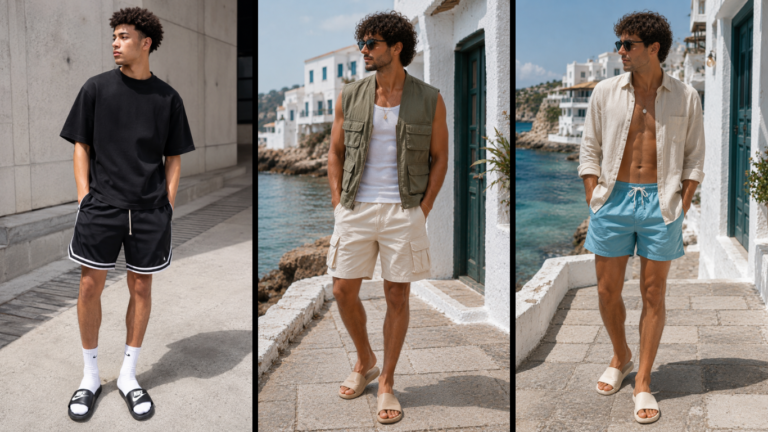
A proper pair of leather sandals — not the foam pool-slide kind, though those have their place too — covers the growing number of summer occasions where sneakers feel like too much and flip-flops feel like too little.
Look for sandals with a contoured or molded footbed rather than a flat one; a flat footbed offers no arch support and tends to feel worse the longer you’re on your feet, which defeats the purpose of a comfortable summer shoe. Leather or a leather-look strap ages better and looks less worn-out over a season than cheap rubber or plastic straps, which crack and discolor with repeated sun exposure.
Common mistake: wearing sandals with socks in casual summer settings — a style choice in specific fashion subcultures, but one that reads as an error rather than intentional in most everyday contexts.
9. An Unstructured Linen or Cotton Blazer
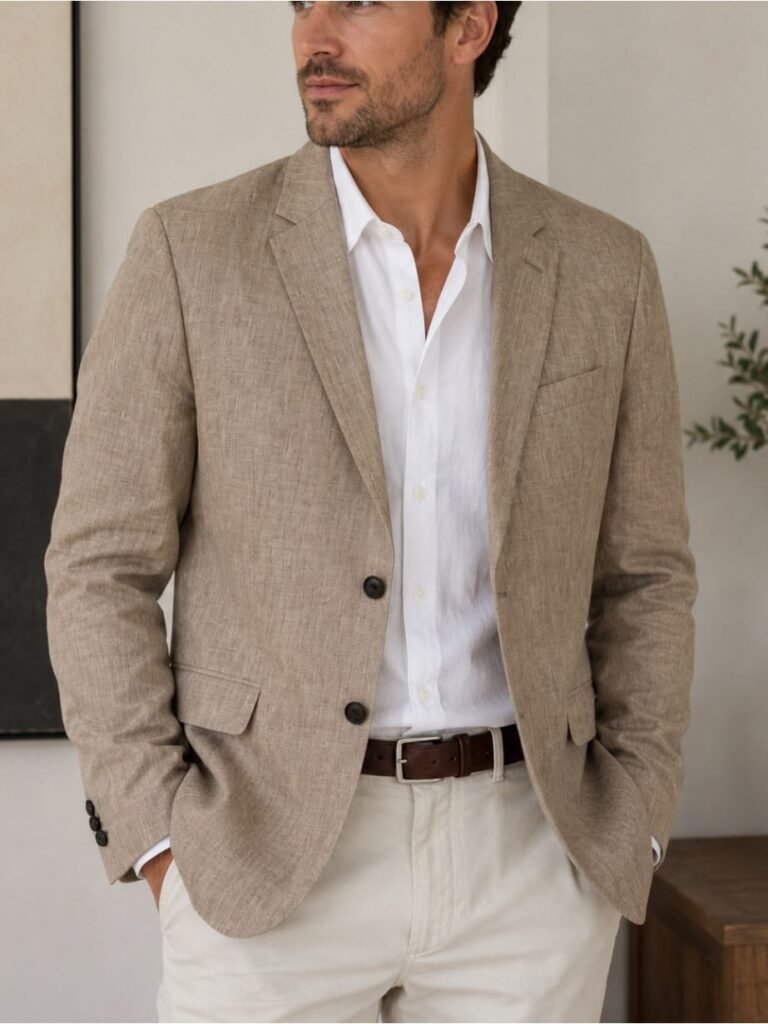
This is the piece most men skip and the one that upgrades a summer wardrobe the most. An unstructured blazer — meaning little to no interior padding or lining — moves and breathes far more like a heavy shirt than a traditional suit jacket, which is why it works in summer heat when a normal blazer wouldn’t.
It instantly elevates the rest of this list: worn open over a plain tee with chinos, it turns a basic outfit into something appropriate for a nicer dinner, a wedding’s cocktail hour, or a summer work event, without requiring you to own a separate “dressy” wardrobe.
Fit note: because unstructured linen has less internal support than a padded jacket, it needs to fit close through the shoulders specifically — a shoulder seam that’s too wide will droop and look unfinished in a way that a structured jacket would hide.
10. A Pair of Well-Fitted Denim Shorts or Lightweight Jeans
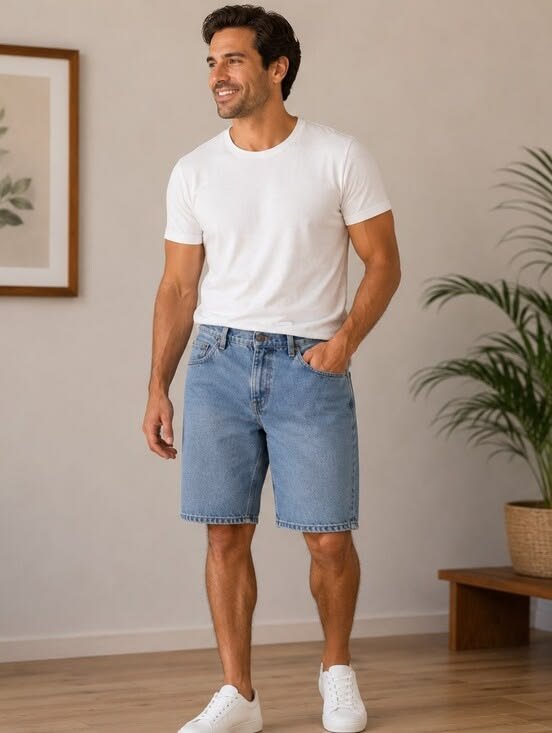
Denim earns a spot even in summer because it’s more durable than most warm-weather fabrics and works in settings — casual bars, outdoor markets, daytime errands — where chino shorts can feel slightly too polished.
If you’re buying jeans specifically for summer rather than shorts, look for a lighter-weight denim (often labeled around 10-12 oz rather than the 14-16 oz standard for cooler-weather denim) or one with a small percentage of added stretch fiber, both of which noticeably improve breathability and comfort in heat.
Common mistake: buying denim shorts that are cut from the same heavy denim as jeans, just shortened. True summer denim shorts use a lighter fabric weight specifically so they don’t feel stiff and hot against bare legs.
11. Quality Sunglasses with Real UV Protection
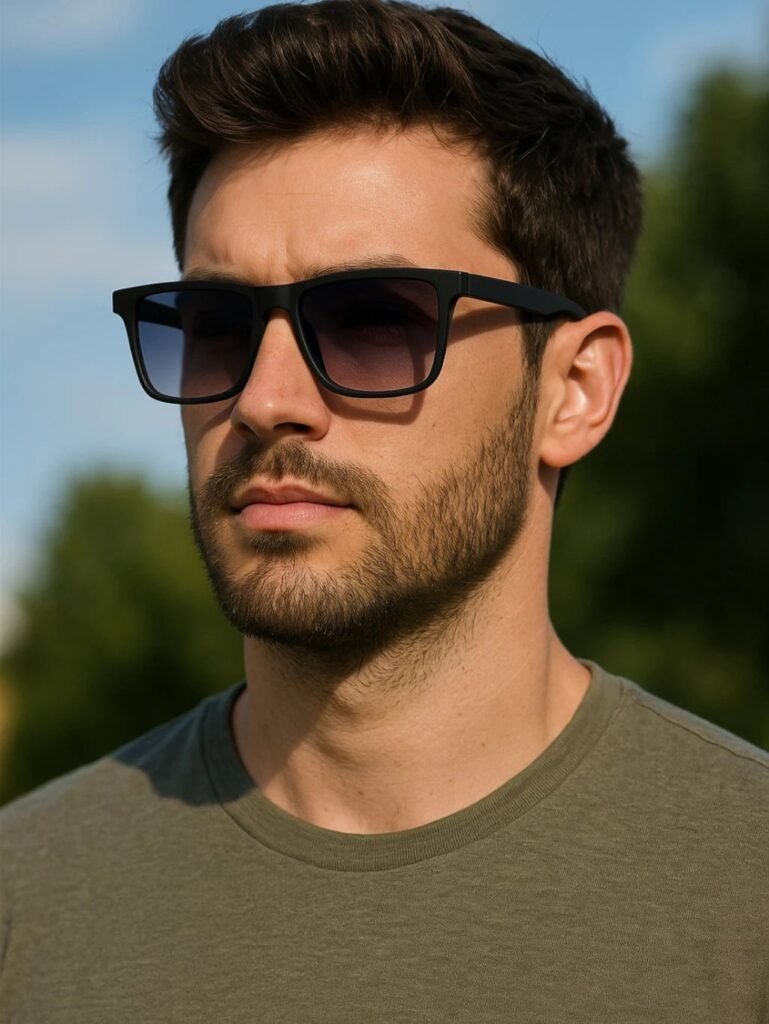
Sunglasses are a style item and a genuine health item at once, and the two considerations point the same direction: cheap sunglasses without real UV filtering can actually cause your pupils to dilate in reduced glare while still letting UV rays through, which is worse for your eyes than wearing no sunglasses at all.
Look for a label confirming 100% UV400 protection — this is a real, checkable spec, not a marketing phrase, and it should be printed on the lens or included in the product description on any legitimate retailer’s page.
Styling note: a classic, moderately-sized frame in a neutral color (black, tortoise, or brown) works across more face shapes and outfits than a trend-driven oversized or heavily tinted frame, which tends to date faster in photos.
12. A Structured Straw or Canvas Hat
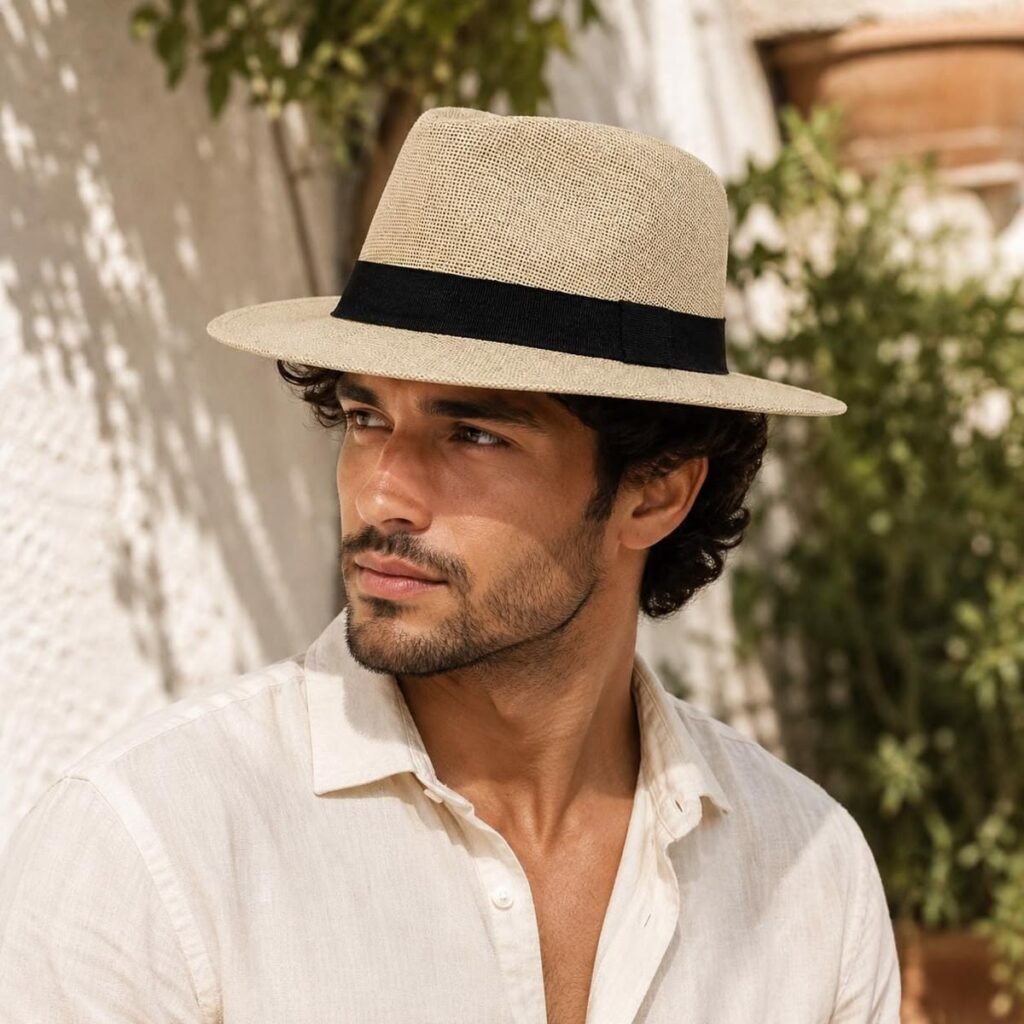
A well-made hat does double duty: real sun protection and an easy way to add visual interest to a simple outfit without extra effort. A woven straw hat (panama-style or a simple brimmed style) works with dressier summer outfits, while a canvas bucket hat or a plain baseball cap fits more casual, athletic-leaning looks.
Fit and construction note: a hat that’s too structured or stiff for your head shape will sit awkwardly and shift constantly; try a hat on and check that it sits level without needing constant adjustment, since a hat you’re fidgeting with all day defeats its own purpose.
13. A Woven or Leather Belt in a Neutral Tone
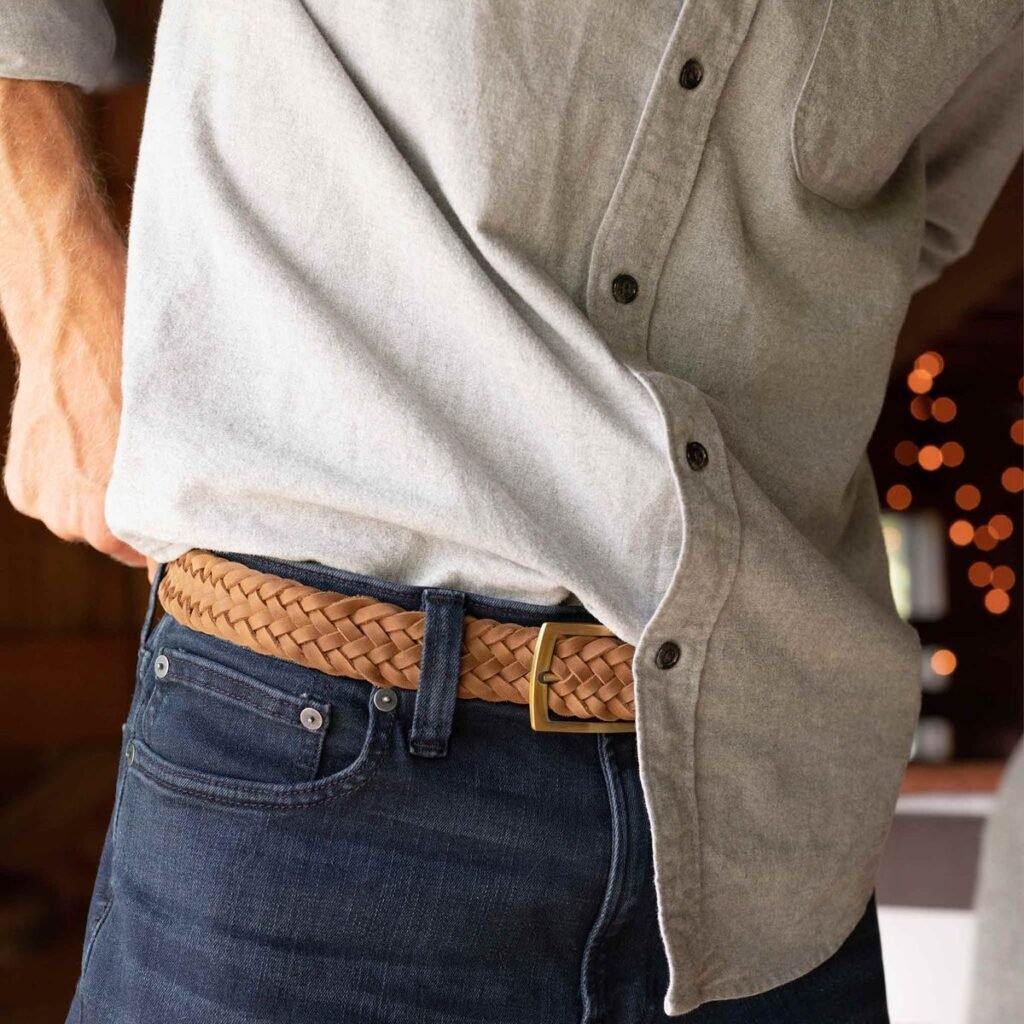
Belts matter more in summer than people expect, mostly because lighter-weight summer trousers and shorts hold their shape less rigidly than heavier winter fabrics, so a well-fitted belt does real functional work, not just decorative work.
A woven fabric or leather belt in a neutral shade (tan, brown, navy) works better with summer’s lighter color palette than a heavy black leather belt built for suit trousers, which can look visually heavy against lighter cottons and linens.
Common mistake: mismatching metal tones — a belt buckle in silver worn with gold-toned watch or sunglasses hardware creates a small but noticeable inconsistency once you’re paying attention to it.
14. A Lightweight Overshirt or Packable Jacket
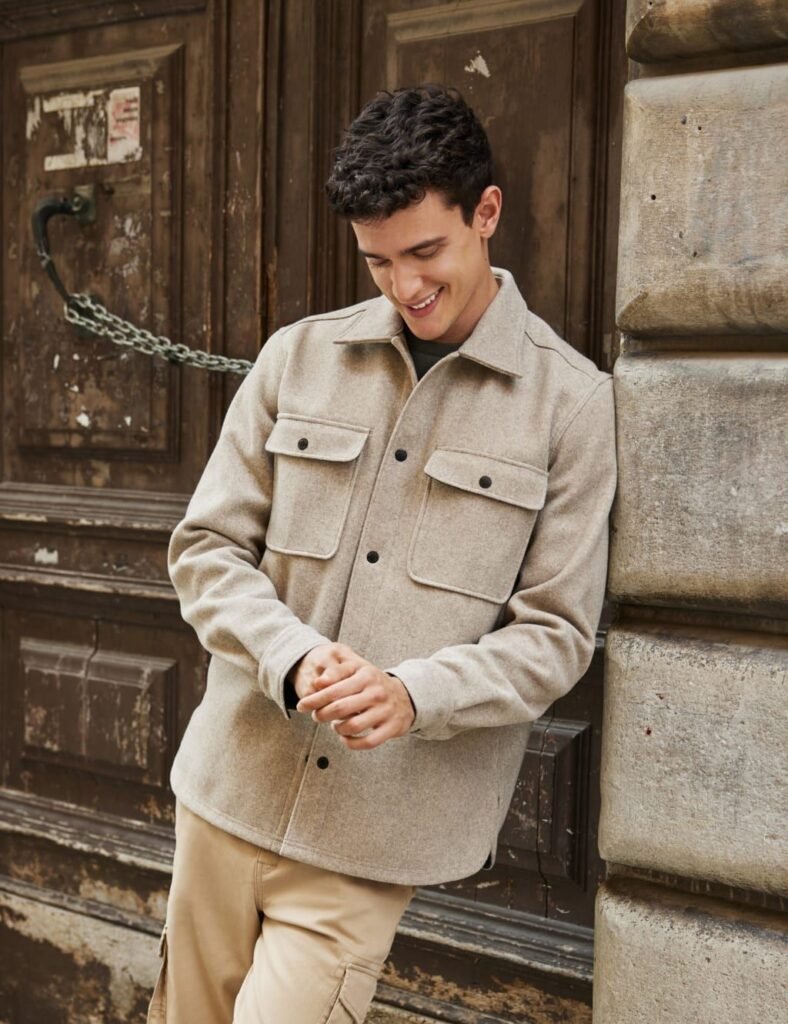
Summer evenings, air-conditioned restaurants, and coastal or mountain climates all get cooler than the daytime heat suggests, and a lightweight overshirt or packable jacket solves that without requiring you to carry a full jacket you’ll never actually need.
An overshirt — heavier than a dress shirt but without a jacket’s lining or structure — is usually the more versatile choice over a true jacket for summer, specifically, since it can be worn buttoned as a light layer or open as a piece of the outfit itself, doing double duty that a zip-up jacket generally can’t.
Practical tip: choose one in a fabric that packs down small (like a technical poplin or a soft chambray) if you’re traveling, since a heavier canvas or denim overshirt takes up more suitcase space for the same functional benefit.
15. Quality No-Show or Lightweight Crew Socks
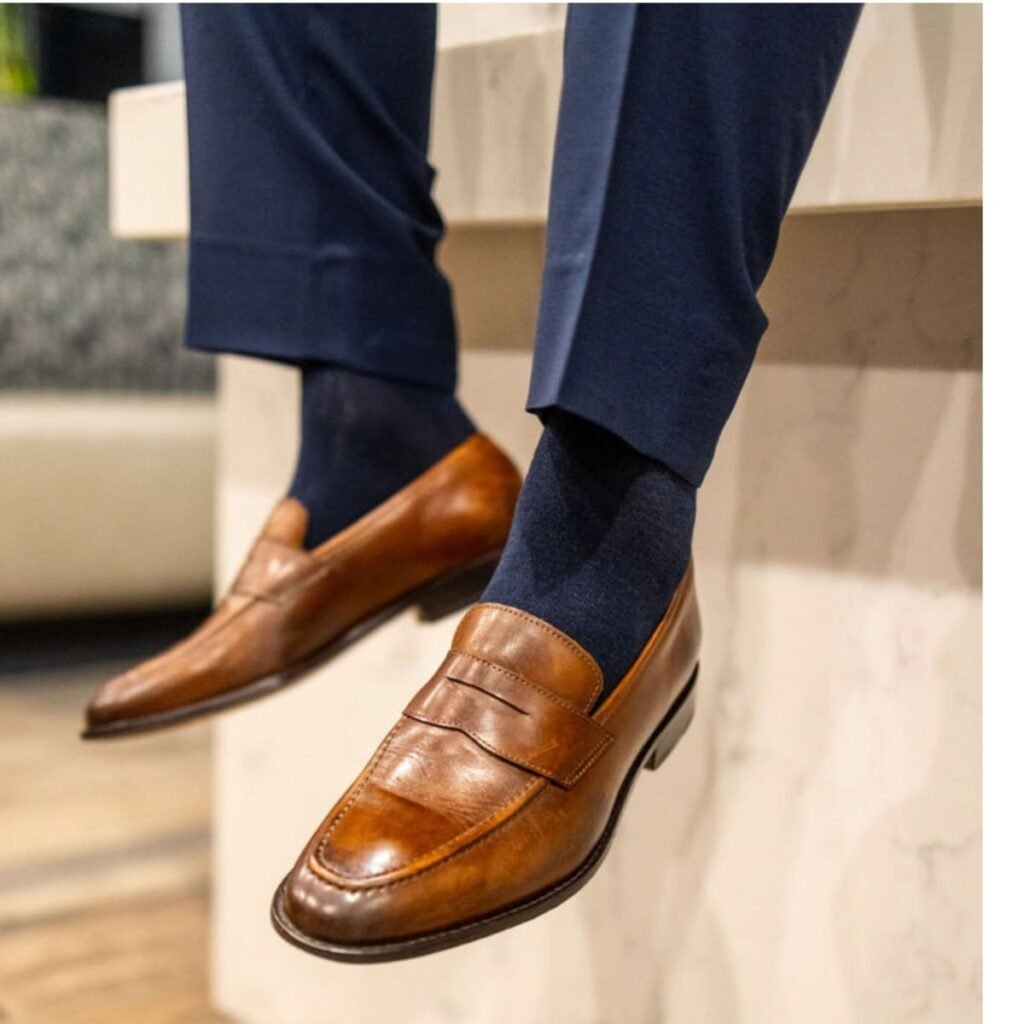
The most overlooked item on this list, and one of the cheapest to get right. Thin, breathable socks — cotton-blend or a moisture-wicking synthetic — prevent the sweaty-foot discomfort that heavier winter-weight socks cause in summer heat, especially with canvas sneakers or leather shoes.
No-show socks matter specifically for the sneaker looks throughout a summer wardrobe; a visible sock line above a low-top sneaker is a small detail, but it’s one people notice more than they’d admit, and it undercuts an otherwise clean, minimal outfit.
Common mistake: buying socks purely by price and ending up with ones that bunch or slide inside the shoe throughout the day — a poorly fitted sock is uncomfortable regardless of how thin or breathable the fabric is.
Why Fabric Weight Matters More Than Most Shopping Guides Admit
A recurring theme across this checklist is fabric weight, measured in grams per square meter (gsm) for knits and ounces per square yard for wovens like denim. It’s a more reliable way to judge summer suitability than fiber content alone, since two cotton shirts can perform completely differently in heat depending on how tightly or loosely they’re woven. When you’re shopping, check the product description for a weight figure before you check the price — a lighter weight in the right fabric is usually the actual signal of a garment built for summer, not just marketed for it.
Fit Over Quantity: The Real Cost-Saving Strategy
It’s tempting to build a summer wardrobe by buying a lot of inexpensive pieces, but a smaller collection of well-fitted items in versatile colors will get worn far more often — and look better every time — than a closet full of ill-fitting basics. A $30 tee that fits your shoulders correctly outperforms a $10 tee that doesn’t, every single time you put it on. If you’re working with a limited budget, prioritize fit and fabric weight on the pieces you’ll wear most often (tees, shorts, sneakers) and save more on items worn less frequently (a blazer, dress-adjacent trousers).
Building Toward Versatility Instead of Trend-Chasing
Every item on this list was chosen because it recombines with several others — a linen shirt works with chino shorts, denim shorts, or lightweight trousers; a polo works with the same range of bottoms plus a blazer for a dressier look. That’s a deliberate strategy: a wardrobe built around versatile neutrals and well-chosen fabrics will outlast and outperform a wardrobe built around whatever’s trending in a given season, both in cost-per-wear and in how consistently good the outfits look.
Frequently Asked Questions
How many of each item on this list do I actually need? For tees and shorts, two to three of each in different colors or weights is usually enough for a full week without excessive laundry. For higher-cost items like a blazer, quality sunglasses, or good leather sandals, one well-chosen piece is genuinely sufficient — these aren’t items that benefit from owning multiples.
What’s the single best first purchase if I’m starting from scratch? A pair of well-fitted chino shorts in a neutral color (navy, khaki, or stone) is the most versatile single item, since it pairs with nearly every top on this list and works across the widest range of summer occasions.
Is linen worth the wrinkling for how much it actually helps with heat? Yes, for pure comfort in real heat, though a linen-cotton blend is a reasonable compromise if wrinkling bothers you. The breathability difference between linen and standard cotton is genuine and noticeable, not just a texture preference.
Do I need separate shoes for casual and slightly dressier summer occasions? Not necessarily — a clean, minimal leather or canvas sneaker in a neutral tone can bridge both casual and semi-dressy summer settings. A separate pair of leather sandals or loafers is useful mainly for occasions where sneakers would read as too sporty.
How do I know if a fabric will actually breathe well before buying it online? Check the fabric weight listed in the product description (lower gsm for knits, lower oz for wovens generally means more breathable) and the fiber content — natural fibers like cotton and linen, or performance synthetics specifically marketed as moisture-wicking, generally outperform standard polyester blends in heat.
Is it worth buying a blazer if I rarely dress up in summer? If you attend even a few weddings, dinners, or work events during summer months, an unstructured linen blazer earns its cost by covering all of them with one item, rather than needing separate outfits for each occasion.
What colors should I prioritize for a versatile summer wardrobe? Neutrals — navy, white, stone, olive, and a light gray — recombine with each other more easily than bold or trend colors, and they photograph and age better over multiple seasons of wear.
How often should I replace summer wardrobe basics like tees and shorts? Well-made tees in a reasonable fabric weight typically hold their shape for one to two years of regular wear before the fabric visibly thins or the collar loses shape. Shorts and trousers generally last several years if properly cared for, since they see less direct wear than tees worn against skin.
Should I prioritize natural fibers or performance synthetics for summer clothing? Both have a place. Natural fibers like cotton and linen are generally more comfortable against skin for everyday wear, while performance synthetics make more sense for swimwear, workout gear, or travel pieces where quick drying and moisture-wicking matter more than everyday comfort.
What’s the most common mistake men make when building a summer wardrobe? Buying items a size too large in an attempt to stay cool. Loose, ill-fitting clothing doesn’t actually breathe better than correctly fitted clothing in the right fabric — it just looks less intentional. Fit and fabric choice do far more for both comfort and appearance than sizing up.
A genuinely useful summer wardrobe isn’t about owning more — it’s about owning the right fifteen items, in the right fit and fabric, so that almost anything in your closet can be paired with almost anything else. Start with whichever gaps stand out most from this list, prioritize fit over quantity as you shop, and you’ll notice the difference in how often you actually reach for these pieces instead of digging past them for something else.
Read also: