10 Gorpcore Outfit Ideas for Men: Outdoor Style Meets Streetwear
There’s something quietly rebellious about gorpcore. While the rest of the fashion world was chasing minimalism and tailored clean lines, a growing community of men started showing up in trail-ready fleeces, waterproof hiking boots, and technical shell jackets — not on a mountain, but on city streets, at coffee shops, and at fashion week. It looked wrong on paper. In practice, it looked like the future.
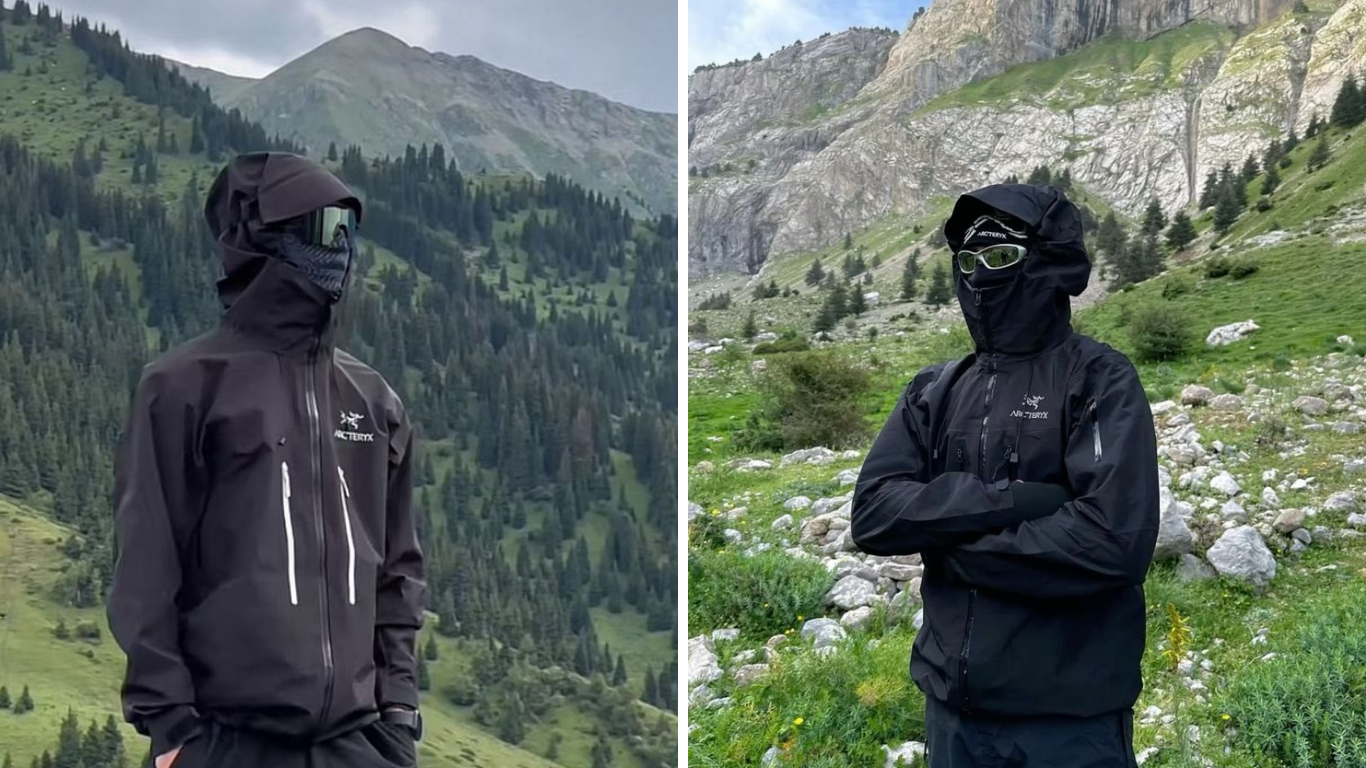
Gorpcore — named after the trail mix snack GORP (Good Old Raisins and Peanuts) — is the aesthetic that happens when outdoor performance gear collides with streetwear sensibility. Think Arc’teryx shell jackets worn with relaxed cargo pants and Salomon trail runners.
Think Patagonia fleeces layered over heavyweight tees with wide-leg pants and trekking sandals. It’s utility dressed up, or more accurately, utility that was never trying to be dressed up at all — it just turned out to be cool by nature.
The appeal isn’t hard to understand. Gorpcore is practical, durable, and visually interesting without requiring any of the hype-chasing that comes with traditional streetwear. You’re not hunting for limited drops or camping outside a store. You’re buying gear designed to keep you warm, dry, and comfortable — and it happens to look great doing it.
This guide breaks down 10 complete gorpcore outfit ideas for men, from entry-level builds using accessible brands to more considered, investment-piece approaches. Whether you’re new to the aesthetic or already deep in it, each outfit here will give you a clear blueprint: what to wear, why it works, and exactly how to put it together.
1. The Technical Shell Jacket and Cargo Pant Foundation
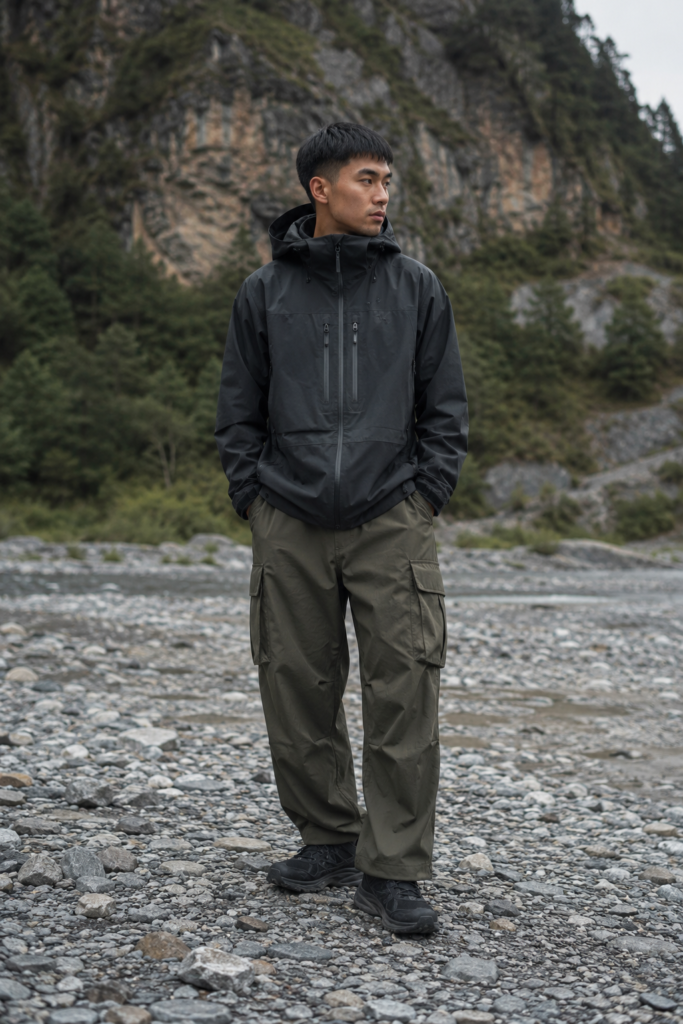
If there’s a single outfit that defines gorpcore at its most essential, it’s a technical shell jacket paired with utility cargo pants. This is the look that launched the aesthetic into mainstream consciousness and it still works better than almost anything else in the gorpcore playbook.
Go with a packable shell jacket in a muted or natural tone — olive, navy, slate grey, or tan. Arc’teryx, Patagonia, and Columbia all produce excellent options at different price points. The jacket should be lightweight and wind/water-resistant with a clean, technical look — minimal branding, few external features, and ideally a hood that tucks away neatly. Underneath, wear a heavyweight cotton tee or a thin technical base-layer in a complementary neutral. Over the bottoms, go with straight or relaxed-leg cargo pants in a coordinating tone: stone, olive, or khaki.
Why it works: The shell jacket signals function without screaming camping trip. Its clean, precise construction lifts what would otherwise be a simple cargo-and-tee outfit into something with genuine visual authority. The technical fabric texture contrasts nicely with the softer cotton of the tee and the structured cargo pant, creating depth without layering chaos.
Best colors: Olive jacket, khaki cargo pants, cream tee — a warm, cohesive earth-tone palette that photographs beautifully and works in almost any outdoor or urban context. Alternatively, a slate grey shell over navy cargos and a white tee creates a cooler, more urban read.
Shoes: Salomon XT-6 or Speedcross trail runners are the gorpcore shoe of record and for good reason — their aggressive outsole, technical construction, and distinctive silhouette are immediately recognizable. Alternatively, Hoka Speedgoat or ASICS Gel-Sonoma trail runners offer the same outdoor aesthetic at more accessible price points.
Accessories: A technical ripstop backpack or a waterproof daypack in a tonal color. Minimal jewelry — gorpcore doesn’t really do chains and pendants. A simple rubber-strap watch like a Casio G-Shock is deeply in-theme and practical.
Season: Year-round. Swap the tee for a base-layer midlayer in winter. In summer, the shell can come off and the cargo-and-tee stands on its own.
Common mistake: Wearing the shell jacket fully zipped in a context where it looks forced. The shell reads best when it’s either appropriately worn for conditions or worn slightly open with an interesting underlayer visible.
Styling tip: Roll the cuffs of the cargo pants once, just above the ankle, to show off the trail runner. It’s a small adjustment that sharpens the silhouette significantly.
2. The Fleece Layer and Wide-Leg Tech Pant Look
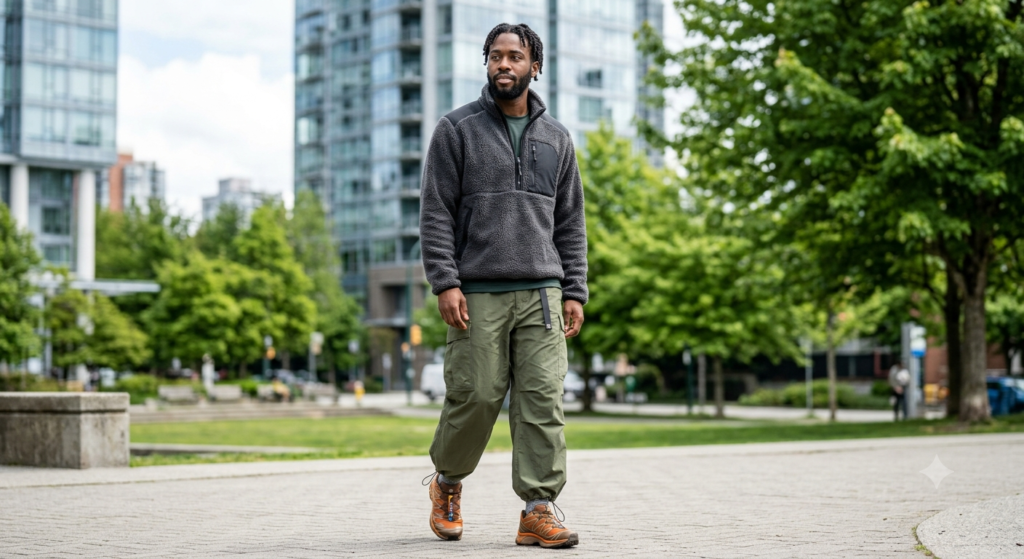
The fleece jacket is arguably gorpcore’s most beloved piece. Worn by mountain guides, ski-lift operators, and field researchers for decades, the fleece pullover or zip-up has found a second life as a cornerstone of urban gorpcore — and when paired with wide-leg technical trousers, it lands in exactly the right visual territory between outdoor function and city-ready style.
Choose a midweight fleece in a bold or interesting colorway — gorpcore actively encourages color here in a way that most streetwear doesn’t. Rust, cobalt, forest green, or even a retro two-tone fleece all work. The fleece can be a quarter-zip, a full-zip, or a pullover — all three are valid. Underneath, wear a thin long-sleeve base layer in a neutral tone. The base layer collar peeking out above the fleece neckline is a classic gorpcore layering detail.
Pair with wide-leg technical pants — the kind made from ripstop, nylon, or a stretch-woven fabric with multiple pockets and a slightly structured drape.
Why it works: The fleece’s texture and the clean surface of technical trousers create an interesting tactile contrast. The wide-leg silhouette balances the volume of a full fleece and keeps the overall proportion from looking boxy or formless.
Best colors: A cobalt or teal fleece with slate grey wide-leg pants is a genuinely striking gorpcore combination. Forest green fleece with olive-toned technical trousers is more tonal but equally strong. Avoid overly dark palettes — gorpcore benefits from color, and an all-dark fleece-and-pant combination just looks like generic outdoor gear.
Shoes: A chunky hiking boot in tan or brown leather — Salomon X Ultra, Danner Trail 2650, or even a budget KEEN hiker — anchors the outdoor aesthetic and adds appropriate visual weight to balance the wide-leg pant. Trail runners work too if you want the fit to feel lighter.
Accessories: A beanie in a contrasting color is a natural gorpcore complement to a fleece — it looks like you’ve just come off a trail or you’re about to. A chest rig or harness bag in olive or black is a more editorial option that fits the utilitarian aesthetic perfectly.
Season: Fall and winter are the primary seasons for this one. The fleece as outerwear is best suited to temperatures between 40–60°F. Colder than that, layer the fleece under a shell.
Common mistake: Choosing a fleece with too much external branding. A Patagonia Synchilla in a clean colorway looks deliberate. A fleece plastered with logo patches across the chest looks like a different category of garment entirely.
3. The Hiking Boot and Relaxed Denim Gorpcore Edit
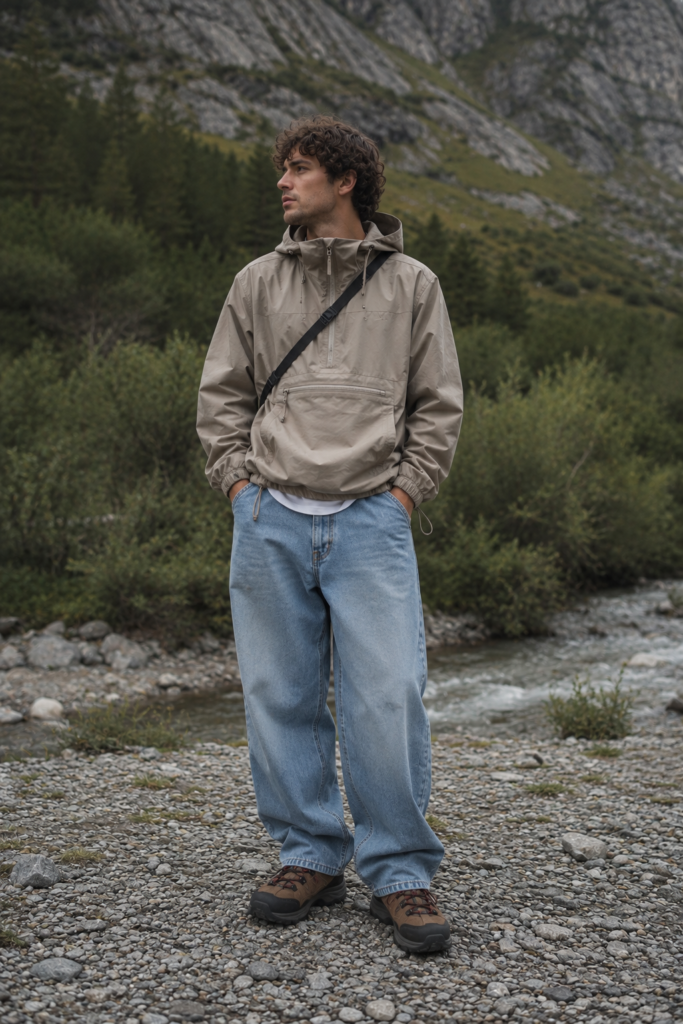
This is the gorpcore entry point — the version of the aesthetic that doesn’t require any new wardrobe additions beyond the footwear. Relaxed or straight-leg denim paired with serious hiking boots is accessible gorpcore: it takes familiar clothes and reframes them through the lens of outdoor utility.
Start with medium to dark wash straight-leg or relaxed-fit denim. Not skinny — the silhouette needs some room through the thigh and calf to balance the visual weight of a substantial boot. Over that, wear a heavyweight flannel shirt in a plaid or check pattern, either fully buttoned as a shirt jacket or over a plain tee with the flannel open. The flannel is a critical element here: it bridges the gap between outdoor culture and relaxed everyday dressing in a way very few other pieces can.
For the boots, go with a proper hiking boot that has genuine outdoor credentials — Salomon X Ultra 4, Merrell Moab Speed, Columbia Newton Ridge, or Timberland’s actual hiking range (not the classic yellow boot, which reads very differently). The boot should have visible lug soles, sturdy construction, and ideally a waterproof membrane.
Why it works: The lug sole and ankle height of the hiking boot give the otherwise familiar denim-and-flannel combination an immediate outdoor upgrade. The boots don’t just look the part — they’re actually built for rough terrain, and that authenticity shows in how they’re constructed.
Best colors: Medium indigo denim with a dark plaid flannel in navy, green, or rust works beautifully. Dark wash denim with an olive or brown flannel leans more rugged and earthy. Keep the boot color cohesive — a tan or brown boot with warm-toned flannel, a darker boot with cooler denim.
Shoes: Already covered by the hiking boot, which is the centerpiece. Make sure the boot laces are clean and properly tied. A waxed cotton lace instead of the standard one adds a small but visible detail upgrade.
Accessories: A wool or fleece beanie. A simple canvas or waxed cotton tote. Maybe a Nalgene bottle visible in a bag side pocket — it’s a small gorpcore detail that communicates the aesthetic without requiring any styling effort.
Season: Fall and early spring. The flannel and denim combination is most appropriate in cool, overcast weather — it actually looks best when the environment matches the outfit’s energy.
Common mistake: Choosing fashion-forward “hiking-inspired” boots that don’t have actual outdoor construction. A sleek designer take on a lug-sole boot doesn’t read as gorpcore — it reads as an attempt at gorpcore. The aesthetic rewards authenticity.
Read also: 15 Streetwear Outfits for Men Who Like to Keep It Clean and Minimal
4. The Puffer Vest and Technical Jogger Outfit
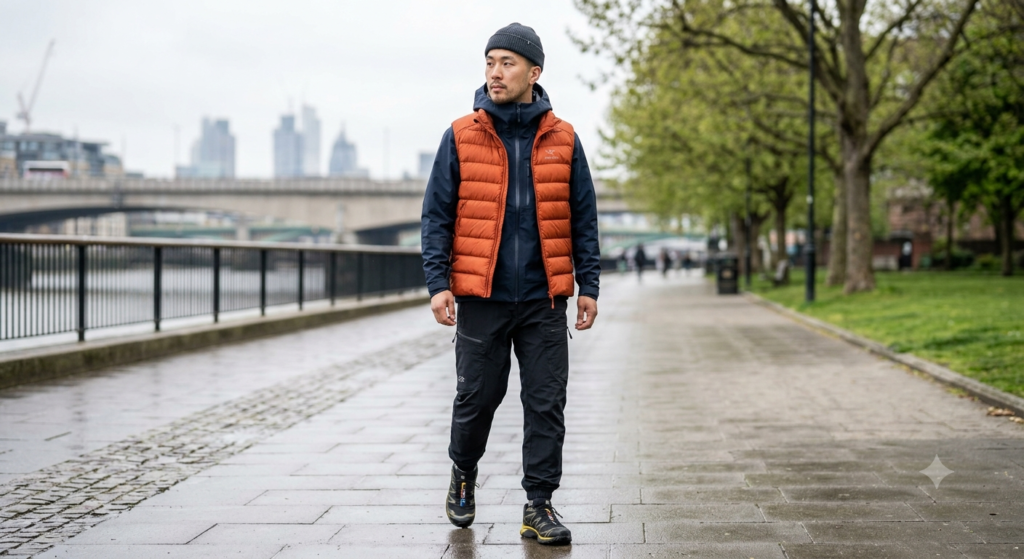
The puffer vest is a gorpcore piece with broad appeal because it layers naturally over almost any midlayer while keeping the arms free for movement. Paired with technical joggers, it creates a streamlined outdoor-athletic silhouette that works as well on city streets as it does at a trailhead.
Choose a lightweight down or synthetic puffer vest in a clean, solid colorway. Black, navy, rust, and forest green are all strong. The vest should be slim-to-regular in fit — not so baggy it overwhelms the layers beneath it. Underneath, wear a long-sleeve technical tee or a lightweight quarter-zip fleece, letting the collar or neck layer show above the vest’s neckline. Below, pair with technical joggers in a coordinating tone — tapered through the leg, with visible utility detailing like zip pockets or toggle cord hems.
Why it works: The puffer vest maintains warmth through the core while the technical layering system works as a complete, visually cohesive outfit rather than a collection of separate pieces. The arm-free silhouette keeps the overall proportions clean and avoids the “michelin man” effect that can come with a full puffer coat.
Best colors: Black vest over a grey quarter-zip with charcoal joggers — monochromatic and clean. Or a rust vest over a cream long-sleeve with dark olive joggers — warm, earthy, and visually interesting. The vest should contrast slightly with the midlayer to show the layering intentionality.
Shoes: Trail runners or a low-profile hiking shoe. New Balance Trail or ASICS Gel-Fujitrabuco are well-priced options that nail the gorpcore footwear aesthetic without the Salomon price tag.
Accessories: A G-Shock watch. A technical ball cap in a coordinating tone. A lightweight technical crossbody bag or a minimal daypack. The overall accessory approach should feel functional-first.
Season: Fall and winter, transitioning into spring. The puffer vest is a layering-season piece — it doesn’t make much sense when it’s 70°F or above.
Common mistake: Wearing joggers that are too fitted or too casual-looking. Very tight joggers make the puffer vest look like a fashion piece rather than outdoor gear. Very casual sweatpants undercut the technical-outdoor aesthetic. The sweet spot is a tapered but relaxed technical jogger with some visible utility construction.
5. The Oversized Patagonia and Earth Tone Palette Build
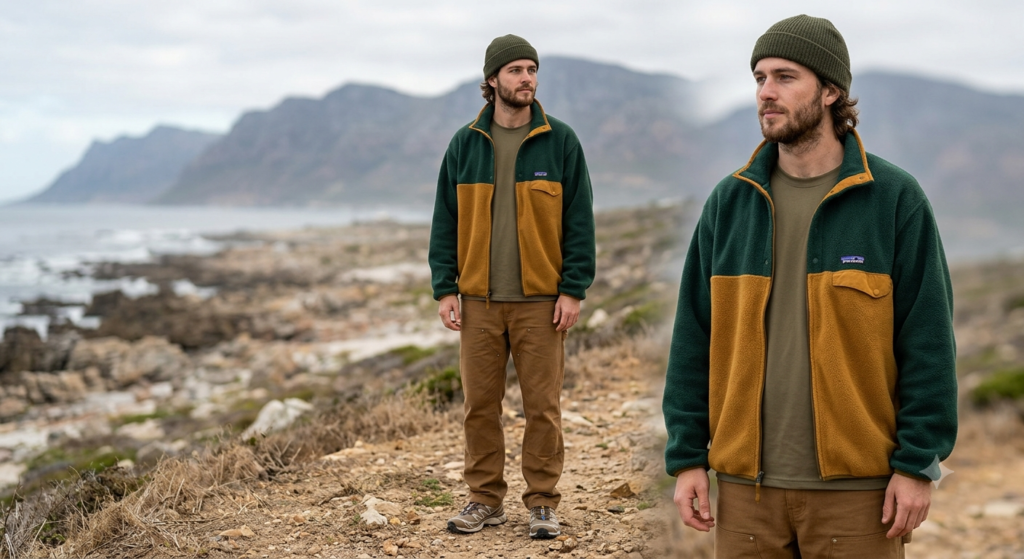
Patagonia holds a special place in gorpcore. The brand’s commitment to environmental responsibility, its instantly recognizable designs, and the cult following its pieces carry make it something of a cultural shorthand for the aesthetic. An oversized Patagonia fleece — particularly the Synchilla or Better Sweater styles — is a gorpcore cornerstone that works across multiple outfit formats.
For this build, go with an oversized Synchilla fleece or similar thick pile fleece in a bold colorway — Patagonia regularly drops the Synchilla in rich tones like Nouveau Green, Teal, and various warm earth shades. Wear it over a plain heavyweight tee or a thin crewneck sweatshirt. Below, pair with straight-leg earth-tone trousers — stone, caramel, or olive — in a fabric with some texture, like a twill, ripstop, or soft canvas.
Why it works: The thick pile texture of the fleece creates immediate visual interest. The earth-tone trousers ground it and stop the bold fleece colorway from overwhelming the outfit. Together they create a silhouette that’s full and comfortable up top, clean and intentional below.
Best colors: A vibrant teal or green fleece with stone or camel trousers is a particularly strong combination. The warm trouser tone balances the cool fleece and creates a palette that feels thoughtfully assembled rather than accidental.
Shoes: Salomon trail runners are the natural pairing for Patagonia gorpcore — the two brands occupy the same cultural space and their aesthetics complement each other. Alternatively, a clean pair of chunky hiking-inspired sneakers in tan or grey fits just as well.
Accessories: The Patagonia fleece carries its own accessory weight — the brand does a lot of the styling work for you. Keep the rest minimal: a simple tote, maybe a cap if the weather calls for it. Avoid competing visual elements.
Season: Fall and winter. The Synchilla is a midlayer — it can be worn alone in mild weather or under a shell when it’s genuinely cold.
Common mistake: Wearing the fleece too tightly to the body. The Patagonia Synchilla is cut to be relaxed and worn over layers. Sizing down in pursuit of a neater fit works against both the comfort and the aesthetic.
Styling tip: Patagonia pieces are widely available secondhand in excellent condition on ThredUp, eBay, and Depop, often for 30–50% of retail. Buying secondhand also aligns with the brand’s own values — something that’s quietly in-theme for gorpcore culture overall.
6. The Arc’teryx-Inspired Shell and Straight Trouser Edit
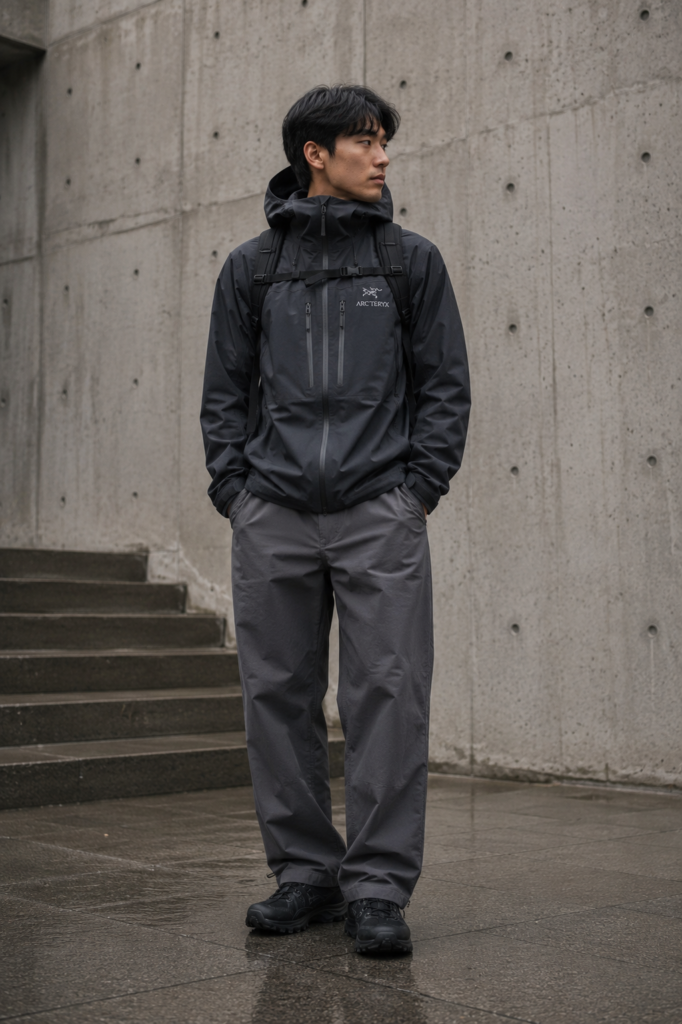
Arc’teryx has become gorpcore’s prestige brand — the aesthetic’s equivalent of what Supreme is to hype streetwear or what Fear of God is to luxury. The clean, technical construction of Arc’teryx pieces, their muted colorways, and the almost architectural precision of their silhouettes make them instant gorpcore statements. But the look can be inspired by Arc’teryx even when it’s not built from it.
The core principle of this outfit is technical precision: a slim-fit shell jacket with clean lines and minimal detailing, worn over a technical midlayer in a slightly contrasting neutral, paired with tailored or straight-cut technical trousers in a dark tone. This is gorpcore’s more refined expression — less “just came off the trail,” more “could have come off the trail but also happens to work in an architecture firm.”
For the jacket, look for clean technical shells from brands like Montane, Rab, or Columbia’s more design-conscious lines. The key is minimal branding, clean seam taping, and a silhouette that isn’t too boxy.
Why it works: The combination of technical precision from the outerwear and the clean silhouette of the trouser creates a gorpcore look that reads equally well in urban and outdoor environments. It’s the aesthetic at its most versatile.
Best colors: Graphite or black shell jacket, charcoal technical trouser, white or off-white base layer visible at the collar. Or a slate blue shell with dark navy trousers — monochromatic cool-tone combinations work particularly well in this more tailored gorpcore format.
Shoes: A mid-top trail shoe or a technical low-top hiking shoe in a neutral tone. Salomon X Ultra 4 Mid or HOKA Kaha are particularly good at bridging trail performance and urban aesthetic. A clean minimalist runner also works for the more refined version.
Accessories: A sleek technical daypack — Cotopaxi, Osprey, or a minimalist Fjällräven Kånken in a tonal color. No visible keychain collections or external bag attachments that add visual clutter.
Season: Fall through spring. This outfit is fundamentally a cold-to-mild weather build.
Common mistake: Mixing the clean, precise lines of an Arc’teryx-inspired shell with overly casual bottoms — sweatpants or joggers. The more refined the jacket, the more the rest of the outfit needs to meet it at the same level of visual precision.
7. The Trekking Sandal and Technical Shorts Summer Gorpcore Fit
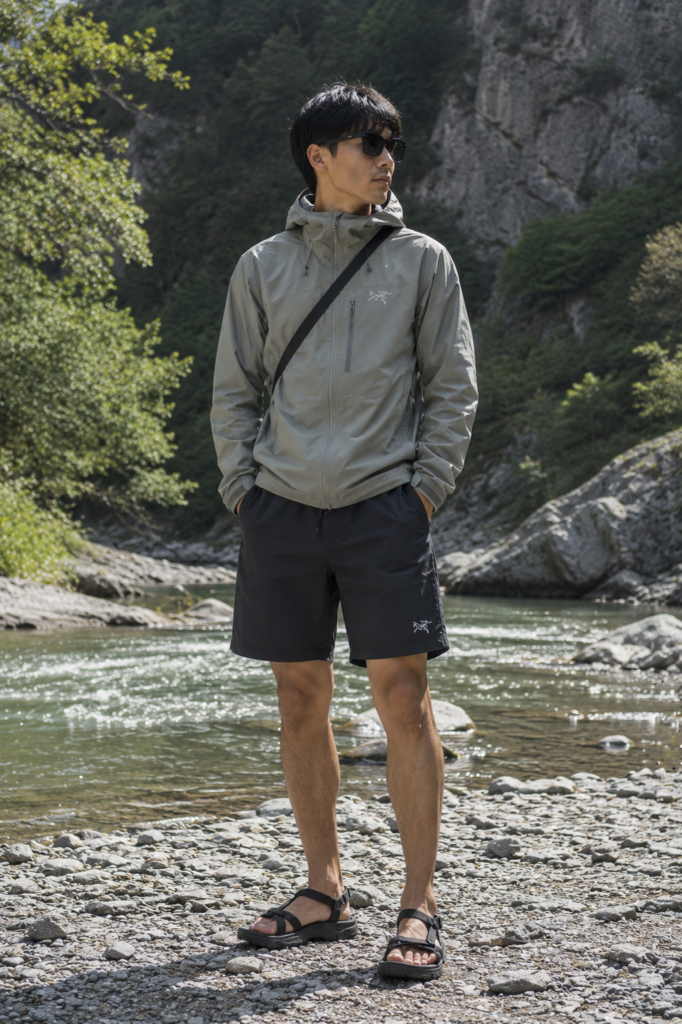
Gorpcore in summer presents a different set of challenges. The heavy layering and technical outerwear that define the aesthetic in cooler months don’t translate directly to 85°F heat. But summer gorpcore exists — and at its best, it’s one of the most distinctive seasonal aesthetics in men’s fashion.
Build this outfit from technical hiking shorts — not basketball shorts, not chino shorts, but actual outdoor-performance shorts with multiple pockets, quick-dry fabric, and a relaxed but structured fit. Go with a mid-thigh length. Over a plain tee in a neutral tone, wear an ultralight sun shirt or a lightweight button-down in a ripstop or UPF fabric — worn open over the tee as a layer. The sun shirt adds outdoor utility credibility and visual layering even in warm weather.
For footwear, lean into the most polarizing element of summer gorpcore: trekking sandals. Chaco Z/1 Classic, Birkenstock Arizona in a muted colorway, or Keen Uneek sandals are all legitimate gorpcore summer footwear. Wear them with minimal or no-show socks, or embrace the gorpcore commitment to function over fashion and wear them with hiking socks.
Why it works: The technical shorts and sun shirt create a warm-weather outdoor kit that looks intentional rather than grabbed from the drawer casual. The trekking sandals are the commitment piece — they make it clear this is a deliberate aesthetic choice, not just a hot day outfit.
Best colors: Khaki or stone shorts with an olive or navy sun shirt. Earth tones dominate gorpcore summer palettes. Trekking sandals in tan or black read better than bright or multi-color options.
Accessories: A technical ball cap with a UPF rating. A Nalgene or Hydro Flask bottle. A lightweight packable daypack. Sunglasses with sporty or wraparound frames — Julbo, Smith, or Goodr are all in-theme.
Season: Summer exclusively. This fit doesn’t translate to any other time of year.
Common mistake: Choosing fashion shorts instead of technical outdoor ones. The gorpcore aesthetic specifically rewards performance gear that has genuine functional credentials. Fashion-forward “hiking-inspired” shorts read as an imitation of the aesthetic rather than participation in it.
8. The Layered Baselayer and Overshirt Mountain Aesthetic
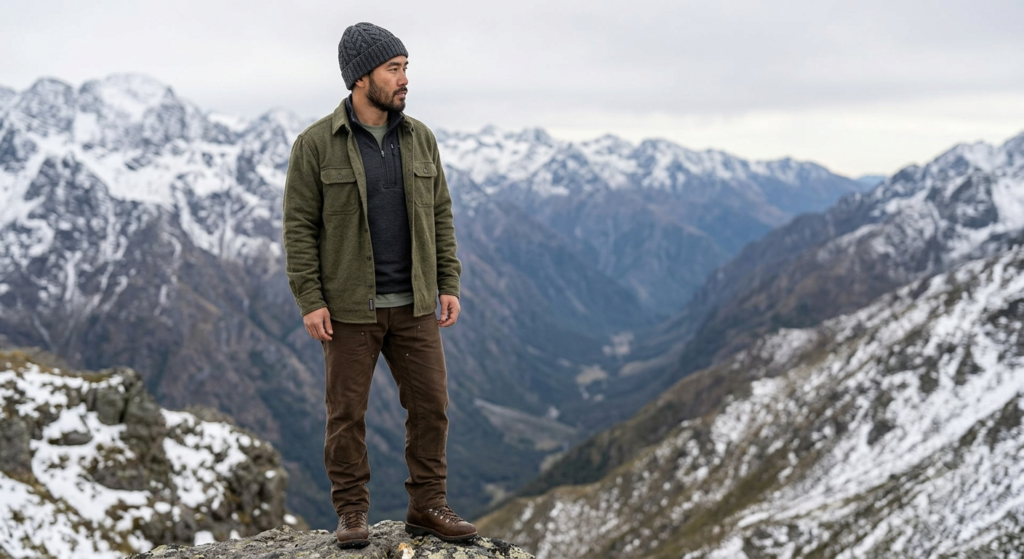
This outfit takes gorpcore’s most fundamental principle — layering for function — and treats it as the visual centerpiece rather than a practical afterthought. The result is an outfit that looks considered and intentional specifically because the layering system is visible, coherent, and aesthetically unified.
Start with a technical long-sleeve base layer in a merino wool or synthetic blend. Merino base layers — Smartwool, Icebreaker, or budget alternatives from brands like Minus33 — have a clean, slightly fitted appearance that works as both a thermal layer and a style component. Over that, wear a heavy twill or canvas overshirt in an earth tone: olive, washed tan, or rust. The overshirt worn open over the base layer reveals the technical underlayer and creates that classic gorpcore collar-visible-beneath-layer detail that reads immediately as belonging to the aesthetic.
Below, pair with straight-cut hiking pants or a relaxed cargo in a coordinating tone. The entire outfit should exist within a narrow color family — warm earth tones or cool neutrals, not a mixture of both.
Why it works: The base-layer-under-overshirt combination looks intentional because the technical quality of the base layer elevates what might otherwise be a basic layering combination. It communicates that you understand outdoor gear and have chosen to use it stylishly.
Best colors: A slate blue merino base layer under an olive canvas overshirt with dark khaki pants — cool and warm tones meeting in a way that feels outdoorsy and considered. Or an off-white merino under a camel overshirt with light tan pants — an almost tonal warm palette with lovely visual warmth.
Shoes: Leather hiking boots in tan or brown with visible lugged soles. The rugged boot grounds the otherwise soft layering combination and brings the outfit back to its outdoor roots.
Accessories: A Buff or neck gaiter around the neck adds an immediate outdoor detail. A simple waxed canvas tote or a technical daypack completes the utilitarian look.
Season: Fall and early spring, when layering is both functional and visually appropriate.
Common mistake: Wearing the overshirt buttoned up. The entire point of this outfit is the visible base layer beneath. A buttoned overshirt becomes a regular shirt and the layering narrative disappears entirely.
9. The Gorpcore Puffer Coat and Slim Technical Pant Winter Build
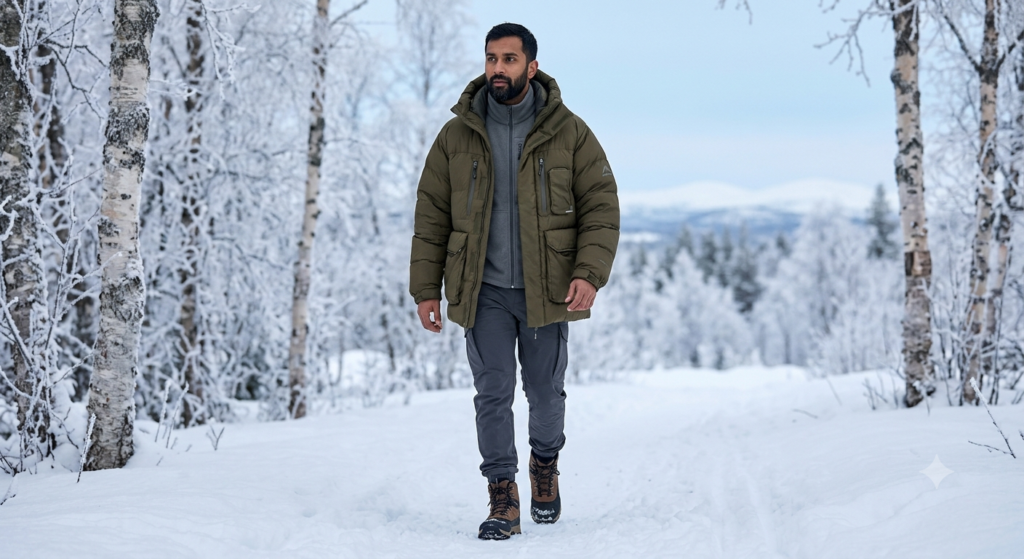
Winter gorpcore has a specific silhouette challenge: heavy outerwear can easily make an outfit look shapeless and incidental rather than intentional. The solution is contrast — a substantial puffer coat or down jacket paired with slimmer technical pants, so the volume on top is balanced by a cleaner line below.
Choose a full-length or 3/4 puffer coat in a bold or distinctive colorway. Winter gorpcore actively embraces color in outerwear — a cobalt puffer, a deep burgundy down jacket, or a saturated orange parka all work within the aesthetic and look far more deliberate than a standard black puffer. Look at brands like Patagonia (Down Sweater or Hi-Loft), The North Face (Nuptse or Himalayan parka), Eddie Bauer, or budget-friendly alternatives from Columbia.
Underneath, the layering system can be fully technical: base layer, fleece midlayer, then the puffer over the top. Below, wear slim or straight technical pants — in dark tones to balance the visual weight of the puffer — with mid-height trail runners or hiking boots.
Why it works: The volume and warmth of the puffer coat is the dominant element, so everything else needs to work quietly and support it rather than compete. A slim technical pant does exactly that — it provides structure and cleanliness below while the puffer creates all the visual interest.
Best colors: A cobalt or deep teal puffer over all-dark-toned layers and black technical pants. Or a saturated orange puffer — which is extremely within the gorpcore winter aesthetic — over grey and charcoal layers.
Shoes: A waterproof winter hiking boot with a substantial sole. Salomon X Ultra Winter, Merrell Moab 3 Mid Waterproof, or Sorel Kinetic Impact mid-boots are all appropriate and authentically gorpcore in construction.
Accessories: A wool beanie. A neck gaiter or Buff. Insulated waterproof gloves for genuine cold-weather wear. G-Shock watch on the wrist. This is the outfit where full outdoor-kit accessories make the most functional and aesthetic sense.
Season: Deep winter. The full puffer coat over a layering system is a genuinely cold-weather build. It’s also the one gorpcore outfit that can be genuinely practical in challenging winter conditions.
Common mistake: Wearing the puffer coat unzipped in genuinely cold weather to try to show the layers beneath. When it’s cold enough for a winter puffer, zip it up. The outfit still reads as gorpcore — the boot, the beanie, and the overall aesthetic communicate the intention clearly.
10. The Relaxed Gorpcore Editorial Fit
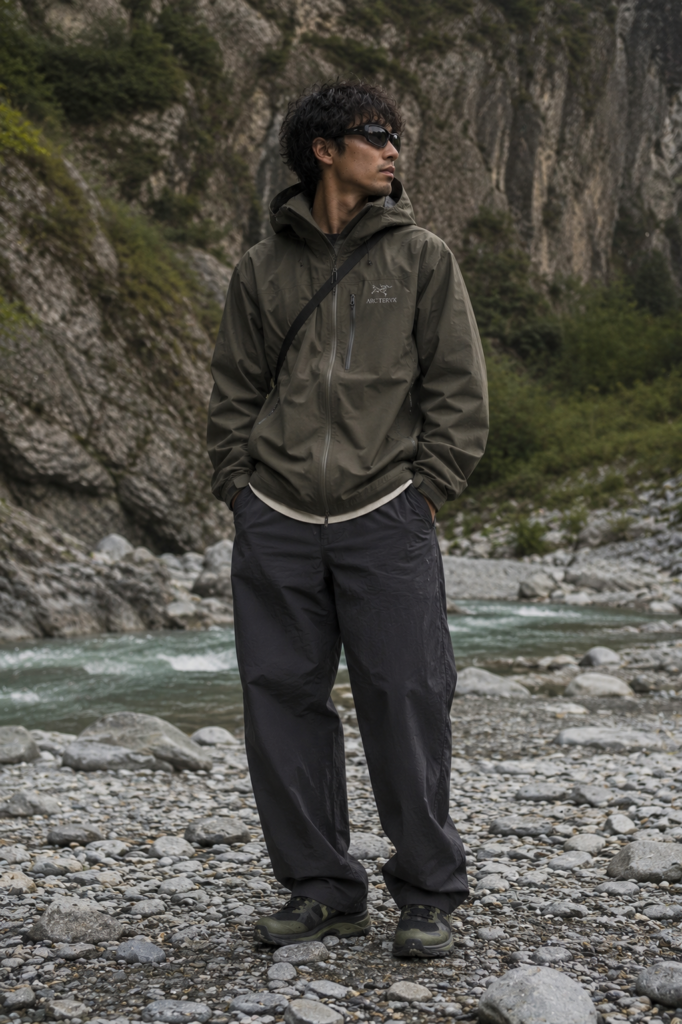
Gorpcore’s most sophisticated expression is also its most unexpected: when outdoor performance gear is worn against unexpected silhouettes or in contexts that deliberately subvert the utilitarian function. This outfit is that — a deliberately editorial take on the aesthetic that takes the best visual elements of gorpcore and applies them to a more relaxed, fashion-influenced silhouette.
Build around a contrast: wide-leg trousers in a technical fabric — ripstop nylon or a stretch-woven outdoor pant — in a rich earth tone. Over a plain tee or a fitted long-sleeve, wear a lightweight technical jacket in a significantly contrasting color. Then add unexpected details: a trekking sandal instead of a heavy boot, a technical crossbody harness bag instead of a standard backpack, and a visible base-layer or knit collar beneath the jacket.
The goal is to look like someone who understands both outdoor gear and fashion, and has the confidence to mix them on their own terms.
Why it works: This version of gorpcore demonstrates the aesthetic’s range — it’s not exclusively about looking like you’re about to hike. At its highest expression, gorpcore is about taking the visual language of outdoor performance gear and using it as a creative palette. The wide-leg trousers and unexpected footwear choice signal fashion awareness; the technical jacket and harness bag keep it honest.
Best colors: Forest green technical jacket, wide-leg stone trousers, and cream base layer visible at the collar. Or a slate blue lightweight jacket over wide-leg tan pants with a white tee — a cleaner, slightly more urban take on the same formula.
Shoes: Trekking sandals in warm weather, or a sleek technical low-top with minimal styling in cooler temperatures. The footwear is a deliberate choice here — not the heaviest boot or the most aggressive trail runner, but something that adds a considered, fashion-forward note.
Accessories: A chest rig or harness bag is the signature gorpcore editorial accessory — worn over the jacket, it adds visual structure and unmistakable outdoor character. Keep the rest minimal.
Season: Spring and summer primarily, when the lighter layering and sandal option are both appropriate.
Common mistake: Over-styling this outfit. The editorial gorpcore look works because of its restraint. Adding too many competing elements — multiple accessories, conflicting silhouettes, too many prints — breaks the intentional, deliberate quality that makes this fit work.
Final Thoughts on Gorpcore Style
What makes gorpcore endure when other trend-adjacent aesthetics fade quickly is that it’s built on something real. The clothes work. They keep you warm, dry, and comfortable in conditions where most fashion-first pieces would fail. The gorpcore guy isn’t performing outdoor preparedness — he genuinely might need that shell jacket to be waterproof, those boots to have traction, and that base layer to manage sweat on a cold morning.
That authenticity is the aesthetic’s defining quality. The best gorpcore outfits are the ones where every piece has been chosen with some awareness of its actual function — and where the styling choices layer on top of that function rather than replacing it.
A few principles to carry into your own gorpcore wardrobe-building: Invest in footwear first — a pair of genuine trail runners or proper hiking boots does more gorpcore work than any other single piece. Embrace color in your outerwear — earth tones form the backbone, but bold fleeces, vibrant puffers, and colored shells are deeply part of the aesthetic. Don’t overlook secondhand outdoor gear — Patagonia, The North Face, and Arc’teryx pieces are widely available on resale platforms in excellent condition, often at a fraction of retail. And finally, layer with purpose. The best gorpcore outfits look like they were layered because the conditions demanded it — not because the wearer was trying to show off every piece they own.
The trail and the street have always had more in common than fashion wanted to admit. Gorpcore just made that obvious.
Frequently Asked Questions
What exactly is gorpcore fashion? Gorpcore is a menswear aesthetic that takes outdoor performance gear — technical shells, hiking boots, trail runners, fleece midlayers, cargo pants — and wears it in urban, everyday contexts as a style statement. The name comes from GORP (Good Old Raisins and Peanuts), a classic hiking snack, and the aesthetic grew out of a broader appreciation for the visual language of brands like Arc’teryx, Patagonia, Salomon, and The North Face. At its core, gorpcore values function, durability, and authenticity over traditional fashion signifiers.
What are the essential gorpcore brands? The core gorpcore brand ecosystem includes Arc’teryx (shells and technical midlayers), Patagonia (fleeces and responsible outdoor gear), Salomon (trail runners and hiking shoes), The North Face (puffers and technical outerwear), Merrell (hiking boots), and Hoka (trail running shoes). More accessible gorpcore-adjacent brands include Columbia, REI Co-op, Fjällräven, and Montane. For budget-friendly gorpcore, secondhand outdoor gear from any of the premium brands often costs the same or less than new budget alternatives.
What shoes are most associated with gorpcore? The Salomon XT-6 and Speedcross trail runners have become the gorpcore shoes of record — they appear in virtually every significant gorpcore editorial and are worn by the aesthetic’s most visible practitioners. Hoka Speedgoat and Clifton Trail are strong alternatives. For boot-forward gorpcore, Salomon X Ultra Mid, Merrell Moab Speed Mid, and Danner Trail 2650 are all well-regarded. Trekking sandals from Chaco or Keen are appropriate for summer gorpcore specifically.
Is gorpcore only for outdoorsy men? Not at all — and that’s one of the reasons it’s become so broadly appealing. You don’t need to hike, trail run, or camp to wear gorpcore. The aesthetic is about the visual language and values of outdoor performance gear, not about actually participating in outdoor sports. That said, the aesthetic rewards genuine outdoor gear with real functional credentials, so buying cheap fashion imitations of technical outdoor pieces tends to produce a less convincing result than buying genuine outdoor gear.
How do I start building a gorpcore wardrobe on a budget? Start with footwear — a pair of Salomon trail runners or genuine hiking boots is the single highest-impact gorpcore investment you can make. Second, look for technical outerwear secondhand. Patagonia, The North Face, and Arc’teryx pieces are widely available on Depop, Poshmark, ThredUp, and eBay in excellent condition for significantly less than retail. Third, complement with budget outdoor brands — Columbia, REI Co-op house brand, and even some Decathlon pieces (Quechua) deliver genuine outdoor construction at accessible price points.
What’s the difference between gorpcore and general outdoor fashion? General outdoor fashion borrows visual cues from outdoor gear — lug-sole boots, cargo silhouettes, earthy tones — without necessarily using genuine performance gear. Gorpcore specifically prizes authentic outdoor performance products: gear that is actually waterproof, actually insulated, actually built for technical use. The difference matters aesthetically too — real outdoor gear has a quality of construction (seam taping, ripstop fabrics, genuine Gore-Tex membranes) that fashion imitations don’t replicate, and that authenticity shows.
Can gorpcore work for shorter or more compact men? Yes, with some proportional adjustments. For shorter men, avoid very oversized or very long outerwear — a 3/4 or full-length puffer coat can overwhelm a shorter frame. Opt instead for hip-length shells and fleeces that sit cleanly at the hips. Straight-leg rather than wide-leg trousers in tapered technical pants will maintain a cleaner vertical line. Trail runners rather than heavy ankle boots can also help keep the proportions balanced.
What accessories are most gorpcore? A Casio G-Shock watch is probably the single most in-theme gorpcore accessory — it’s functional, durable, and worn by outdoor enthusiasts and stylish men equally. A technical daypack or chest harness bag adds both utility and visual character. A beanie in a tonal or contrasting color is a natural gorpcore head-covering. Neck gaiters, Buffs, and technical ball caps with UPF ratings all fit within the aesthetic. Keep jewelry minimal — gorpcore doesn’t particularly do heavy accessory stacking.
How do earth tones fit into gorpcore color theory? Earth tones form the foundation of gorpcore’s color palette — olive, stone, camel, rust, khaki, and forest green all feel immediately at home in the aesthetic because they reference the natural environments that outdoor gear is designed for. But gorpcore doesn’t exclusively live in earth tones. Bold technical colorways — cobalt, teal, orange, and saturated blues — are common in performance gear and are fully part of the aesthetic, particularly in outerwear. The principle is that colors should feel like they belong on a trail or a mountain rather than on a fashion runway.
Is gorpcore still relevant or has it peaked? As of 2026, gorpcore has moved well past trend status into a more established menswear category. The trail runner as a fashion silhouette is now fully normalized. Technical outerwear is carried by major fashion retailers that wouldn’t have stocked it a decade ago. The aesthetic’s core brands — Arc’teryx, Patagonia, Salomon — have all collaborated with high-fashion houses, cementing the crossover. Rather than peaking and fading, gorpcore appears to be integrating into the broader menswear vocabulary in the way that streetwear did before it — becoming a lasting reference point rather than a moment.
Read also: