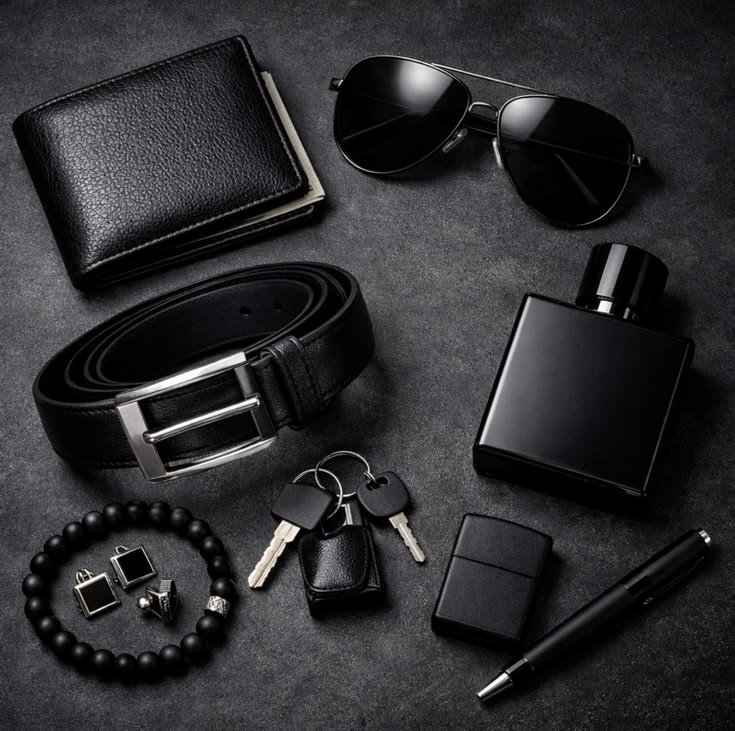
11 Accessories That Make a Basic Outfit Look Intentional
You’ve got the outfit basics down — a plain t-shirt, well-fitted jeans, clean sneakers. It’s fine. It’s not wrong. But it also doesn’t look like you thought about it, even if you did. That’s the gap accessories are built to close.
A lot of men skip accessories entirely, either because they feel unnecessary or because the idea of “accessorizing” sounds like something outside their comfort zone.
But the truth is, the difference between an outfit that looks like a uniform and one that looks styled often comes down to one or two small, well-chosen details — not an entirely different outfit.
This guide covers 11 accessories that consistently do the most work with the least effort, why each one matters, and exactly how to use it without overdoing it — because the line between “intentional” and “trying too hard” is real, and it’s worth understanding before you start adding pieces.
Quick Reference: Accessory Impact vs. Effort
| Accessory | Effort to Style | Visual Impact |
|---|---|---|
| Watch | Very low | High |
| Belt | Very low | Medium-High |
| Quality bag or backpack | Low | Medium |
| Sunglasses | Very low | Medium-High |
| Simple bracelet or ring | Very low | Low-Medium |
| Scarf | Medium | High (seasonal) |
| Hat | Medium | Medium-High |
| Socks (visible) | Low | Low-Medium |
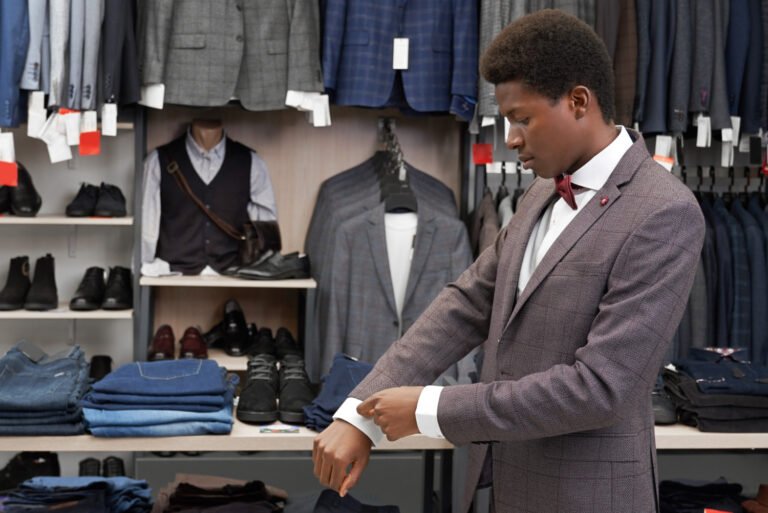
| Pocket square (formal wear) | Medium | Medium (formal only) |
| Tie or knit tie | Medium | High (formal only) |
| Simple necklace or chain | Low | Low-Medium |
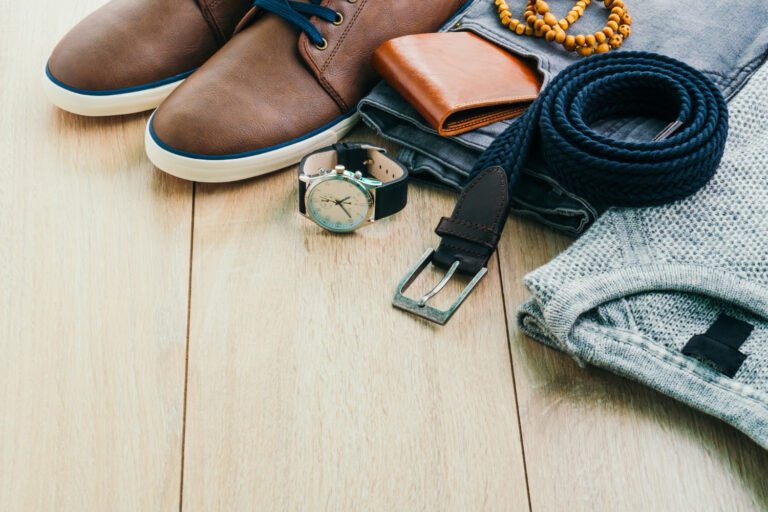
1. A Well-Chosen Watch
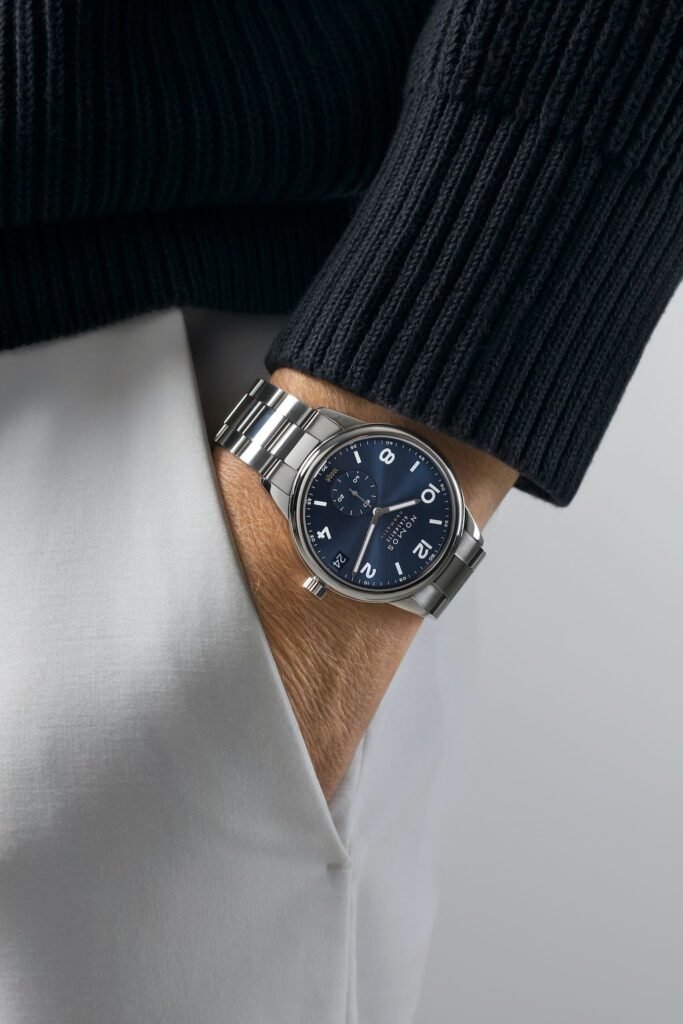
What it is: A wristwatch — analog, simple, and proportionate to your wrist — worn as both a functional and aesthetic piece.
Why it matters: A watch is one of the few accessories that works across nearly every formality level, from a t-shirt-and-jeans outfit to a full suit, as long as the style is matched appropriately. It also draws the eye to a specific, deliberate point, which reads as put-together in a way that’s hard to replicate with clothing alone.
Why beginners overlook it: Since phones tell time, many men see watches as purely decorative or unnecessary, missing that the primary value here is aesthetic and stylistic rather than functional.
Common mistakes:
- Wearing an oversized, chunky sports watch with formal or business attire, where it visually clashes.
- Choosing a watch face too large or too small for your wrist, throws off proportion.
How to wear it correctly: For everyday and business casual wear, a simple analog watch with a leather or metal band in a neutral tone works with almost everything. Save sport or digital watches for genuinely athletic or casual contexts.
Budget-friendly alternative: A simple, well-proportioned quartz watch from an affordable brand does the same visual job as an expensive mechanical one for everyday styling purposes — the design and fit on your wrist matter more than the mechanism inside.
Situations where it works best: Business casual offices, dates, and any outfit where you want a small, deliberate focal point.
Situations where it may not work: Very casual athletic or gym settings, where a sport-specific watch (if any) makes more sense.
Key takeaway: A simple, well-fitted watch is one of the highest-impact, lowest-effort accessories a man can wear.
2. A Matching Leather Belt
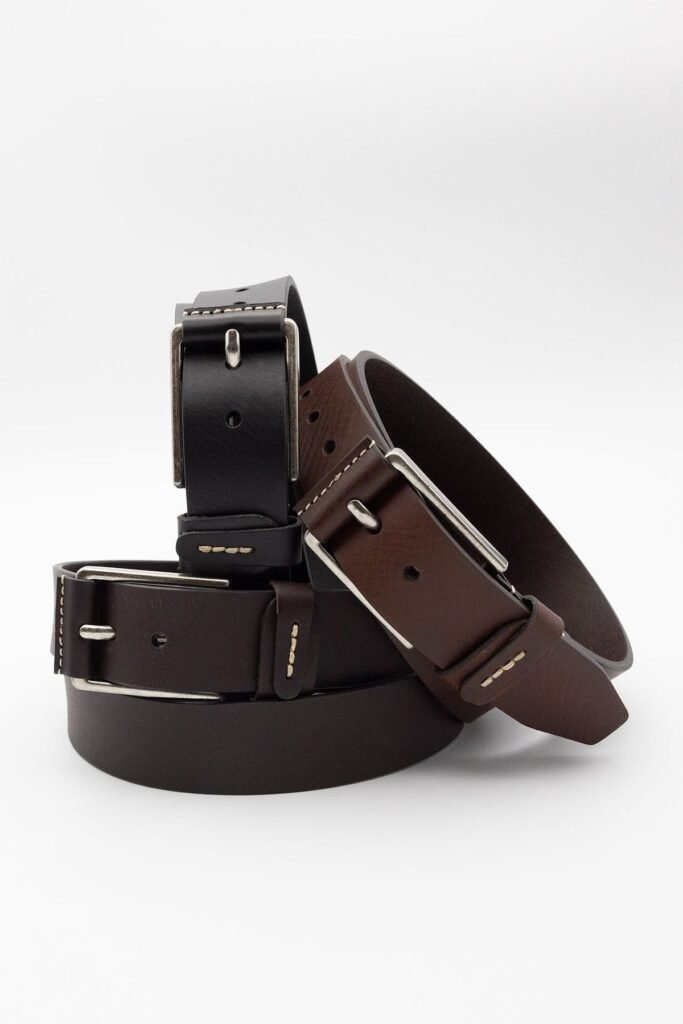
What it is: A belt in a leather tone that matches (or closely coordinates with) your shoes — typically black or brown, in a simple, low-shine leather.
Why it matters: As covered in fit and coordination fundamentals, a matching belt and shoe combination creates visual consistency that reads as planned rather than accidental. It’s a small detail, but it’s one that stands out immediately when it’s wrong.
Why beginners overlook it: Belts are often bought once, in whatever color is available, and then worn with every outfit regardless of the shoes — since the belt itself feels “hidden” under a shirt or jacket, its coordination with the shoes gets overlooked.
Common mistakes:
- Wearing a black belt with brown shoes, or vice versa, without matching leather tones.
- Choosing a belt with heavy, flashy hardware that clashes with an otherwise simple outfit.
How to wear it correctly: Keep two belts on hand — one black, one brown — and match each to your shoe choice for the day. Keep the buckle simple and understated for most everyday and business casual settings.
Budget-friendly alternative: A basic leather or leather-look belt in black and brown from any mainstream retailer covers this need completely — the coordination matters far more than the price.
Situations where it works best: Any outfit involving trousers, chinos, or jeans with a visible belt loop and waistband.
Situations where it may not work: Outfits with elastic-waist joggers or sweatpants, where a belt isn’t functionally or stylistically necessary.
Key takeaway: Matching your belt to your shoes is a five-second decision with an outsized effect on how coordinated your outfit looks.
Read also: 15 Style Mistakes Every Man Makes Before He Learns to Dress Well
3. A Quality Bag or Backpack
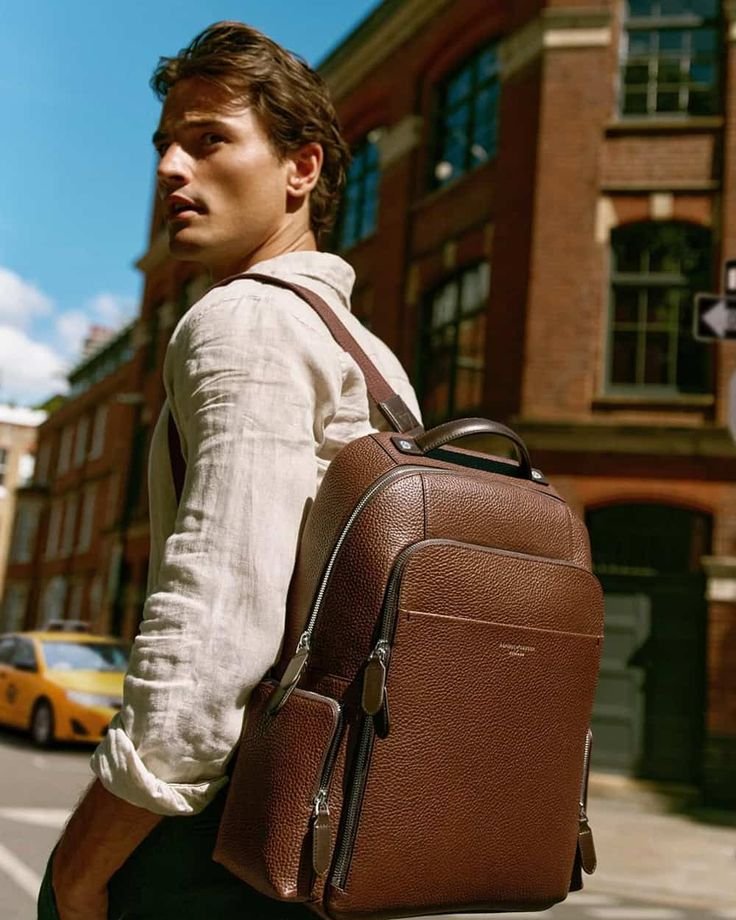
What it is: A structured, simple bag — a leather or canvas backpack, a messenger bag, or a minimal tote — used for carrying essentials instead of an oversized, logo-heavy, or overly sporty option.
Why it matters: A bag is often one of the most-seen accessories throughout the day, especially for commuting, work, or school, yet it’s frequently chosen purely for storage capacity without any consideration of how it looks with the rest of the outfit.
Why beginners overlook it: Bags are functional by necessity, so the aesthetic side often gets deprioritized entirely — the first bag that fits a laptop and looks “fine” tends to become the permanent choice.
Common mistakes:
- Carrying a heavily branded, oversized athletic backpack with business casual or smart casual outfits, creating a formality mismatch.
- Choosing a bag with bright, clashing colors that don’t coordinate with the rest of a typically neutral wardrobe.
How to wear it correctly: Choose a simple, structured bag in a neutral tone (black, brown, navy, olive) that scales appropriately to what you actually carry daily. Match the bag’s material loosely to your shoes when possible — a leather bag with leather shoes, a canvas bag with more casual sneakers.
Shopping Tip: A slightly more structured bag (rather than a soft, shapeless one) tends to read as more intentional and put-together, even in a fully casual outfit.
Situations where it works best: Commuting, work, school, and travel.
Situations where it may not work: Formal events, where carrying a bag at all is often unnecessary or impractical.
Key takeaway: A simple, neutral, appropriately scaled bag pulls double duty as both function and style — don’t treat it as purely utilitarian.
4. Sunglasses That Suit Your Face Shape
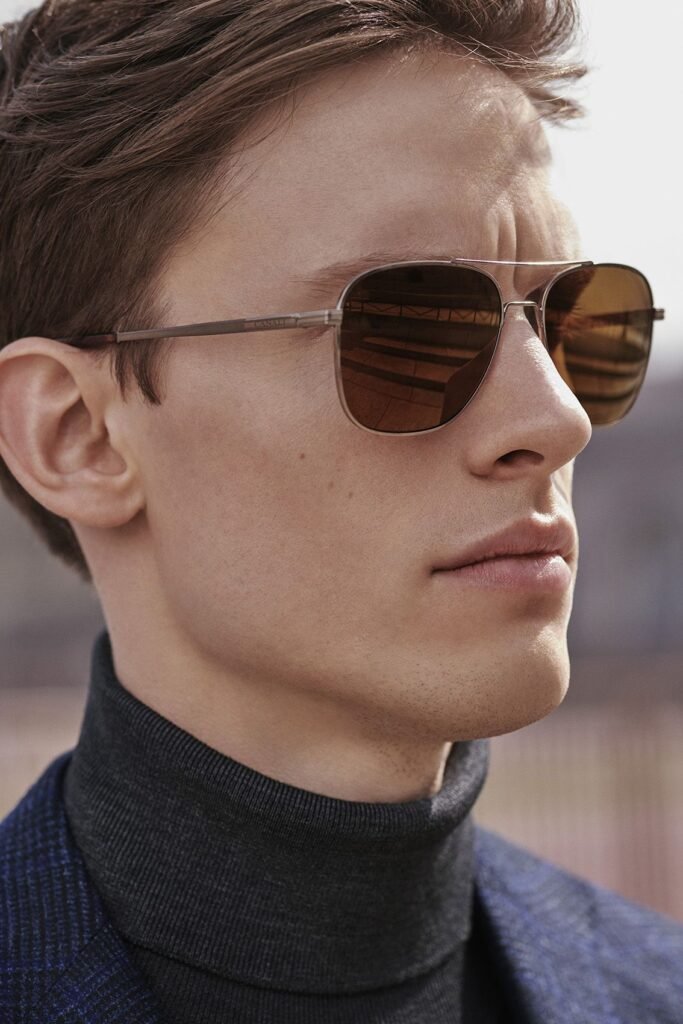
What it is: A pair of sunglasses chosen specifically for how the frame shape complements your face, rather than whatever’s cheapest or most trend-driven at the moment.
Why it matters: Sunglasses sit directly on the most-noticed part of your body — your face — making them one of the highest-impact accessories available, for better or worse, depending on the fit.
Why beginners overlook it: Sunglasses are often bought quickly and cheaply as a practical necessity (blocking sun) rather than as a considered style choice, resulting in a frame shape that doesn’t actually suit the wearer’s face.
Common mistakes:
- Choosing an overly small or overly large frame relative to your face size, which throws off facial proportions.
- Owning only one pair in a very specific, trend-driven shape that doesn’t work with a range of outfits or occasions.
How to wear it correctly: As a general guide, rounder faces often suit more angular frames, while more angular faces often suit rounder frames — the goal is contrast with your natural face shape rather than matching it exactly. Try a few shapes in person if possible before committing.
Budget-friendly alternative: A simple, well-fitted pair from an affordable retailer performs the same styling function as an expensive designer pair — frame shape and proportion matter far more than the brand name.
Situations where it works best: Outdoor casual outings, travel, and everyday summer wear.
Situations where it may not work: Indoor formal events, where sunglasses (worn indoors) typically read as impractical rather than stylish.
Key takeaway: The right sunglasses shape for your face does more for your appearance than the price tag ever will.
5. A Simple Bracelet or Ring
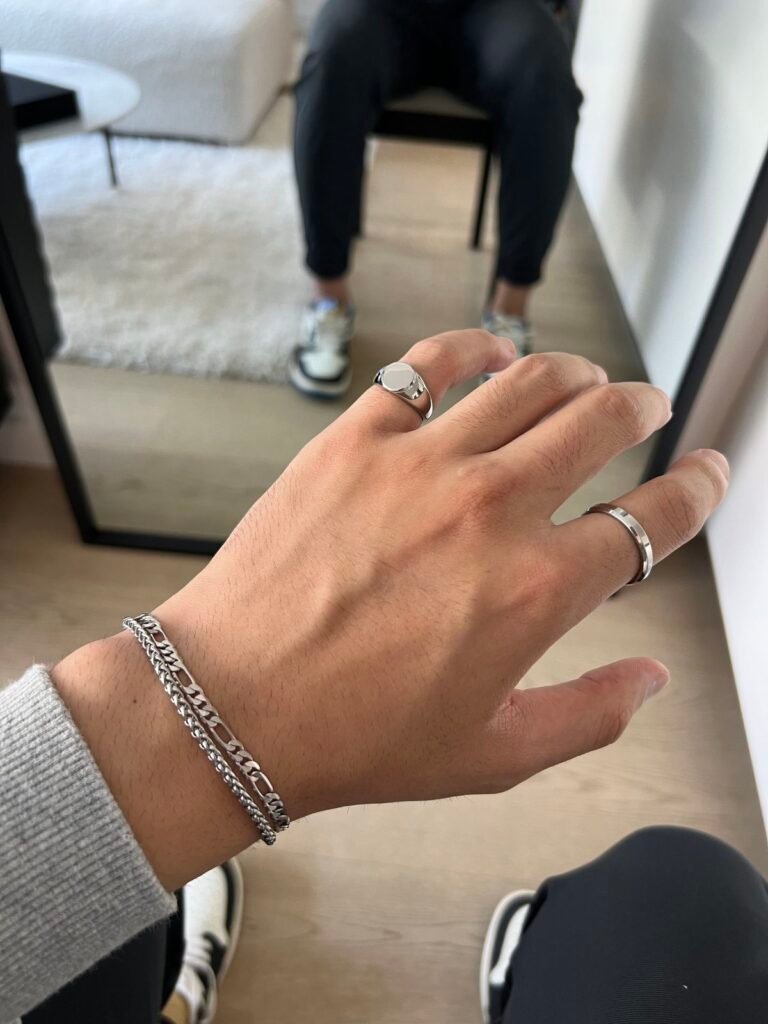
What it is: One understated bracelet (leather, beaded, or simple metal) or ring, worn as a small, personal detail rather than a statement piece.
Why it matters: Small jewelry pieces add a subtle sense of personality and intentionality to an outfit without requiring any change to the clothing itself — they’re one of the lowest-effort ways to make a basic outfit feel more “yours.”
Why beginners overlook it: Jewelry can feel like unfamiliar territory for men who’ve never worn any, leading to either avoiding it entirely or, at the other extreme, overdoing it once they start.
Common mistakes:
- Wearing several mismatched bracelets or rings at once, which can look cluttered rather than intentional.
- Choosing overly flashy, attention-grabbing pieces that compete with the rest of a simple outfit instead of complementing it.
How to wear it correctly: Start with one piece — a simple leather or beaded bracelet, or a plain band ring — in a tone that coordinates with your watch or other metal accessories (silver-toned with silver, gold-toned with gold).
Confidence Tip: One well-chosen piece reads as more deliberate and confident than several competing ones — restraint here works in your favor.
Situations where it works best: Casual and smart casual outfits, everyday wear.
Situations where it may not work: Very formal settings, where minimal or no visible jewelry beyond a watch is typically more appropriate.
Key takeaway: One simple, well-chosen piece of jewelry adds personality without adding visual clutter.
6. A Scarf for Cooler Weather
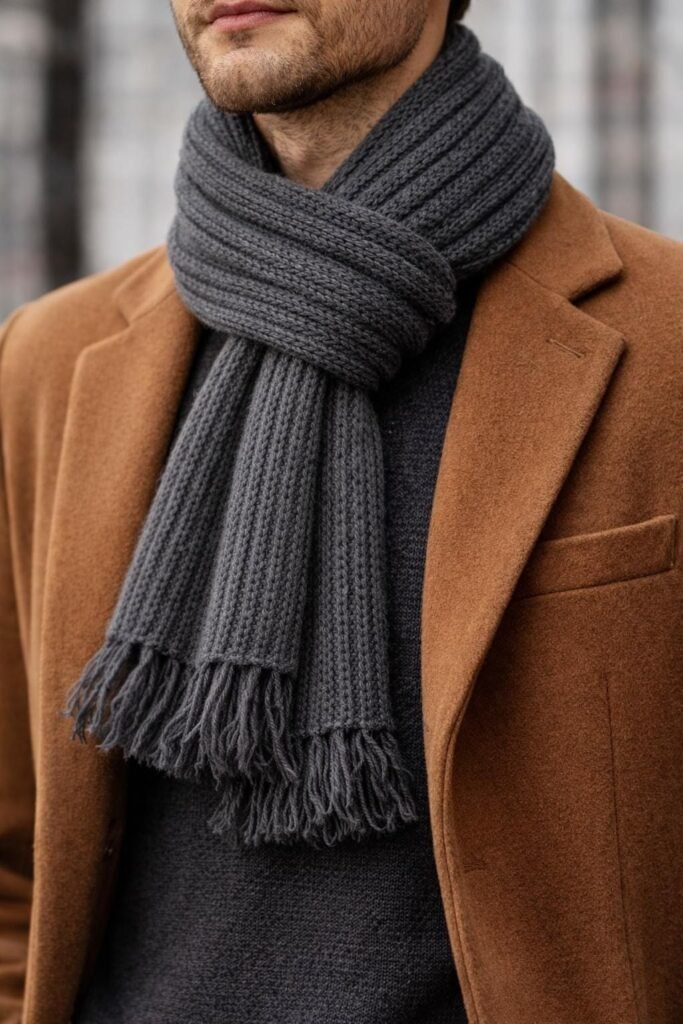
What it is: A simple, solid or subtly patterned scarf worn with outerwear in cold or transitional weather — wool, cotton, or a soft blend.
Why it matters: A scarf adds both function (warmth) and a clear style upgrade, since it introduces texture and, if chosen well, a coordinated color accent right at eye level, near the face — one of the most-noticed areas of any outfit.
Why beginners overlook it: Scarves can feel like an unfamiliar or overly formal accessory to men who’ve never worn one regularly, so they default to going without, even in weather where a scarf would genuinely help both warmth and style.
Common mistakes:
- Choosing a scarf in a color or pattern that clashes with the rest of the outfit rather than coordinating with it.
- Wrapping it in an overly complicated way that looks fussy rather than natural — a simple loop or drape is usually more effective for everyday wear.
How to wear it correctly: Choose a solid neutral (gray, navy, charcoal, camel) or a subtle texture as your first scarf — it’s the most versatile and hardest to get wrong. A simple loop around the neck, tucked loosely into a coat, works for most casual and business casual settings.
Seasonal Tip: Scarves are especially effective in the color-limited months of deep winter, where most outerwear defaults to black, gray, or navy — a scarf is an easy way to introduce a bit of visual warmth without overhauling your whole coat collection.
Situations where it works best: Cold-weather commuting, casual and business casual outerwear, travel.
Situations where it may not work: Indoor settings (should generally be removed once inside) and warm-weather outfits.
Key takeaway: A scarf adds function and visual interest at exactly the point people look first — near your face.
7. A Hat That Fits Your Head and Your Outfit
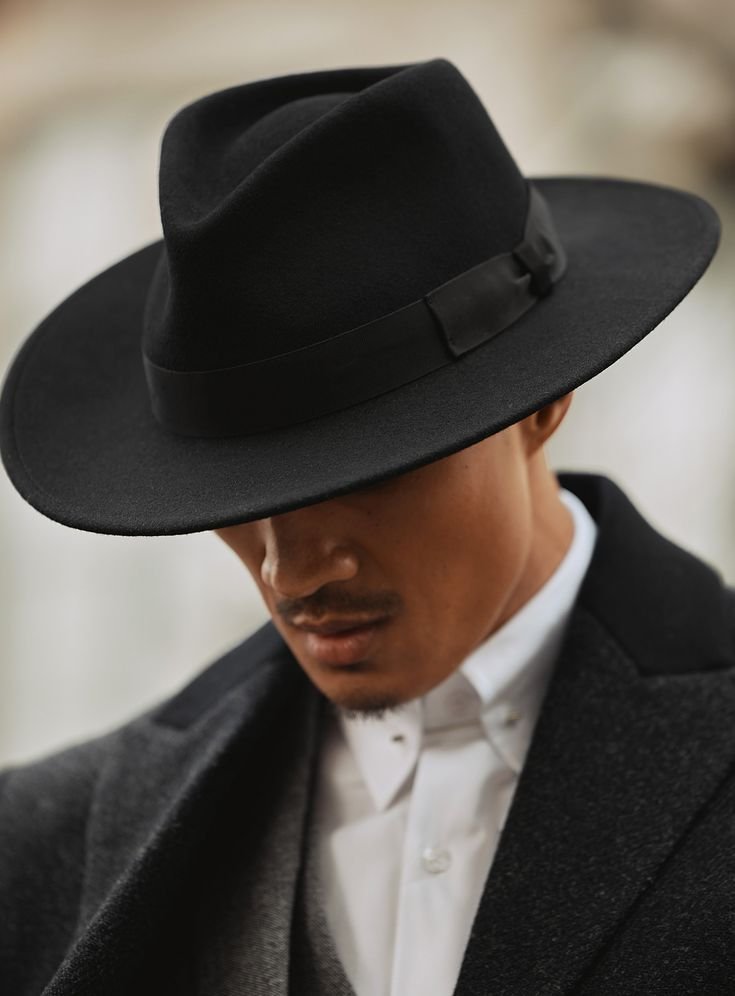
What it is: A well-proportioned hat — a baseball cap for casual outfits, a beanie for cold weather, or a structured hat for smarter occasions — chosen to fit both your head size and the outfit’s overall formality.
Why it matters: A properly fitting hat is functional (sun or cold protection) and can add a clear style element, but an ill-fitting or mismatched one is one of the fastest ways to undercut an otherwise solid outfit.
Why beginners overlook fit here specifically: Hats are often bought in a single generic size or grabbed as an afterthought, without checking that the fit is snug but not tight, and appropriate for the shape of the wearer’s head and face.
Common mistakes:
- Wearing a heavily branded, oversized baseball cap with business casual or smart casual outfits, creating a formality mismatch.
- Choosing a beanie that sits too high on the head (unless intentionally styled that way) or too loose, losing its shape.
How to wear it correctly: Match the hat’s formality to the outfit — a simple baseball cap with casual weekend wear, a fitted beanie with cold-weather casual outfits, and a more structured hat only in settings where it genuinely fits the overall look.
Budget-friendly alternative: A simple, unbranded or subtly branded cap or beanie in a neutral color works across more outfits than a heavily logoed or trend-specific option.
Situations where it works best: Casual outdoor settings, cold weather, sun protection, and relaxed weekend outfits.
Situations where it may not work: Business casual offices and formal events, where hats are typically not appropriate to wear indoors or as part of the outfit.
Key takeaway: A hat should be chosen for the outfit’s formality level, not just for warmth or sun protection alone.
8. Socks That Are Actually Chosen, Not Random
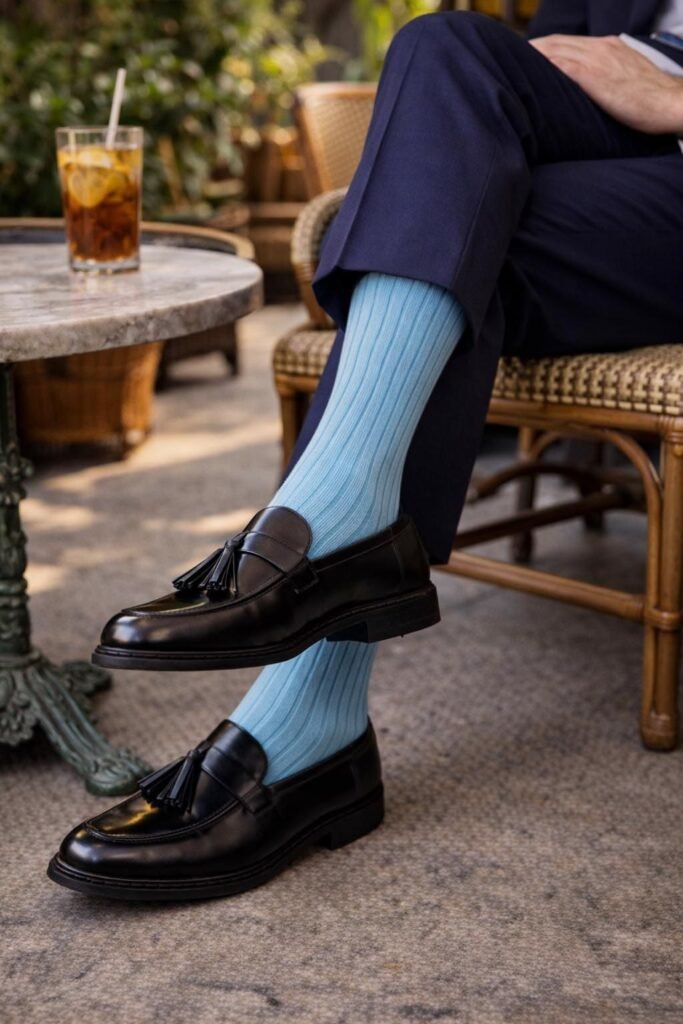
What it is: Socks selected deliberately to either match your trousers (for a seamless leg line in dressier outfits) or coordinate with your sneakers and overall outfit (for casual settings).
Why it matters: Socks become visible when you sit, cross your legs, or the wind catches a trouser hem — a mismatched or overly casual sock choice in that moment can undercut an otherwise sharp outfit.
Why beginners overlook it: Socks feel invisible day-to-day, so they’re frequently grabbed at random from a drawer rather than chosen with any intention.
Common mistakes:
- Wearing white athletic socks with dress shoes and tailored trousers.
- Wearing loud, novelty-patterned socks in settings that call for a more polished, subtle look.
How to wear it correctly: For dressier outfits, match socks to your trouser color, or occasionally your shoe color, for a clean, unified line. For casual outfits with sneakers, simple no-show or low-cut socks in neutral tones work best.
Shopping Tip: Buy socks in multiples of the same neutral colors so you’re never stuck defaulting to a mismatched pair on a rushed morning.
Situations where it works best: All outfits — this is a detail worth getting right consistently, not just for special occasions.
Situations where it may not work: N/A — this is a low-cost, universally applicable fix.
Key takeaway: Socks are a near-zero-cost detail with an outsized ability to either support or quietly undercut an outfit.
9. A Pocket Square for Formal Occasions
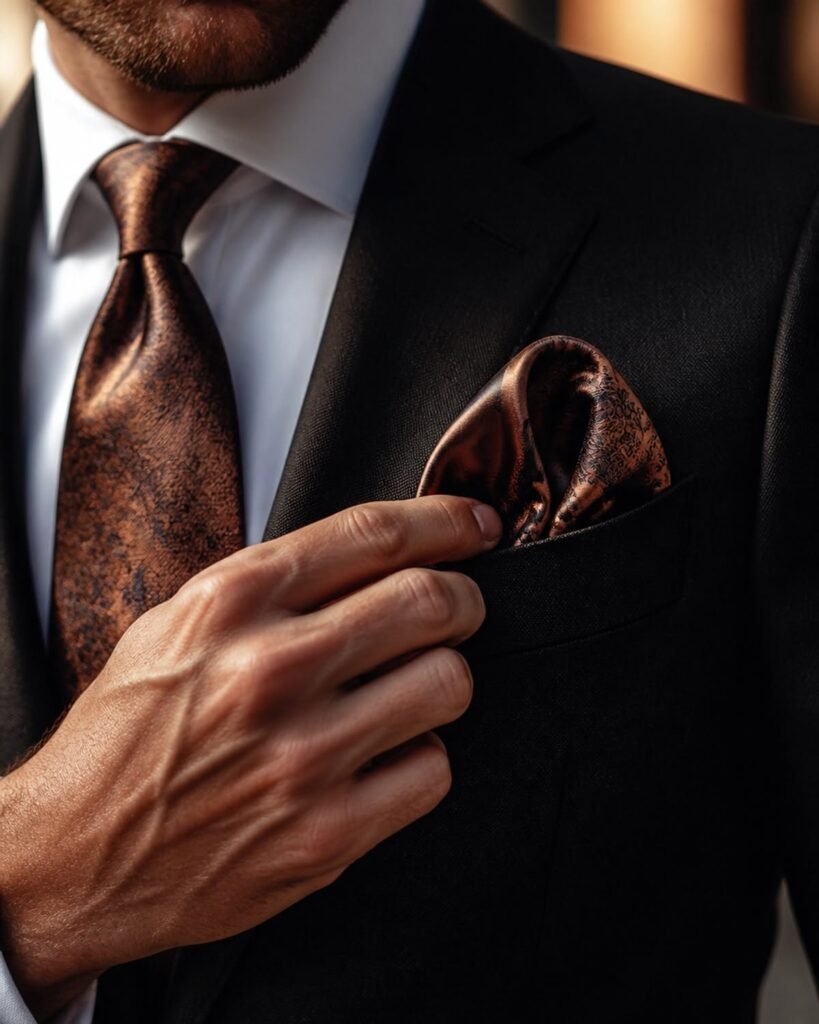
What it is: A small folded square of fabric worn in a suit or blazer’s breast pocket, typically for formal or elevated smart-casual occasions.
Why it matters: A pocket square adds a small but noticeable finishing detail to formal wear, signaling extra attention to detail in exactly the kind of setting where that attention is expected and noticed — interviews, weddings, and formal dinners.
Why beginners overlook it: Pocket squares can feel like an optional, “extra” step that’s easy to skip, especially since a suit or blazer looks complete without one — the addition is subtle rather than essential.
Common mistakes:
- Matching the pocket square exactly to the tie in color and pattern, which looks overly coordinated and “matchy” rather than intentional.
- Folding it too precisely and stiffly for a casual blazer occasion, when a simple, slightly relaxed puff fold often looks more natural.
How to wear it correctly: Choose a pocket square that complements — rather than exactly matches — your tie or shirt, either through a shared color tone or a contrasting texture. A simple straight fold works for formal events; a looser puff fold suits smart casual blazer outfits.
Budget Tip: A single high-quality white linen or cotton pocket square is the most versatile starting point and works with nearly any suit or blazer color.
Situations where it works best: Weddings, interviews, formal dinners, and elevated smart-casual blazer outfits.
Situations where it may not work: Casual outfits without a jacket or blazer, where there’s no breast pocket to use one in the first place.
Key takeaway: A pocket square is a small, optional detail — but in formal settings, it’s exactly the kind of small detail that signals real effort.
10. A Tie or Knit Tie, Chosen With Intention
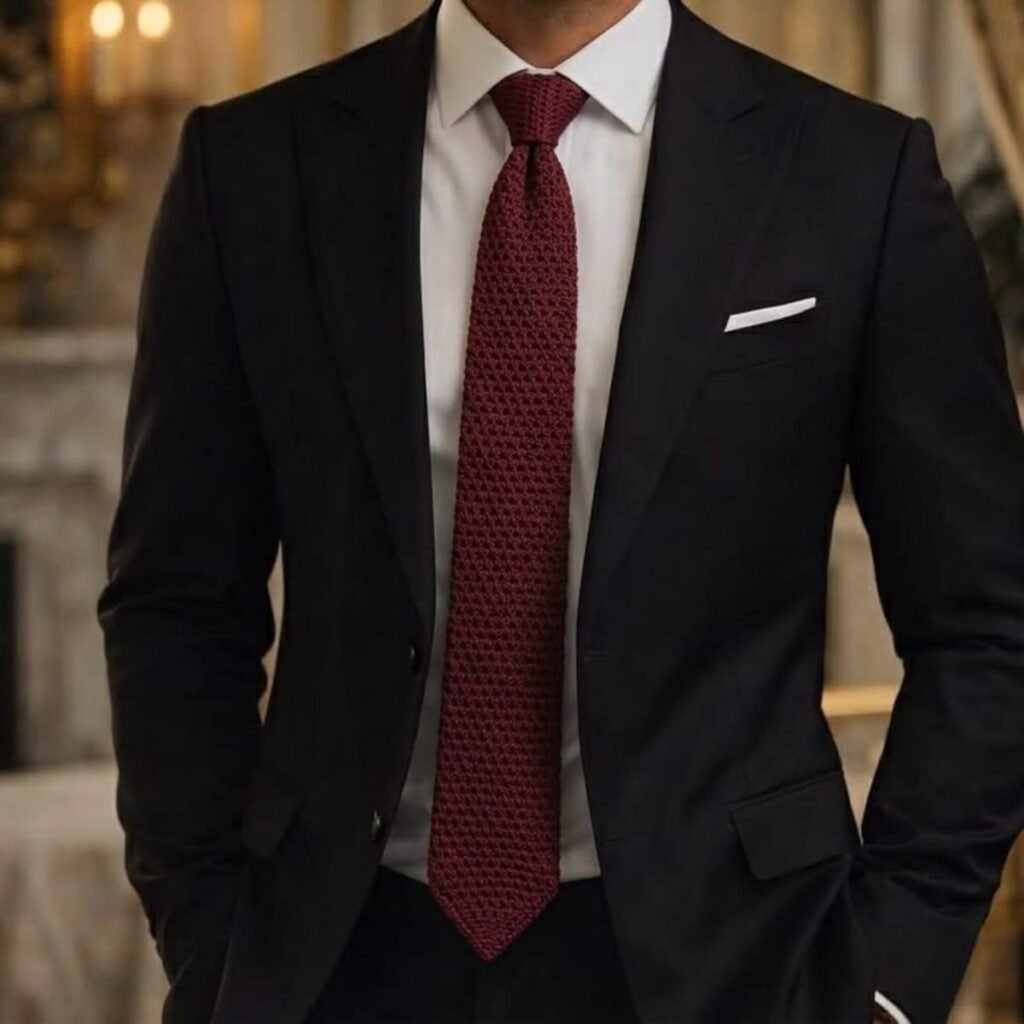
What it is: A necktie (traditional silk or a more casual knit tie) worn with a dress shirt, typically under a blazer or suit jacket, chosen to coordinate with the rest of the outfit rather than clash with it.
Why it matters: A tie remains one of the clearest formality signals in menswear — its presence, color, and pattern communicate a lot about the occasion and how seriously the wearer is taking it.
Why beginners overlook coordination here specifically: Ties are often bought individually and paired randomly with whatever shirt is available that day, without considering how the tie’s color and pattern relate to the shirt and jacket underneath.
Common mistakes:
- Wearing a tie in the exact same pattern or print as the shirt, creating visual competition instead of coordination.
- Choosing an overly wide or overly narrow tie relative to current proportions and your body size, which can look dated or mismatched.
How to wear it correctly: Keep the shirt relatively simple (solid or subtly patterned) if the tie has a bold color or pattern, and vice versa — let one element carry the visual interest, not both simultaneously. A knit tie offers a slightly more relaxed, textured alternative to silk for smart casual settings.
Fit Tip: The tie’s tip should land right at your belt buckle when properly tied — noticeably longer or shorter looks unintentional.
Situations where it works best: Interviews, formal business settings, weddings, and any occasion with an explicit formal dress code.
Situations where it may not work: Casual and most business casual settings, where a tie can actually read as overdressed rather than appropriate.
Key takeaway: A well-coordinated tie signals real effort in formal settings — but knowing when to skip it entirely is just as important as knowing how to wear one.
11. A Simple Necklace or Chain
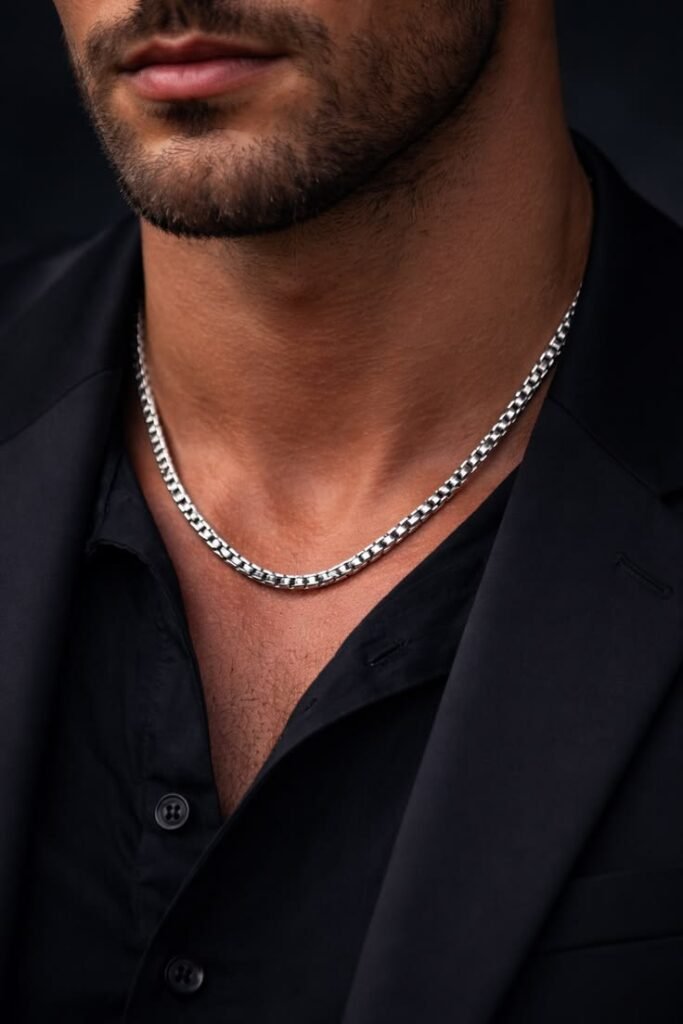
What it is: A thin, understated necklace or chain — silver, gold-toned, or a simple cord — worn as a subtle personal touch rather than a statement piece.
Why it matters: Similar to a bracelet or ring, a simple necklace adds a bit of personality and visual interest to an otherwise plain outfit, particularly with crewneck or v-neck tops where it’s naturally visible.
Why beginners overlook it: Necklaces can feel unfamiliar or unnecessary to men who’ve never worn one, and without a clear sense of how understated it should be, it’s easy to either skip it entirely or overcorrect with something too large or flashy.
Common mistakes:
- Wearing a necklace that’s too thick or ornate for an everyday casual outfit, making it look like a costume piece rather than a subtle accessory.
- Stacking multiple necklaces of different lengths and styles without any coordination, creating visual clutter.
How to wear it correctly: Start with one thin chain or cord in a length that sits comfortably at or just below the collarbone. Match the metal tone to your other accessories (watch, rings) for a cohesive look.
Confidence Tip: A simple, well-chosen necklace works best when it looks like an afterthought — a natural part of your everyday look rather than something added specifically to “accessorize.”
Situations where it works best: Casual and smart casual outfits, particularly with crewnecks, henleys, or open-collar shirts.
Situations where it may not work: Very formal settings with a full suit and tie, where visible neck jewelry is typically minimized or skipped entirely.
Key takeaway: One thin, simple chain adds a personal touch without drawing more attention than the rest of the outfit.
How Many Accessories Is Too Many?
A common beginner mistake, once accessories click, is overcorrecting and adding too many at once — a watch, two bracelets, a necklace, a hat, and sunglasses all in the same outfit. As a general guideline:
- Casual outfits: 1–2 accessories (e.g., watch + bracelet, or hat + sunglasses).
- Business casual outfits: 1–2 accessories, kept understated (watch + belt is often enough).
- Formal outfits: Watch, belt, and — if the occasion calls for it — a tie and pocket square; skip additional jewelry beyond a simple ring or wedding band.
Common Mistake: Wearing every accessory you own at once “to see what sticks” — this almost always reads as cluttered rather than intentional, regardless of how nice each individual piece is.
Budget Strategy for Building an Accessory Collection
Where spending more makes sense: A watch and a leather belt are worn daily and seen up close — investing slightly more here for quality materials and proportion pays off over time.
Where it’s fine to save: Sunglasses, hats, and simple jewelry pieces don’t need to be expensive — fit, proportion, and coordination matter far more than the price tag for these categories.
How to build gradually: Start with a watch and a matching belt (black and brown), since these two alone cover the widest range of outfits. Add sunglasses, a bag, and simple jewelry next, and save formal pieces like a tie and pocket square for when you actually need them for a specific event.
Frequently Asked Questions
1. What’s the single best accessory for a beginner to start with? A simple, well-proportioned watch. It works across nearly every outfit and occasion, and it’s one of the easiest accessories to get right on the first try.
2. How many accessories should I wear at once? Generally one to two for casual and business casual outfits, and up to three or four (watch, belt, tie, pocket square) for formal occasions — more than that usually starts to look cluttered.
3. Do I need to match all my metal accessories? It’s not mandatory, but keeping your watch, rings, and any other metal pieces in the same tone (silver or gold) creates a more coordinated, intentional look.
4. Are accessories only for dressier outfits? No — accessories like a watch, a bracelet, or sunglasses work just as well with a basic t-shirt-and-jeans outfit, often making the biggest visible difference precisely because the outfit itself is simple.
5. What accessories should I avoid as a beginner? Avoid overly large, flashy, or heavily branded pieces at first — they’re harder to coordinate and more likely to look like they’re trying too hard rather than adding a subtle finishing touch.
6. Can I wear a hat with a business casual outfit? Generally, no — hats are typically reserved for casual settings and are usually removed indoors, particularly in business or formal environments.
7. How do I know if my sunglasses actually suit my face? Try a few different frame shapes in person — as a general rule, choosing a frame shape that contrasts with (rather than mirrors) your natural face shape tends to look more balanced.
8. Is it okay for men to wear necklaces and bracelets? Yes — simple, understated jewelry is a widely accepted and common styling choice; the key is keeping pieces thin, minimal, and coordinated rather than large or mismatched.
9. Do I need a pocket square every time I wear a blazer? No — it’s optional. It adds a nice finishing detail for formal occasions specifically, but plenty of smart casual blazer outfits look complete without one.
10. What’s the easiest accessory mistake to fix immediately? Mismatched belt and shoe colors. It’s one of the fastest, cheapest, and most noticeable fixes available — simply owning a black and a brown belt solves it permanently.
11. Should my bag match my shoes? Loosely, yes — matching the general material and tone (leather bag with leather shoes, more casual canvas bag with casual sneakers) creates a more coordinated overall look, though it doesn’t need to be an exact match.
Final Thoughts
Accessories are one of the most efficient ways to make a basic outfit look considered without changing the clothing itself. A watch, a matching belt, and one small personal detail — a bracelet, a simple chain — can turn a plain t-shirt-and-jeans outfit into something that reads as genuinely put-together.
Start small. Add a watch and a matching belt first, since they do the most work for the least effort. Build from there, one accessory at a time, and pay attention to restraint — the goal is one or two well-chosen details, not an accumulation of everything you own at once.
Read also: