10 Wardrobe Essentials Every Beginner Man Needs Before Anything Else
Stand in front of your closet for a second. If it’s full of clothes but you still feel like you have “nothing to wear,” you’re not imagining it — and you’re definitely not alone.
Most guys in this situation don’t actually have a clothing problem. They have a foundation problem.
They’ve bought trendy pieces, one-off items that caught their eye online, or whatever was on sale, without ever building the small set of core pieces that everything else is supposed to connect to.
This happens for a simple reason: nobody ever taught us how to build a wardrobe. We learn how to shave, how to tie a tie (badly), maybe how to iron a shirt — but almost nobody sits a young man down and explains that style isn’t about owning a lot of clothes.
It’s about owning the right clothes, in the right fits, that work together.
This guide fixes that. Below are the 10 wardrobe essentials every beginner man needs before anything else — not trend pieces, not “aesthetic” purchases, but the foundational items that make every other outfit decision easier.
Get these right, in the right fits and colors, and you’ll be able to mix and match your way through interviews, dates, weddings, weekends, and everything in between without ever standing in front of your closet feeling stuck again.
Quick Answer: The 10 essentials are: a well-fitted white t-shirt, a classic white or light-blue dress shirt, dark wash jeans, tailored chinos, a versatile blazer, a neutral crewneck or v-neck sweater, a quality leather belt, white leather sneakers, brown leather dress shoes or boots, and a well-fitted overshirt or jacket. Together, these ten pieces form a capsule wardrobe capable of covering casual, business casual, and smart casual situations.
Why Start With These 10 Pieces (Not More)
Before we get into the list, it helps to understand the logic behind it. A beginner wardrobe isn’t about buying everything at once — it’s about buying pieces that multiply your outfit options instead of just adding to a pile.
Think about it mathematically. If you own five random shirts, three random pants, and two random pairs of shoes that don’t share a color palette, you might technically have 30 possible combinations — but most of them will look wrong.
If instead you own five coordinated pieces that were chosen to work with each other, you get fewer total combinations, but almost every single one of them looks intentional.
That’s the real goal of a capsule wardrobe: fewer decisions, better results. These 10 items were chosen because each one pulls its weight in multiple types of outfits — casual, business casual, and smart casual — rather than being locked into just one context.
1. A Well-Fitted White T-Shirt
What It Is
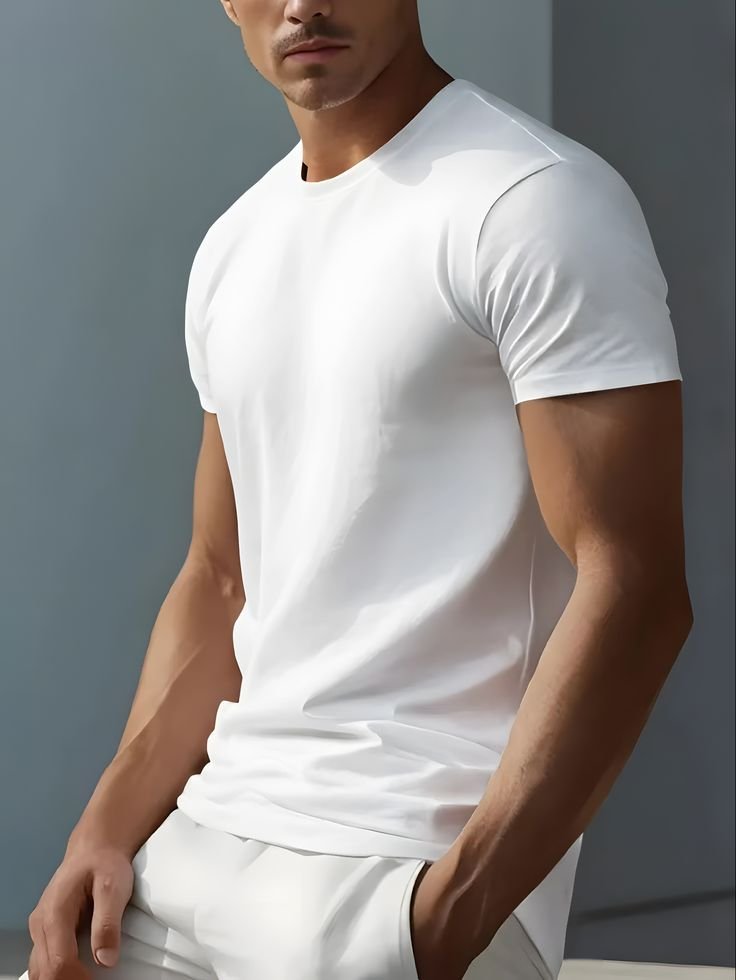
A plain, high-quality white t-shirt in a fit that actually suits your body — not too baggy, not shrink-wrapped.
Why It Matters
The white tee is the most underrated piece in a beginner’s wardrobe because it’s the base layer for almost everything: under a blazer, under an overshirt, on its own with jeans, or layered under a jacket in cooler weather. A cheap, see-through, boxy white tee undercuts every outfit it’s part of. A well-made one elevates all of them.
Why Beginners Overlook It
Most guys assume “a t-shirt is a t-shirt.” They grab a 5-pack from a big-box store and call it done. But fabric weight, collar shape, and fit make a massive visual difference — a thin, stretched-out tee reads cheap even under a $300 blazer.
Common Mistakes
- Buying tees that are too large, creating a shapeless silhouette
- Choosing thin, semi-transparent fabric
- Ignoring the neckline (stretched-out crew necks look worn out fast)
- Only owning off-white or “vintage wash” tees, which look dingy rather than intentional
How to Wear It Correctly
Look for a mid-weight cotton (180–220 GSM) that holds its shape after washing. The shoulder seams should sit right at your shoulder bone, not drooping past it. Length should hit around mid-fly — long enough to tuck if needed, short enough to wear untucked without looking like a nightshirt.
Stylist Tip: Buy two identical white tees — one slightly more fitted for layering under blazers, one with a touch more room for wearing solo.
Budget-Friendly Alternatives
You don’t need a $60 designer tee. Mid-range basics brands often use the same weight cotton as premium labels at a third of the price. Prioritize fit and fabric weight over the logo.
Situations Where It Works Best
Weekend outings, casual Fridays, layering under jackets, travel days, coffee dates.
Situations Where It May Not Work
Formal interviews, weddings, funerals — a plain tee alone reads too casual for these.
Example Outfit
White tee + dark jeans + white sneakers + minimalist watch = an effortless weekend look that took two minutes to put together but looks deliberate.
Key Takeaway: A quality white tee isn’t boring — it’s the quiet foundation that makes louder pieces look better.
2. A Classic White or Light-Blue Dress Shirt
What It Is
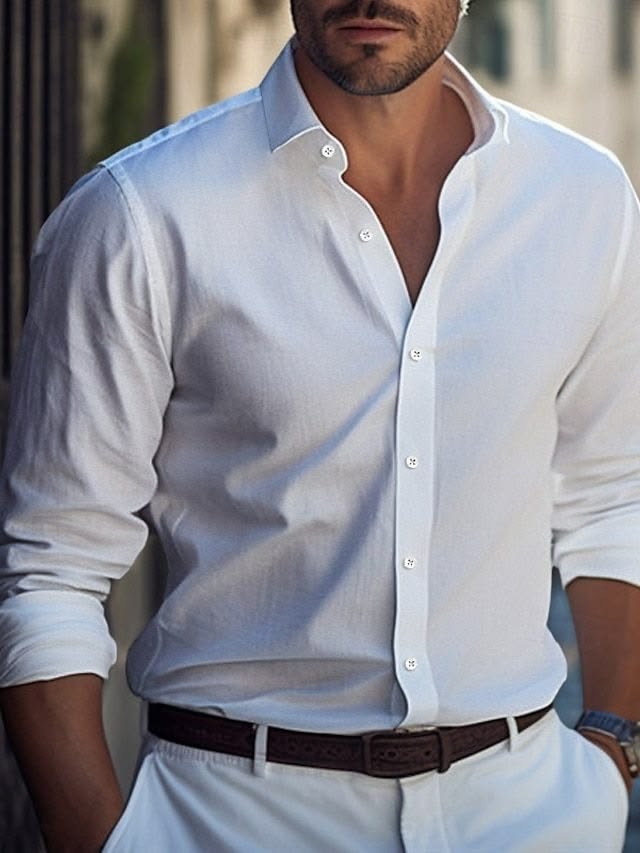
A crisp, well-fitted button-up dress shirt in white or light blue — the two most versatile shirt colors that exist.
Why It Matters
This single shirt can carry you through a job interview, a business casual office, a first date, and even a wedding (under a blazer or sweater). No other single item does as much heavy lifting for “put-together” situations.
Why Beginners Overlook It
Many first-time buyers go straight for patterned or colored shirts because they seem more “interesting.” But patterns are harder to match and quickly narrow your outfit options. A plain white or light-blue shirt matches literally everything you already own.
Common Mistakes
- Buying shirts that are too big in the body, creating a “borrowed from Dad” look
- Ignoring sleeve length (sleeves should end right at the wrist bone)
- Choosing shiny, cheap poly-blend fabric that looks synthetic under light
- Skipping ironing or steaming, which undoes even a perfect fit
How to Wear It Correctly
The shoulder seam should sit exactly on your shoulder — not drooping down your arm, not pulling up toward your neck. There should be slight room to pinch fabric at the chest and waist, but no excess billowing.
Fit Tip: If you can grab a fistful of fabric at the waist when the shirt is buttoned, it’s too big. If the buttons pull or gap when you move your arms, it’s too small.
Budget-Friendly Alternatives
100% cotton shirts from mid-range retailers often outperform “fast fashion” shirts twice their price because of better weave density. Look for a labeled fabric weight or thread count when shopping online.
Situations Where It Works Best
Job interviews, business casual offices, dinners, first dates, smart casual events, weddings (paired with a blazer).
Situations Where It May Not Work
Beach vacations, gym, heavy manual work, or ultra-casual weekend errands — it will look overdressed.
Example Outfit
Light-blue dress shirt (sleeves rolled) + chinos + brown leather shoes = the single most reliable “smart casual” outfit a beginner can own.
Key Takeaway: One great dress shirt in a neutral color will get more wear than five patterned shirts combined.
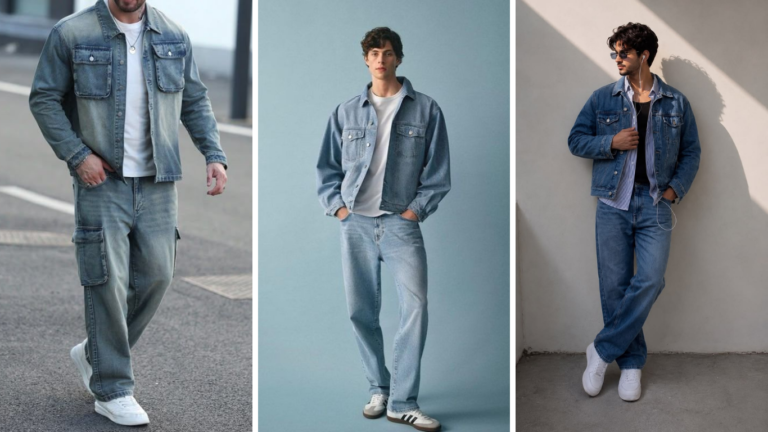
3. Dark Wash Jeans
What It Is
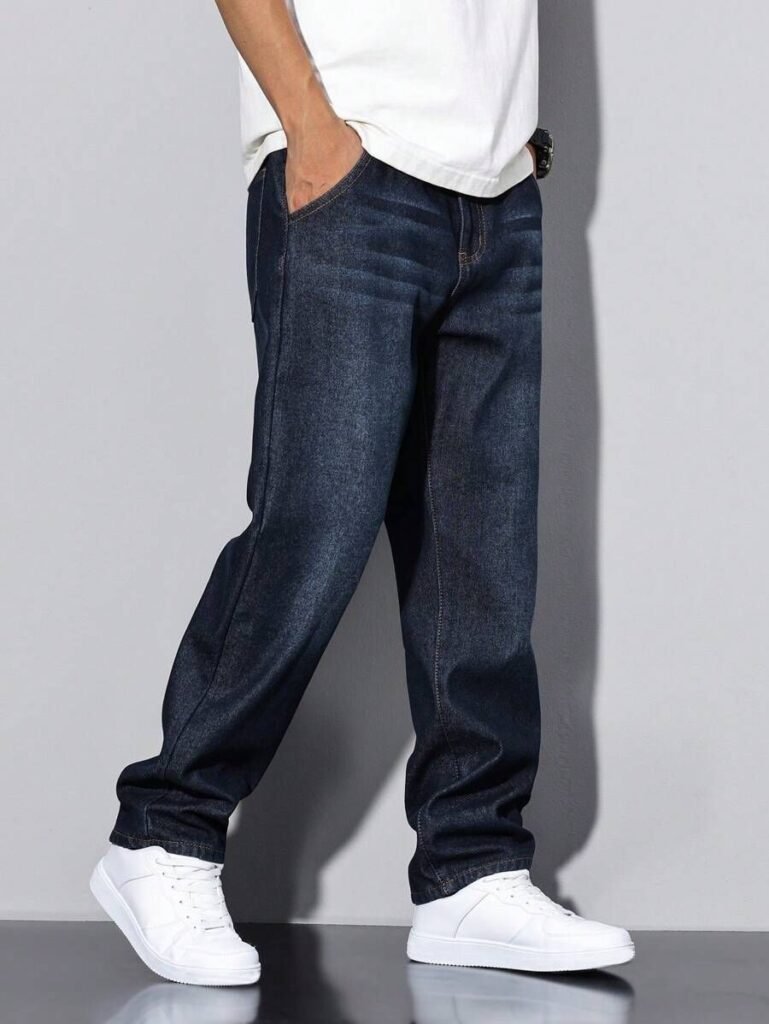
A pair of jeans in a dark, uniform indigo wash with minimal fading, distressing, or embellishment — a straight or slim-straight cut works for most body types.
Why It Matters
Dark wash jeans are dressier than light wash and can transition from casual to smart casual with the right shoes and shirt. They’re the single most versatile pants you can own because they pair with sneakers, boots, dress shoes, t-shirts, and even blazers.
Why Beginners Overlook It
Many beginners default to whatever wash or fit they wore in their teenage years — often light wash, heavily distressed, or oversized. These choices instantly cap how “dressed up” an outfit can look, no matter what’s on top.
Common Mistakes
- Choosing jeans that are too skinny or too baggy for current proportions
- Buying heavily faded or ripped jeans as a “first pair,” limiting versatility
- Ignoring rise (where the waistband sits) — too low or too high can throw off your whole silhouette
- Not hemming jeans that pool excessively at the ankle
How to Wear It Correctly
Look for a straight or slim-straight fit that skims the leg without hugging it. The hem should have a slight break at the shoe, not stacking in folds.
Common Mistake: Wearing jeans that are several inches too long and letting them bunch at the ankle — this is one of the fastest ways to make an otherwise good outfit look sloppy.
Budget-Friendly Alternatives
Mid-range denim brands (not necessarily the expensive “heritage” labels) often use quality Japanese or Turkish denim at a fraction of premium pricing. A $60–$90 dark wash pair with a good fit will outperform a $200 pair with a bad one.
Situations Where It Works Best
Casual Fridays, weekend outings, dates, travel, dinners with friends.
Situations Where It May Not Work
Formal interviews, funerals, black-tie or formal weddings — denim reads too casual regardless of wash.
Example Outfit
Dark jeans + white dress shirt (sleeves rolled) + brown boots + minimal watch = smart casual done right for a dinner date.
Key Takeaway: One dark, well-fitted pair of jeans replaces the need for five “trendy” ones.
4. Tailored Chinos
What It Is
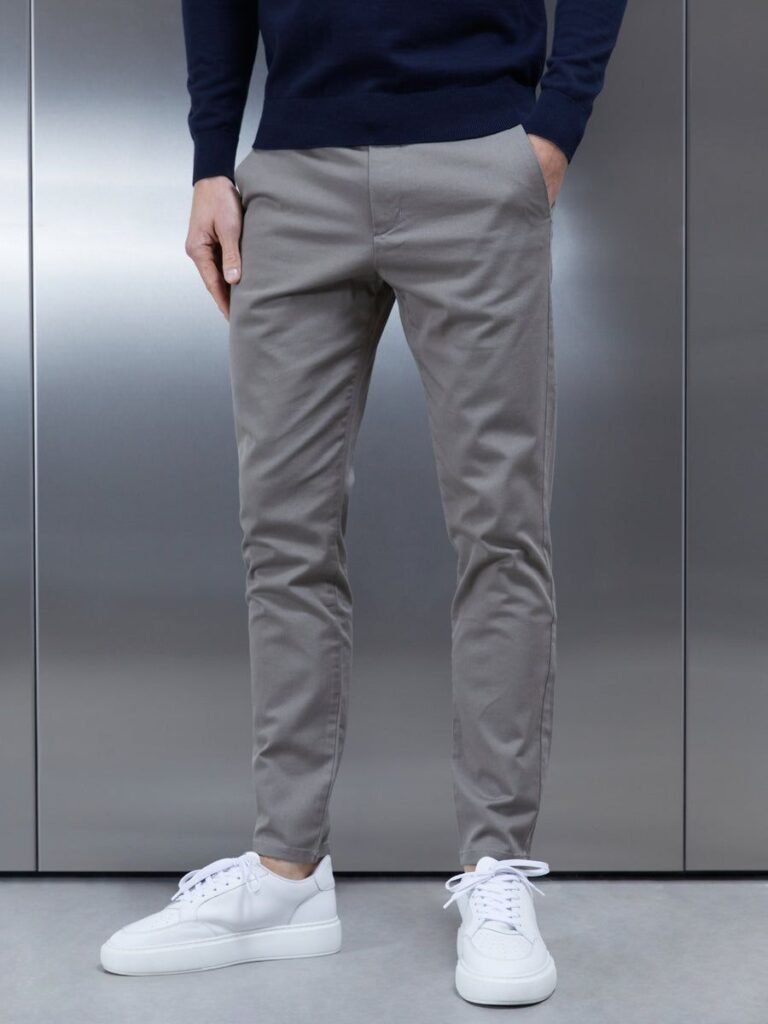
Flat-front cotton trousers in a neutral color like navy, khaki, or stone, cut in a straight or slim-straight fit.
Why It Matters
Chinos sit exactly between jeans and dress pants — dressier than denim, more comfortable and versatile than suit trousers. They’re the go-to pant for business casual offices and smart casual events where jeans feel too relaxed.
Why Beginners Overlook It
Chinos have an undeserved reputation for being “boring” or “dad-like.” In reality, a well-fitted pair in the right color looks sharp and modern — the outdated look comes from baggy fits and pleats, not the fabric itself.
Common Mistakes
- Buying pleated chinos, which add bulk to the hips and thighs
- Choosing a fit that’s too loose through the leg
- Sticking only to khaki, missing out on navy — arguably the most versatile chino color
- Ignoring proper hemming
How to Wear It Correctly
Look for a flat front, straight or slightly tapered leg, and a slight break at the shoe. Navy chinos pair with nearly every shirt color, while khaki works best with blues, whites, and earth tones.
Budget Tip: Buy one navy and one khaki pair before branching into other colors — together they cover 90% of situations a beginner will face.
Budget-Friendly Alternatives
Cotton-stretch blends from mainstream retailers hold shape well and cost far less than tailored designer chinos, without sacrificing the clean silhouette beginners need.
Situations Where It Works Best
Business casual offices, first dates, dinners, university, smart casual weekend events.
Situations Where It May Not Work
Weddings requiring a full suit, funerals, black-tie events, gym or manual labor.
Example Outfit
Navy chinos + white t-shirt + navy blazer + white sneakers = business casual with a relaxed edge, perfect for a Friday client meeting.
Key Takeaway: Chinos are the missing middle ground most beginner wardrobes lack — dressier than jeans, easier than suit pants.
Read also: 6 Ways to Dress Sharp on a Tight Budget
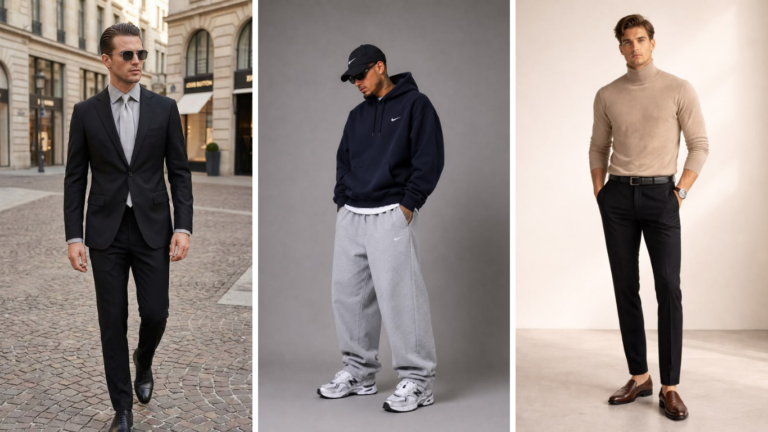
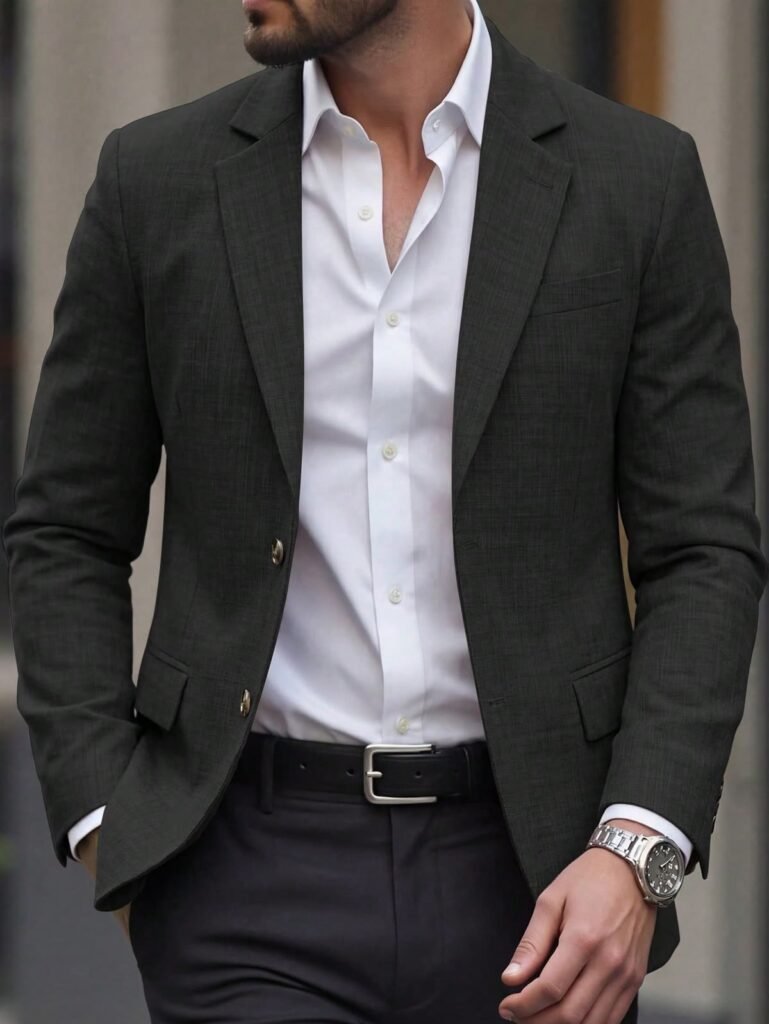
5. A Versatile Blazer
What It Is
An unstructured or lightly structured blazer in navy or charcoal — not a full matching suit, but a standalone jacket that pairs with different trousers.
Why It Matters
A blazer instantly elevates any outfit underneath it. Throw it over a t-shirt and jeans, and you look intentional rather than underdressed. It’s the fastest way for a beginner to look “put together” without learning complex styling rules.
Why Beginners Overlook It
Blazers get associated with formal suits, so many beginners assume they need a full matching suit before they can own one. In reality, a standalone blazer designed to be worn separately (not part of a suit) is far more versatile day-to-day.
Common Mistakes
- Buying a full suit jacket and wearing it alone (the fabric and buttons often look mismatched with casual pants)
- Choosing a blazer that’s boxy or overly padded in the shoulders
- Sizing too large “for comfort,” which erases the tailored silhouette that makes a blazer work
- Never getting sleeves hemmed — sleeves should stop right at the wrist bone, showing a quarter-inch of shirt cuff
How to Wear It Correctly
The shoulder seam should sit exactly on your shoulder bone. The jacket should close comfortably over your chest with one button, without pulling. Sleeves should show a touch of shirt cuff.
Fit Tip: If the blazer feels tight enough to worry about sitting down, size up. If you can fit a full fist between the buttoned jacket and your chest, size down.
Budget-Friendly Alternatives
Unstructured cotton or cotton-blend blazers (rather than heavy wool) are more casual, more affordable, and easier for beginners to style with jeans and chinos alike.
Situations Where It Works Best
Business casual offices, dinners, dates, semi-formal weddings, smart casual events.
Situations Where It May Not Work
Casual weekend errands, the gym, beach trips — a blazer will always read as intentional dressing up.
Example Outfit
Navy blazer + white tee + dark jeans + white sneakers = the easiest “elevated casual” look in men’s fashion, appropriate for a first date or casual dinner.
Key Takeaway: One good blazer does more for your overall look than five new shirts.
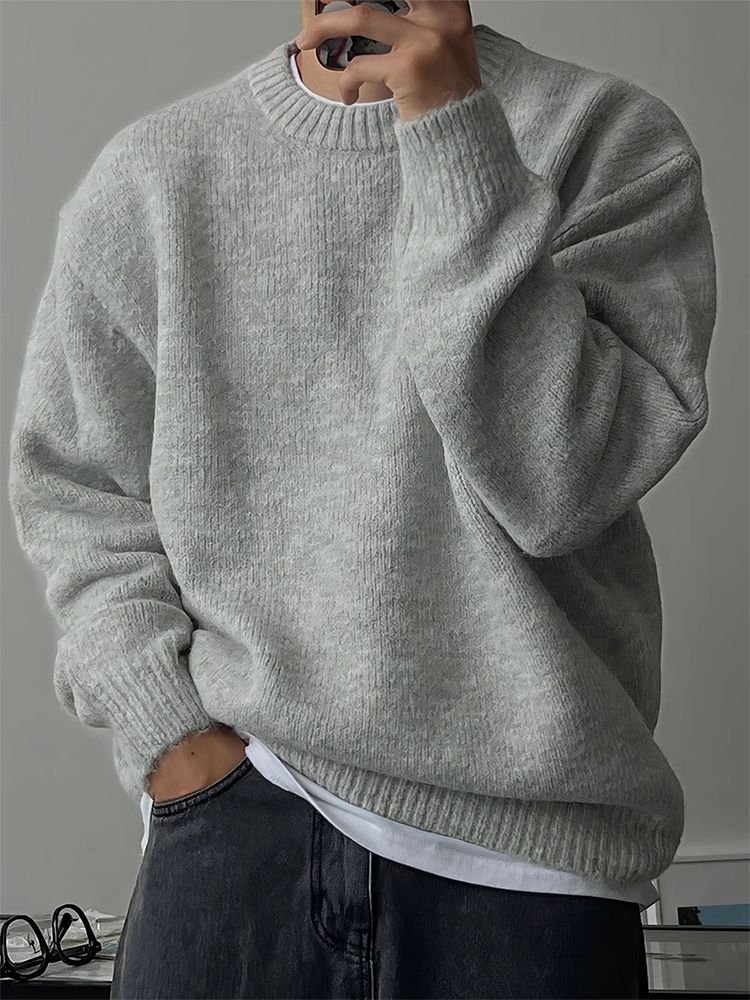
6. A Neutral Crewneck or V-Neck Sweater
What It Is
A lightweight sweater in merino wool, cotton, or a cotton-wool blend, in a neutral tone like navy, grey, or oatmeal.
Why It Matters
Sweaters solve the “in-between” temperature problem and add texture to outfits that would otherwise rely entirely on shirts. A well-fitted sweater layered over a collared shirt instantly reads as smart casual.
Why Beginners Overlook It
Sweaters often get treated as strictly cold-weather items, so beginners buy them last, if at all. But a lightweight sweater works for three seasons and adds a layering option most beginner wardrobes are completely missing.
Common Mistakes
- Buying bulky, oversized sweaters that hide your shape entirely
- Choosing itchy, low-quality acrylic blends over merino wool or cotton
- Sticking to only one neckline (having both a crewneck and a v-neck opens more collar-shirt combinations)
- Wearing sweaters with dress shirts that have overly busy collars, creating a cluttered neckline
How to Wear It Correctly
The sweater should skim the body without clinging. Sleeves should end at the wrist. Layer over a collared shirt with the collar showing for smart casual, or wear alone over a tee for relaxed weekend looks.
Seasonal Tip: Lightweight merino wool sweaters work in fall, winter, and cool spring evenings — making them one of the highest cost-per-wear items in a wardrobe.
Budget-Friendly Alternatives
Cotton-blend crewnecks from mainstream retailers offer a similar silhouette to merino wool at a lower price point, though merino tends to resist odor and wrinkles better over time.
Situations Where It Works Best
Business casual offices, dinners, university, coffee dates, weekend outings, layering in cooler weather.
Situations Where It May Not Work
Hot climates, formal black-tie events, gym or workout settings.
Example Outfit
Grey crewneck sweater (layered over a white collared shirt) + chinos + brown leather shoes = polished smart casual for a fall dinner.
Key Takeaway: A sweater isn’t just for warmth — it’s a layering tool that adds texture and polish beginners often skip entirely.
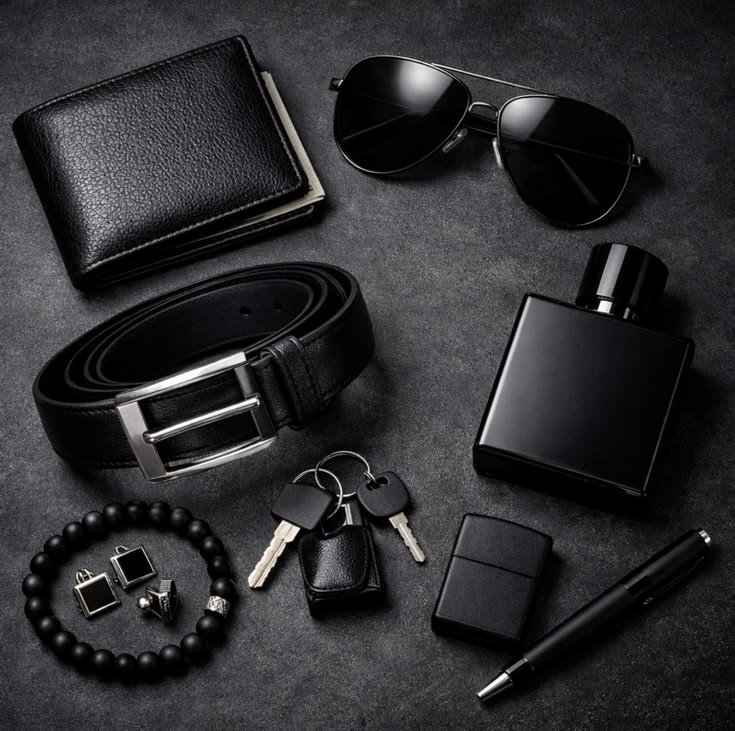
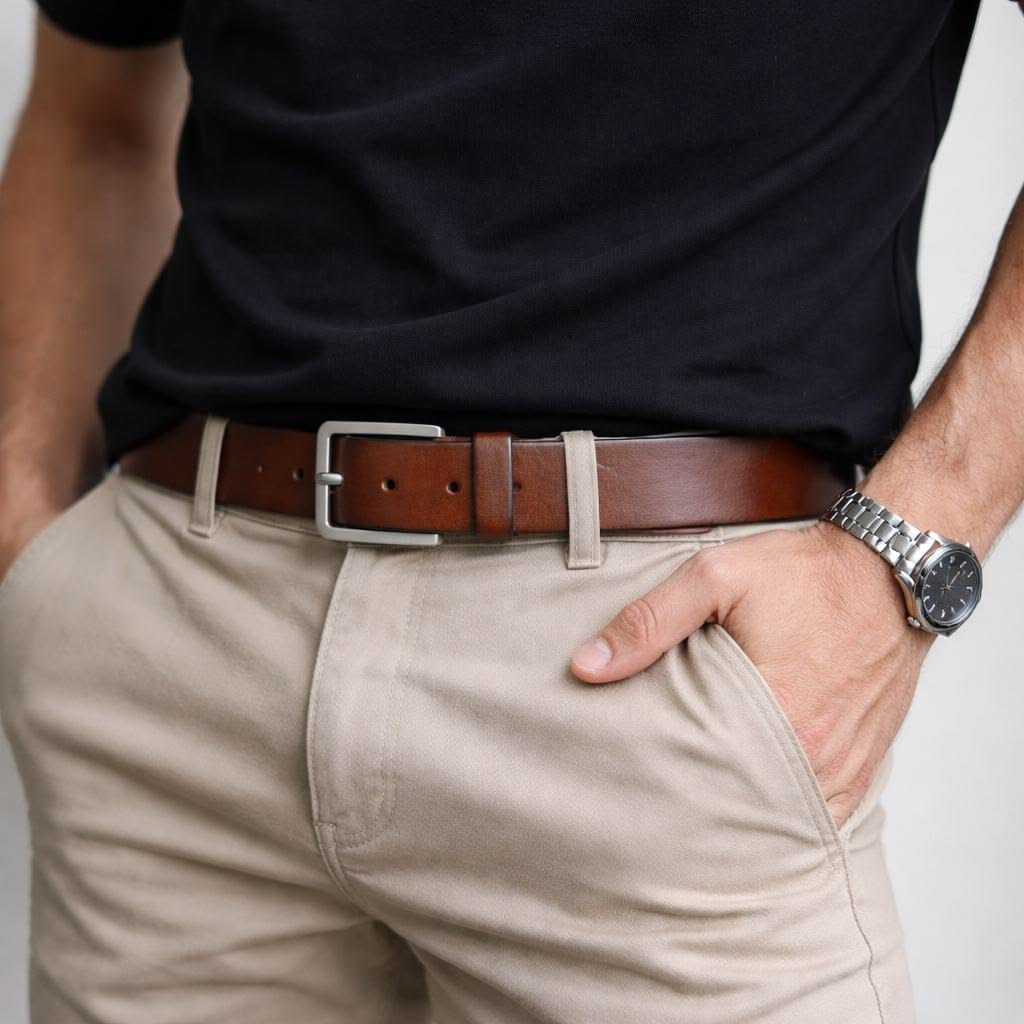
7. A Quality Leather Belt
What It Is
A simple leather belt in brown and/or black, with a clean, understated buckle.
Why It Matters
A belt is one of the smallest items in a wardrobe but one of the most noticeable when it’s wrong — mismatched to your shoes, worn out, or made of obvious fake leather. Getting it right is a quiet signal of attention to detail.
Why Beginners Overlook It
Belts feel like an afterthought, so many beginners either skip them entirely with jeans or wear a cheap, cracking belt that doesn’t match their shoes at all.
Common Mistakes
- Wearing a black belt with brown shoes (or vice versa) — this is one of the most common beginner mismatches
- Choosing a belt with a flashy, oversized logo buckle
- Buying a belt that’s the wrong length, leaving excess strap flapping
- Ignoring wear and cracking on a budget belt, which looks worse over time than paying slightly more upfront
How to Wear It Correctly
Match your belt color to your shoes, not your pants. Brown belt with brown shoes, black belt with black shoes. The belt should have one to two extra holes of adjustment room, with no more than about 2 inches of excess strap past the first loop.
Shopping Tip: Full-grain or top-grain leather belts develop a better patina over time and last years longer than bonded leather alternatives.
Budget-Friendly Alternatives
A simple leather belt from a mid-range retailer with a plain buckle will outperform a “designer” belt with an oversized logo in almost every styling scenario.
Situations Where It Works Best
Any outfit involving dress shoes, chinos, or tailored trousers — job interviews, business casual, dinners, weddings.
Situations Where It May Not Work
Athletic wear or outfits built entirely around sneakers and joggers, where a belt isn’t needed.
Example Outfit
Brown leather belt + chinos + brown leather shoes + light-blue dress shirt = a coordinated, professional look for an interview.
Key Takeaway: Matching your belt to your shoes is a small detail that instantly signals you know what you’re doing.
Read also: 11 Accessories That Make a Basic Outfit Look Intentional
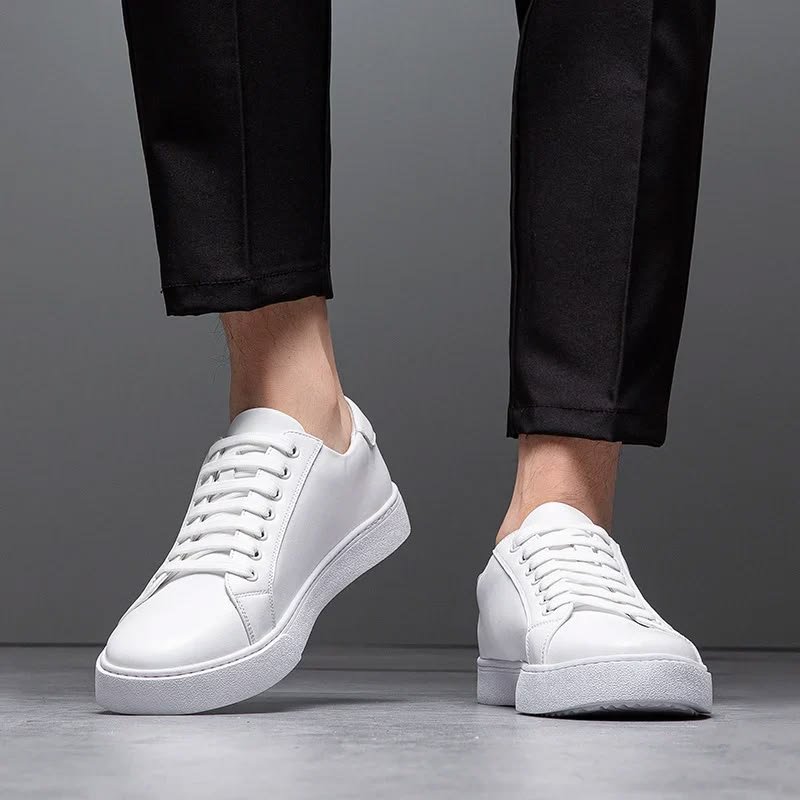
8. White Leather Sneakers
What It Is
A clean, minimal white leather (or leather-look) sneaker without heavy branding, mesh panels, or bright accent colors.
Why It Matters
Minimal white sneakers are the single most versatile shoe a beginner can own. They pair with jeans, chinos, shorts, and even certain smart casual outfits — bridging casual and elevated looks better than almost any other shoe.
Why Beginners Overlook It
Beginners often default to whatever athletic sneaker is trending, packed with mesh, bright soles, and chunky branding. These look great for athletic wear but clash with almost everything else in a beginner’s wardrobe.
Common Mistakes
- Choosing sneakers with busy colorways instead of clean white or white/grey
- Wearing sneakers that are visibly dirty or yellowed
- Sizing sneakers too large “for comfort,” creating a clownish silhouette
- Pairing chunky “dad shoe” style sneakers with tailored pieces like blazers
How to Wear It Correctly
Keep them clean — a magic eraser or sneaker cleaner goes a long way. Choose a low-profile silhouette (like a minimalist court-style sneaker) over a bulky athletic trainer for the most outfit flexibility.
Maintenance Tip: Wipe down leather sneakers weekly and store shoe trees or stuff them with paper to keep their shape between wears.
Budget-Friendly Alternatives
Leather-look synthetic sneakers from mainstream retailers look nearly identical to premium leather sneakers when clean, at a fraction of the price — just expect a shorter lifespan.
Situations Where It Works Best
Weekend outings, casual Fridays, travel, dates, university, smart casual events with chinos or dark jeans.
Situations Where It May Not Work
Job interviews, formal weddings, funerals, business formal offices.
Example Outfit
White sneakers + dark jeans + white tee + navy blazer = smart casual that works for a casual dinner or a relaxed date.
Key Takeaway: Clean, minimal white sneakers do more styling work than any “hype” sneaker ever will for a beginner wardrobe.
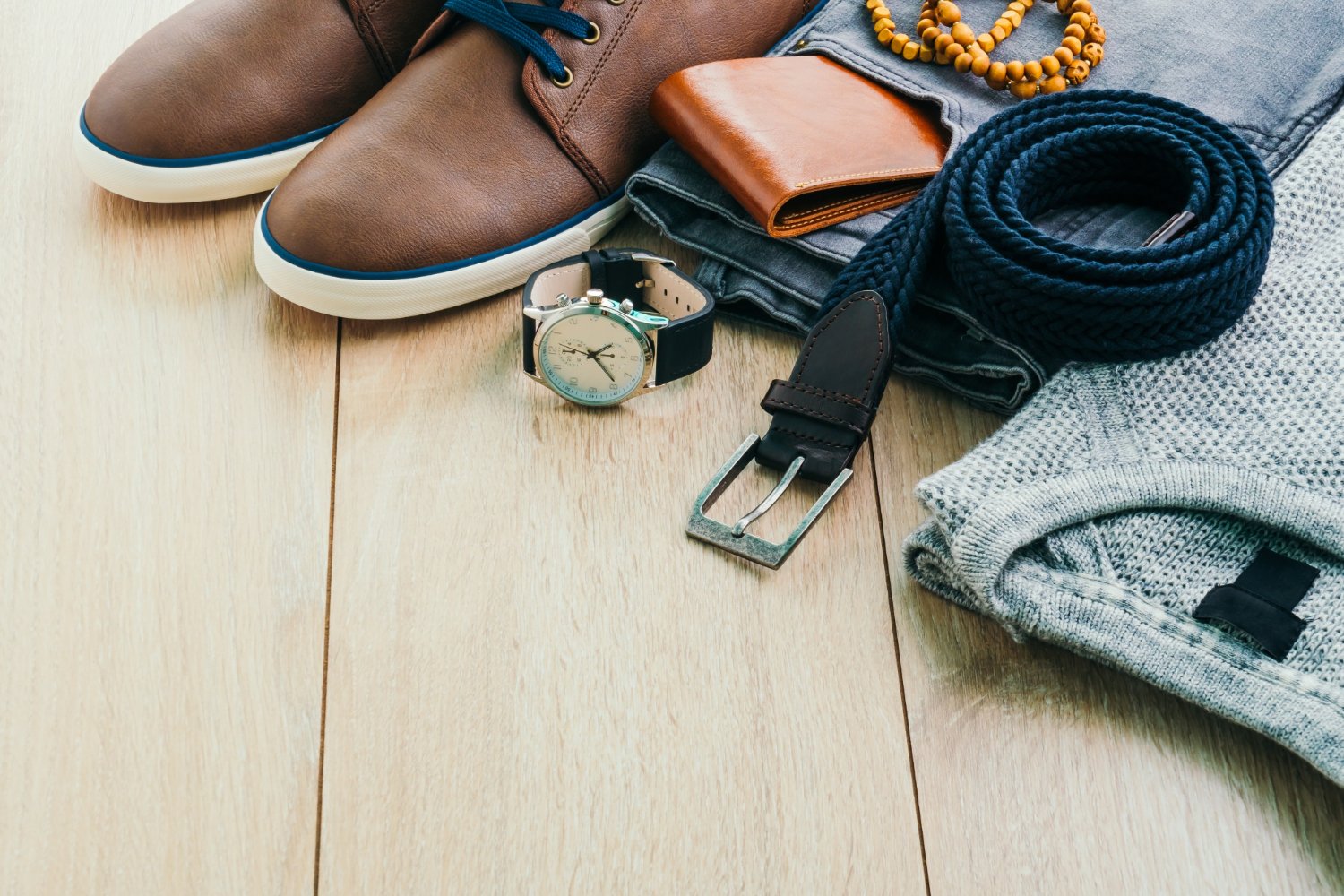
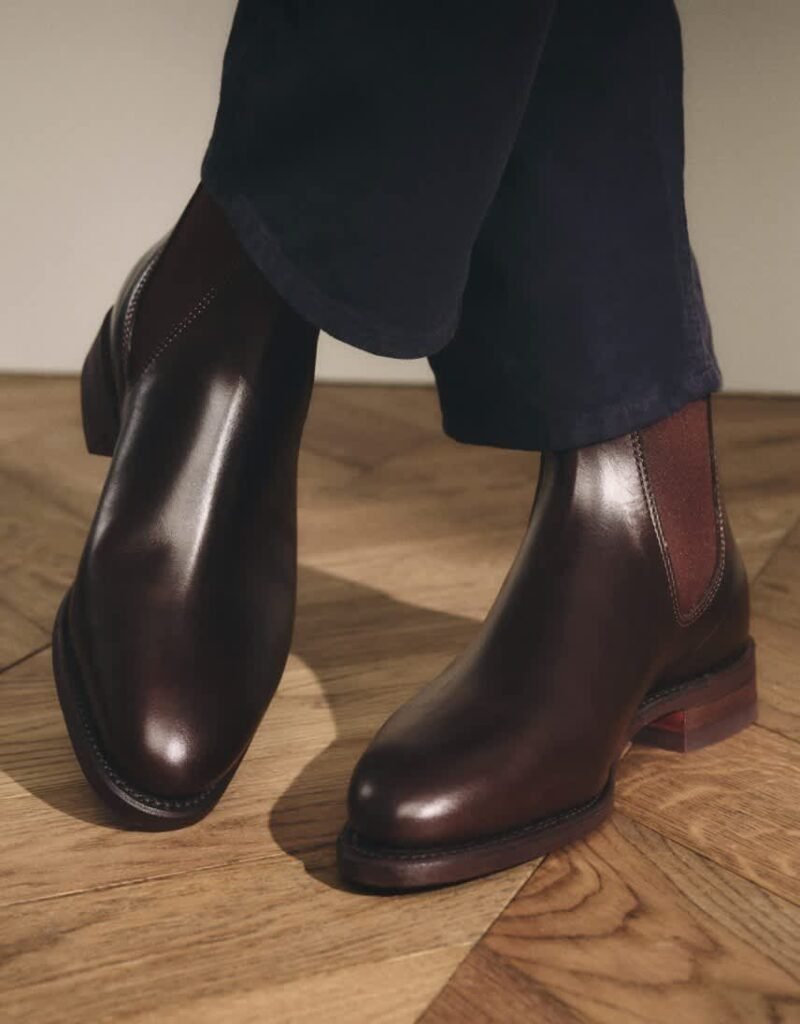
9. Brown Leather Dress Shoes or Boots
What It Is
A pair of brown leather derbies, oxfords, or Chelsea boots — depending on your climate and lifestyle — with a clean, low-shine finish.
Why It Matters
Every beginner wardrobe needs one shoe that can carry business casual and formal situations. Sneakers can’t do this job. A quality pair of brown leather shoes fills the gap for interviews, weddings, and dressier dinners.
Why Beginners Overlook It
Dress shoes feel intimidating and expensive, so many beginners either skip them entirely (showing up to interviews in sneakers) or buy the cheapest possible pair, which looks stiff, shiny, and obviously synthetic.
Common Mistakes
- Buying shoes with excessive shine or an obviously plastic-like finish
- Ignoring proper sizing, leading to blisters and a shortened lifespan
- Never conditioning the leather, causing premature cracking
- Wearing dress shoes with athletic socks that show above the pant hem
How to Wear It Correctly
Oxfords are the most formal option (best for interviews and weddings); derbies are slightly more casual and versatile; Chelsea boots split the difference and work well in cooler climates. Pair with dress socks that match your trouser color.
Shopping Tip: Genuine leather uppers with a stitched (Goodyear-welted or Blake-stitched) sole can be resoled and last for years, unlike glued synthetic soles that need full replacement.
Budget-Friendly Alternatives
Mid-range leather derbies or Chelsea boots offer 80% of the polish of premium options for a fraction of the price — prioritize genuine leather over construction method if budget is tight.
Situations Where It Works Best
Job interviews, weddings, funerals, business casual offices, dinners, formal dates.
Situations Where It May Not Work
Athletic activities, beach trips, casual weekend errands — they’ll look overdressed and feel uncomfortable for walking long distances.
Example Outfit
Brown derbies + chinos + light-blue dress shirt + brown belt = a reliable, professional outfit for any interview or formal meeting.
Key Takeaway: One properly fitted pair of brown leather shoes covers every formal situation a beginner will realistically face.
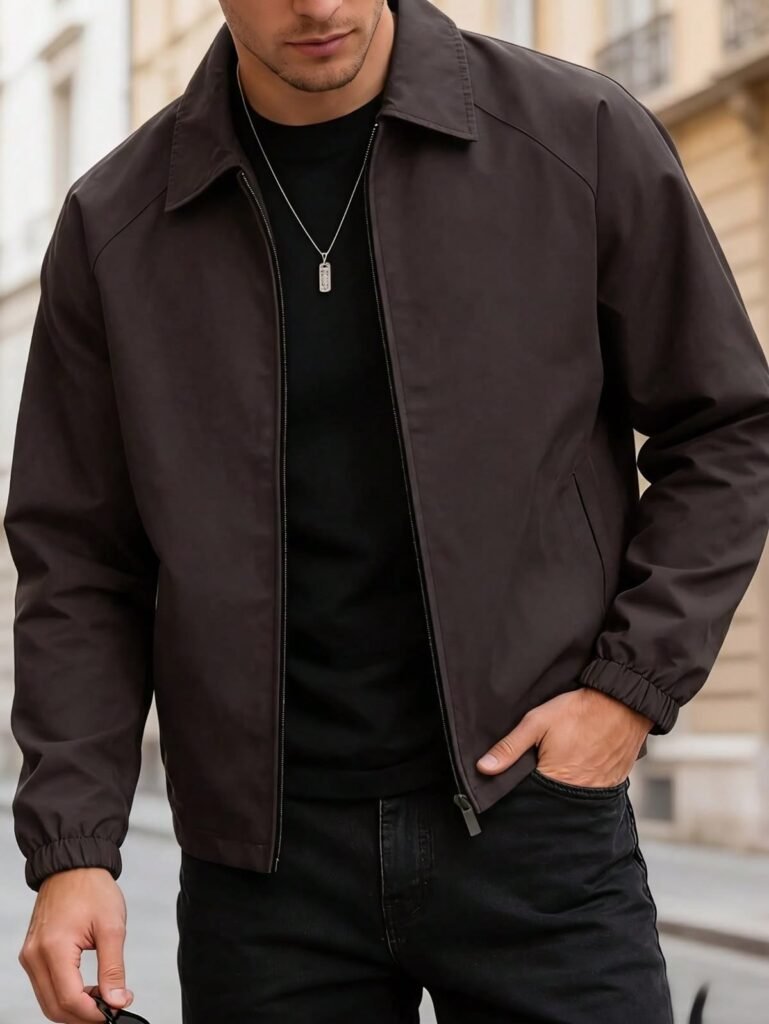
10. A Well-Fitted Overshirt or Lightweight Jacket
What It Is
A sturdy, mid-weight shirt-jacket (overshirt) or a simple bomber, denim, or field jacket — a layering piece that sits between a t-shirt and a full coat.
Why It Matters
Overshirts and light jackets add structure, texture, and warmth without the formality of a blazer. They’re perfect for casual and smart casual situations where a full jacket is too much but a t-shirt alone isn’t enough.
Why Beginners Overlook It
Most beginners jump straight to heavy winter coats without ever owning a versatile in-between layer, leaving a noticeable gap in three-season dressing.
Common Mistakes
- Buying an overshirt that’s too tight to layer over a t-shirt or thin sweater
- Choosing a shiny or overly technical-looking fabric that doesn’t match casual or smart casual pieces
- Ignoring color coordination — an overshirt in a clashing color limits its versatility
- Wearing it buttoned all the way up like a dress shirt, rather than open over a tee
How to Wear It Correctly
Choose a neutral color like olive, navy, tan, or grey. Wear it open over a white t-shirt with the sleeves pushed up slightly for a relaxed look, or fully closed as a light jacket in cooler weather.
Stylist Tip: An overshirt in a neutral, textured fabric (like brushed cotton or corduroy) pairs with both jeans and chinos, making it one of the most flexible layering pieces you can own.
Budget-Friendly Alternatives
Cotton-blend overshirts from mainstream retailers offer the same silhouette and function as premium heritage brands, at a much lower price point.
Situations Where It Works Best
Weekend outings, travel, casual Fridays, university, layering in transitional weather.
Situations Where It May Not Work
Formal interviews, weddings, funerals, business formal offices.
Example Outfit
Olive overshirt (open) + white tee + dark jeans + white sneakers = an effortless, layered weekend look.
Key Takeaway: An overshirt fills the gap between “too casual” and “too formal” that most beginner wardrobes are missing entirely.
Comparison Table: Capsule Wardrobe vs. Trend-Based Wardrobe
| Factor | Capsule Wardrobe | Trend-Based Wardrobe |
|---|---|---|
| Outfit combinations | High — pieces are chosen to work together | Low — items often don’t match each other |
| Cost per wear | Low over time | High — trend pieces get worn a handful of times |
| Shopping decisions | Fewer, more intentional | Frequent, impulsive |
| Longevity | Years | Often out of style within a season |
| Getting dressed | Fast and stress-free | Time-consuming and stressful |
Body Type Considerations
A capsule wardrobe works for every build, but small adjustments make a real difference.
Slim men: Favor slim-straight (not skinny) fits in jeans and chinos, and look for sweaters with a bit of structure rather than clingy knits, which can emphasize thinness in an unflattering way.
Athletic men: Prioritize shirts and blazers with room through the chest and shoulders but tapered at the waist — off-the-rack “athletic fit” or “muscle fit” lines often solve this without tailoring.
Broad men: Structured blazers with slight shoulder padding create a cleaner line; avoid boxy fits that add bulk. Vertical patterns (like a subtle stripe) can elongate the frame.
Tall men: Look for “tall” sizing in shirts, jeans, and jackets to avoid short sleeves and high-water hems. Layering pieces like overshirts should extend past the hip, not stop above it.
Short men: Avoid oversized fits entirely — a slightly slimmer cut and higher-rise trousers create a longer leg line. Cropped jackets (hitting right at the hip) work better than long ones.
Plus-size men: Structured fabrics that skim rather than cling (like a mid-weight cotton) drape better than thin jersey. Vertical details, darker washes, and well-tailored shoulders create a cleaner overall silhouette.
Common Beginner Mistakes (And How to Fix Them)
Mistake 1: Buying Too Much, Too Fast
Beginners often buy 15–20 items in one shopping trip, hoping quantity solves the problem. This usually results in a closet full of items that don’t coordinate.
Fix: Build your wardrobe in the order listed above — a few coordinated pieces at a time.
Mistake 2: Prioritizing Trends Over Fit
A trendy item in the wrong fit will always look worse than a basic item in the right fit.
Fix: Learn your correct sizing in shoulders, waist, and length before buying anything new — even basics.
Mistake 3: Ignoring Color Coordination
Owning ten shirts and eight pants that don’t share a color logic leads to constant mismatches.
Fix: Stick to a core palette of navy, white, grey, and brown/tan before introducing bolder colors.
Mistake 4: Never Trying Clothes On
Online shopping without checking return policies or trying items on leads to a closet of ill-fitting “almosts.”
Fix: Always check sizing charts, read fit reviews, and try items on as soon as they arrive.
Mistake 5: Skipping Tailoring
Many beginners assume tailoring is only for suits. In reality, hemming jeans or taking in a blazer at the waist can transform an off-the-rack item into something that looks custom-fit.
Fix: Find a local tailor and budget $15–$40 per basic alteration.
Smart Budget Strategy for Beginners
Where to save money: Basic t-shirts, sweaters, and casual jackets — fabric quality matters more than brand name here, and mid-range retailers often use comparable materials to premium labels.
Where to spend more: Dress shoes, a blazer, and jeans — these items get worn constantly, involve more complex construction, and show wear faster when made cheaply.
How to build gradually: Start with items 1–4 (t-shirt, dress shirt, jeans, chinos) in month one. Add the blazer and sweater in month two. Round out with the belt, sneakers, dress shoes, and overshirt over the following two months. This spreads cost while still giving you a functional wardrobe almost immediately.
Maximizing cost per wear: Divide the price of an item by how many times you realistically expect to wear it in a year. A $120 blazer worn 40 times costs $3 per wear. A $25 trend shirt worn twice costs $12.50 per wear — the “expensive” item is often the cheaper one long-term.
Budget Tip: Never buy more than one of an item until you’ve worn the first one at least five times. This forces you to actually test the fit and versatility before committing further.
Quality Fabric vs. Cheap Fabric
| Signal | Quality Fabric | Cheap Fabric |
|---|---|---|
| Feel | Substantial, slightly heavy | Thin, flimsy |
| Wrinkling | Resists wrinkles, recovers shape | Wrinkles instantly, stays creased |
| Shine | Matte or slight natural sheen | Artificial, plasticky shine |
| Washing | Holds color and shape over time | Fades and pills quickly |
| Cost per wear | Lower over time | Higher due to short lifespan |
How to Shop Smart as a Beginner
- Check the fabric composition before checking the price — cotton, wool, and cotton blends generally outperform full synthetic fabrics for both comfort and appearance.
- Read the fit description, not just the size chart — “slim,” “regular,” and “relaxed” mean different things across brands.
- Buy for the season ahead, not the season you’re in — end-of-season sales are the best time to stock up on essentials.
- Avoid impulse buying by using a 48-hour rule: if you still want the item after two days, it’s a genuine addition, not an impulse purchase.
- Prioritize versatility over uniqueness — an item that only works with one outfit isn’t earning its space in a beginner wardrobe yet.
Real-Life Scenarios: Putting the 10 Essentials to Work
Job interview: Light-blue dress shirt + tailored chinos or dress trousers + brown leather derbies + brown belt (add the blazer for extra polish).
First date (casual dinner): White tee + navy blazer + dark jeans + white sneakers.
Business casual office: Navy chinos + white dress shirt + grey sweater layered on top + brown leather shoes.
Weekend errands: White tee + overshirt (open) + dark jeans + white sneakers.
Wedding (semi-formal, daytime): Light-blue dress shirt + navy blazer + chinos or dress trousers + brown leather shoes.
Funeral: White dress shirt + charcoal blazer + dark trousers + black leather shoes and belt.
Travel day: White tee + overshirt + dark jeans + white sneakers — comfortable, wrinkle-resistant, and presentable at the same time.
University: White tee or dress shirt + chinos or jeans + sneakers — swap in the overshirt for cooler days.
Coffee date: White tee + dark jeans + white sneakers + overshirt, kept simple and low-effort but clean.
Frequently Asked Questions
1. How many wardrobe essentials do I actually need to start? You can build a functional starting wardrobe with just the first four items — a white t-shirt, a dress shirt, dark jeans, and chinos. These alone cover casual and business casual situations while you gradually add the rest.
2. Is it better to buy cheap versions of all 10 items or invest in a few good ones? A mix works best. Save on items with simple construction (t-shirts, sweaters) and invest more in items with complex construction and heavy use (dress shoes, blazer, jeans), since these show wear and fit issues fastest when made cheaply.
3. What colors should a beginner wardrobe focus on? Start with navy, white, grey, and brown/tan. These four colors coordinate with each other in nearly any combination, which minimizes mismatches while you’re still learning to put outfits together.
4. Do I need both a black and brown pair of dress shoes? Not at first. Brown is more versatile for beginners because it pairs with both casual and business casual outfits. Add black leather shoes later for formal events and dark suits.
5. How do I know if clothes actually fit me correctly? Check three points: shoulder seams should sit exactly on your shoulder bone, there should be no excess pulling or bunching at the chest or waist, and sleeve or pant length should end at the wrist or shoe without excess bunching.
6. Can I build this wardrobe on a tight budget? Yes. Focus on one category at a time, buy end-of-season sales, and prioritize fabric quality and fit over brand name. A functional 10-piece wardrobe can realistically be built for a few hundred dollars over two to three months.
7. What’s the biggest mistake beginners make when starting a wardrobe? Buying too many trend-driven pieces before establishing neutral, versatile basics. This leads to a closet full of items that don’t work together, which is far more limiting than owning fewer, better-coordinated pieces.
8. How often should I replace these essential items? With proper care, quality basics like jeans, a blazer, and leather shoes can last 3–5+ years. T-shirts and sweaters typically need replacing every 1–2 years due to more frequent washing and wear.
9. Do these essentials work for every body type? Yes, though fits should be adjusted. The core items stay the same, but slim, athletic, broad, tall, short, and plus-size men should adjust specific cuts and proportions as outlined in the body type section above.
10. What should I buy after these 10 essentials? Once these are in place, consider adding a versatile watch, a second pair of dress shoes in black, a lightweight jacket for warmer transitional weather, and one or two patterned shirts to start introducing personal style on top of your foundation.
11. Can I skip the blazer if I don’t wear it often? It’s not mandatory, but it’s one of the highest-impact pieces for occasional formal or semi-formal situations. Even worn only a handful of times a year, it solves problems (weddings, interviews, dinners) that nothing else in this list can.
12. How do I keep leather shoes and belts looking new? Condition leather every few months with a leather conditioner, avoid wearing the same pair two days in a row (letting them air out), and use a shoe horn to prevent the heel from breaking down prematurely.
Final Thoughts: Build Slowly, Build Right
None of these 10 items are flashy on their own. That’s the point. A beginner wardrobe built on fit, fabric quality, and color coordination will outperform a closet full of trend pieces every single time — not because the trend pieces are bad, but because they were never designed to work together.
Start with the basics: a white tee, a dress shirt, dark jeans, and chinos. Add the blazer and sweater next. Round things out with a good belt, both types of shoes, and an overshirt. By the time you own all 10, you won’t just have more clothes — you’ll have a wardrobe that actually works, outfit after outfit, without the daily guesswork.
Style isn’t about owning everything. It’s about owning the right ten things first.
Read also: