6 Ways to Dress Sharp on a Tight Budget
There’s a common assumption that dressing well requires money — that the guys who always look put-together are simply spending more than you are.
It’s an understandable assumption, but it’s usually wrong. Looking sharp has far more to do with fit, coordination, and maintenance than it does with how much you spent on any single item.
In fact, some of the most consistently well-dressed men aren’t the ones with the biggest wardrobes — they’re the ones who’ve figured out how to make a small, well-chosen set of clothes work hard for them. That’s a skill, not a budget requirement, and it’s entirely learnable.
This guide covers six practical, genuinely effective ways to dress sharp without spending a lot of money — not shortcuts or compromises, but the actual habits and priorities that separate a budget wardrobe that looks intentional from one that looks like exactly what it is.
Quick Reference: Budget vs. Premium Priorities
| Category | Where to Save | Where to Spend (If You Can) |
|---|---|---|
| Basics (tees, socks) | Any decent retailer | Rarely worth premium pricing |
| Trousers/jeans | Mid-range, well-fitted | Resoleable leather, if the budget allows |
| Outerwear | Mid-range, structured cut | Worth investing if worn often |
| Dress shoes | Mid-range leather | Resoleable leather, if budget allows |
| Accessories (belt, sunglasses) | Any coordinated, simple option | Rarely necessary to spend more |
| Tailoring | Never skip this | This is the actual investment |
1. Prioritize Fit Over Price — Every Single Time
What it means: When choosing between a cheaper item that fits well and a more expensive item that doesn’t, the cheaper, well-fitted item will look better in every practical sense.
Why it matters: Fit is the single biggest visual factor in how “expensive” or “intentional” an outfit looks — far more than fabric quality, brand name, or price. A $20 t-shirt that fits your shoulders and torso correctly will consistently outperform a $100 t-shirt that’s a size too big or too tight.
Why beginners overlook this: There’s a common assumption that spending more automatically solves fit problems, when in reality, fit is about finding the right cut and size for your specific body — a completely separate issue from price point.
Common mistake: Buying a more expensive item primarily because of the price tag or brand name, without checking basic fit fundamentals — shoulder seam placement, sleeve length, trouser break.
How to apply it:
- Try on multiple sizes of the same budget item rather than assuming your usual size is correct.
- Check the shoulder seam, chest, and length before considering the price at all.
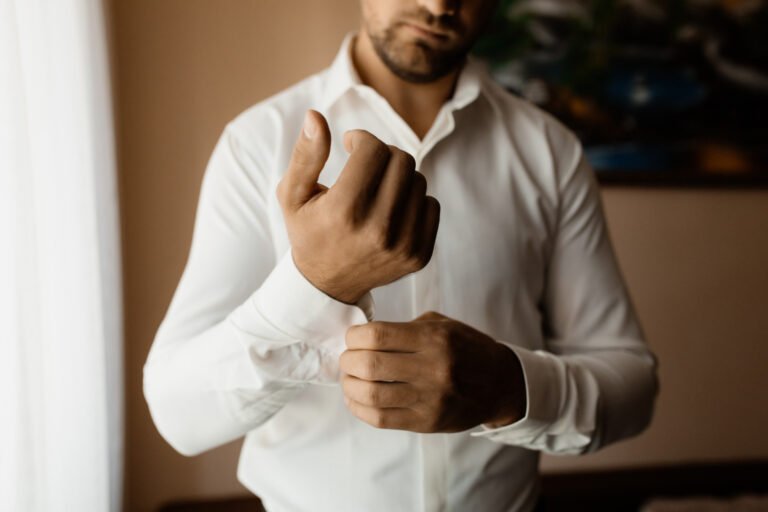
- Remember that a well-fitted budget piece can always be improved with cheap tailoring; a poorly fitted expensive piece often can’t be fixed as easily.
Budget Tip: Many mainstream, affordable retailers offer well-cut basics that fit the majority of body types reasonably well right off the rack — the key is trying on a couple of sizes rather than grabbing your assumed size and leaving.
Key takeaway: A well-fitted budget item will always look sharper than a poorly fitted expensive one — fit costs nothing extra to prioritize.
Read also: How to Build a Casual Wardrobe from Scratch (The Lazy Man’s Guide)
2. Spend Your Tailoring Budget Before Your Clothing Budget
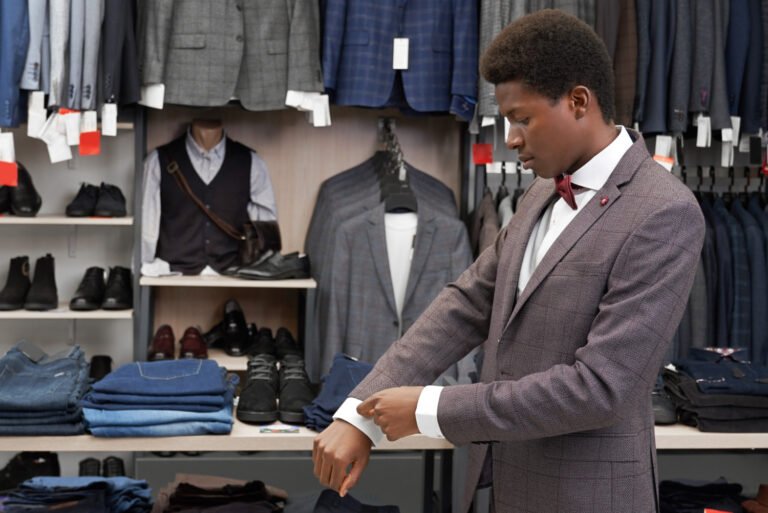
What it means: If you have a limited amount to spend on improving your wardrobe, set aside a portion specifically for tailoring — hemming trousers, taking in a jacket, slimming a shirt — before spending the rest on new pieces.
Why it matters: Tailoring is consistently one of the highest-impact, lowest-cost improvements available. A basic hem typically costs $10–20 and can transform how a pair of trousers looks entirely — far more cost-effective than buying an entirely new pair, hoping for a better fit.
Why beginners overlook this: Tailoring feels like an extra, optional step reserved for expensive suits or special occasions, rather than a standard part of maintaining an everyday wardrobe.
Common mistake: Buying several new items on a tight budget without setting aside anything for tailoring, resulting in a wardrobe that’s larger but not necessarily better-fitting than before.
How to apply it:
- Identify your 3–4 most-worn pieces (usually trousers and a jacket) and prioritize tailoring those first.
- Build a relationship with one reliable, reasonably priced local tailor rather than shopping around each time.
- Treat tailoring as a standard cost of owning clothes, not an optional luxury.
Budget Tip: Ask your tailor for a rough price list of common adjustments (hemming, taking in a waist, slimming a shirt) so you can budget for it in advance rather than being surprised by the cost each time.
Key takeaway: A small tailoring budget consistently delivers more visible improvement than an equivalent amount spent on new, untailored clothing.
3. Build a Small Capsule of Versatile Basics Instead of Many Trend Pieces
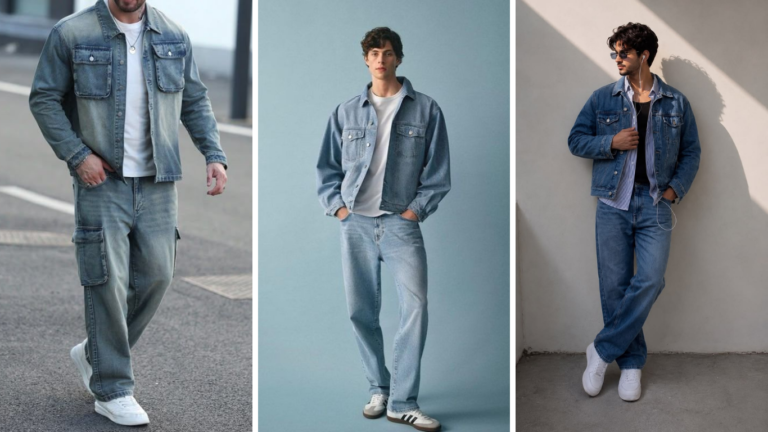
What it means: Focus your spending on a small number of neutral, versatile pieces that combine with each other in many different ways, rather than a larger number of trend-specific items that only work in one or two outfits.
Why it matters: Versatility directly determines cost per wear — the actual cost of an item divided by how many times you realistically wear it. A neutral t-shirt worn weekly for years costs far less per wear than a trendy graphic piece worn a handful of times before it feels dated.
Why beginners overlook this: Trend pieces are often more visually exciting to buy in the moment, while basics can feel “boring,” even though basics are what actually get worn — and seen — most often.
Common mistake: Spending a limited clothing budget on several colorful, trend-driven pieces that don’t coordinate with each other or with the rest of the wardrobe, leaving few complete outfit combinations despite owning a reasonable number of items.
Capsule Wardrobe vs. Trend-Based Wardrobe
| Capsule Wardrobe | Trend-Based Wardrobe | |
|---|---|---|
| Cost per wear | Low — items reused constantly | High — items worn briefly |
| Coordination | Everything works together | Pieces often clash or stand alone |
| Longevity | Lasts years, doesn’t look dated | Outdated within a season or two |
| Budget efficiency | High — fewer items, more outfits | Low — more items, fewer outfits |
How to apply it:
- Prioritize neutral colors (white, black, gray, navy, olive, tan) that combine easily with each other.
- Buy trend pieces sparingly, and only once your basics are solid — treat them as small additions, not the foundation.
- Before buying anything new, ask how many existing pieces it would realistically pair with.
Shopping Tip: A genuinely versatile capsule wardrobe of 15–20 well-chosen pieces can generate dozens of distinct outfit combinations — far more efficient than a larger, less coordinated collection.
Key takeaway: A small wardrobe of coordinated basics delivers more usable outfits per dollar than a larger collection of mismatched trend pieces.
4. Maintain What You Already Own
What it means: Regularly clean, condition, and care for your existing clothes and shoes so they continue looking sharp for longer, rather than replacing items as soon as they show wear.
Why it matters: Maintenance directly extends the usable life of everything you own, which means more wear per dollar spent — one of the most direct ways to stretch a tight clothing budget without spending anything additional most of the time.
Why beginners overlook this: Maintenance habits (ironing, proper washing, shoe care) are rarely taught explicitly, so many men simply wear clothes until they visibly wear out, without realizing basic care could have extended their life significantly.
Common mistakes:
- Washing dark clothing in hot water, which accelerates fading and shortens the garment’s life.
- Never cleaning or conditioning leather shoes, leading to premature cracking and a dull, tired appearance.
- Continuing to wear visibly worn items (pilled sweaters, stretched-out collars) simply because there’s no budget to replace them immediately.
How to apply it:
- Wash dark clothing inside-out in cold water to slow fading.
- Avoid high heat in the dryer for structured or knit pieces, which causes most premature shrinking and shape loss.
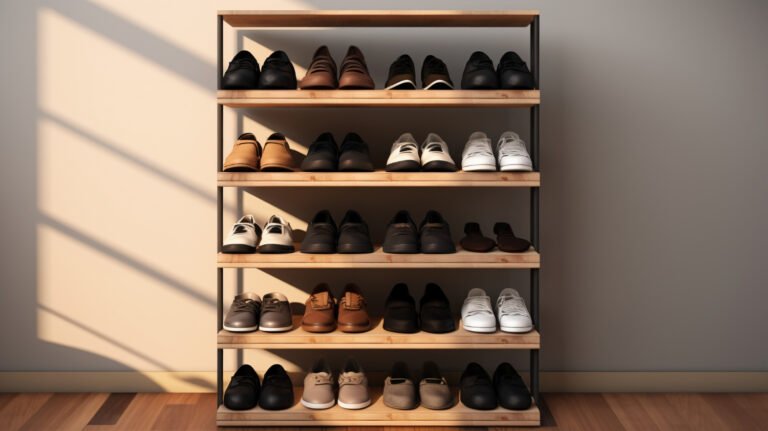
- Wipe down and condition leather shoes regularly, and use shoe trees to help them maintain shape between wears.
- Iron or steam clothes before wearing — a five-minute habit that instantly improves how “finished” an outfit looks, regardless of the item’s original price.
Maintenance Tip: Rotate shoes rather than wearing the same pair every single day — giving leather and fabric time to fully dry and recover between wears significantly extends their lifespan.
Key takeaway: Proper maintenance is essentially free money — it extends the life of everything you already own, which is the most direct way to reduce cost per wear over time.
5. Shop Secondhand and Off-Season Strategically
What it means: Look for quality pieces through thrift stores, consignment shops, or off-season sales, where well-made items are frequently available at a fraction of their original price.
Why it matters: Secondhand shopping and off-season sales give access to genuinely better-quality fabric and construction than an equivalent amount spent on new, full-price fast fashion — the trade-off is time and effort spent searching rather than money spent upfront.
Why beginners overlook this: Secondhand shopping can feel intimidating or uncertain without a clear sense of what to look for, and off-season shopping requires planning ahead rather than buying in the moment of need.
Common mistakes:
- Buying secondhand items purely because they’re cheap, without checking fit or fabric quality, results in pieces that don’t actually get worn.
- Skipping off-season sales entirely and only shopping when an item is needed immediately, missing significant discounts on items you’ll need eventually anyway (winter coats, for example).
How to apply it:
- When thrifting, check fabric composition labels, fit through the shoulders (the hardest area to alter), and overall condition before buying.
- Focus secondhand searches on higher-quality, natural-fiber basics and outerwear, where the savings compared to new retail prices are most significant.
- Buy seasonal items (heavy coats, boots) at the end of their season for the following year, when discounts are typically deepest.
Budget Tip: A quality secondhand wool coat or leather jacket often costs a fraction of an equivalent new item, with the same (or sometimes better) construction quality, since older pieces were frequently made with more durable materials.
Key takeaway: Secondhand and off-season shopping isn’t a downgrade — it’s often the most direct path to better quality materials on a limited budget, if you know what to check for.
6. Learn to Recognize Quality Before You Buy
What it means: Develop a basic ability to judge fabric quality and construction in the store, so your limited budget goes toward pieces that will actually hold up, rather than items that look fine on the hanger but wear out quickly.
Why it matters: Not all low-priced clothing is poor quality, and not all expensive clothing is high quality — price alone is an unreliable signal. Learning to check fabric and construction directly means your money goes toward genuinely durable pieces regardless of the price point.
Why beginners overlook this: Without a reference point, most fabric and construction differences are invisible — a thin, synthetic-heavy garment and a mid-weight natural-fiber one can look almost identical in a product photo or even on the hanger.
Common mistakes:
- Judging quality purely by price or brand reputation, without physically checking the fabric or stitching.
- Buying fully synthetic fabric for everyday basics (t-shirts, button-ups) without realizing it will pill, thin, or lose shape considerably faster than natural fiber blends.
How to apply it — quick quality checks:
- Fabric weight: A garment that feels thin or see-through under light usually won’t hold up as well as one with a bit more substance and weight.
- Stitching: Check seams for even, tight stitching without loose threads or visible gaps — a strong early indicator of overall construction quality.
- Fabric content label: Natural fibers (cotton, wool, linen) or high-quality blends generally perform and age better than fully synthetic options, especially for basics worn frequently.
- Buttons and zippers: Check that they feel sturdy and move smoothly — cheap hardware is one of the first things to fail on lower-quality garments.
Quality Fabric vs. Cheap Fabric
| Quality Fabric | Cheap Fabric | |
|---|---|---|
| Feel | Substantial, breathable | Thin, stiff, or overly synthetic |
| Drape | Falls naturally on the body | Clings or bunches oddly |
| Longevity | Holds shape after many washes | Pills, thins, or stretches quickly |
| Cost per wear | Higher upfront, lower over time | Lower upfront, higher over time |
Shopping Tip: Read online reviews specifically mentioning how a garment holds up “after several washes” — this is often more reliable than the product description or price point alone for judging real-world quality.
Key takeaway: Recognizing quality independent of price means your limited budget consistently goes toward pieces that actually last, rather than ones that simply look fine in the moment.
Putting It Together: A Realistic Budget Starter Wardrobe
Here’s how these six principles come together in practice — a genuinely functional, budget-conscious starter wardrobe:
- 3–4 well-fitted, neutral t-shirts (checked for fit, not just size)
- 1–2 button-up shirts in versatile colors (white, light blue)
- 1 pair well-fitted, tailored jeans
- 1 pair chinos, tailored to break correctly over your usual shoes
- 1 versatile jacket or overshirt, checked for fabric weight and stitching quality
- 1 pair minimal sneakers, kept clean
- 1 pair leather (or leather-look) dress shoes, if budget allows, secondhand or mid-range
- 1 black belt, 1 brown belt, matched to your shoe colors
- Basic tailoring budget set aside specifically for hemming and small adjustments
This list intentionally avoids trend pieces and focuses entirely on versatility, fit, and quality fundamentals — the same principles that separate a genuinely sharp budget wardrobe from one that simply looks cheap.
Common Budget Wardrobe Mistakes to Avoid
| Mistake | Why It Happens | Quick Fix |
|---|---|---|
| Buying by price alone | Assuming cheaper always means lower quality (or vice versa) | Check fabric and stitching directly |
| Skipping tailoring | Feels optional or expensive | Budget a small amount specifically for it |
| Chasing trends over basics | Trend pieces feel exciting to buy | Prioritize versatile neutrals first |
| Never maintaining clothes | Maintenance habits aren’t commonly taught | Learn basic washing and shoe care routines |
| Avoiding secondhand entirely | Feels uncertain or intimidating | Learn what to check (fit, fabric, condition) |
| Judging quality by brand name | Price and branding feel like reliable signals | Check fabric weight and construction directly |
How to Gradually Build a Sharp Wardrobe Over Time
Dressing sharp on a budget isn’t about a single big shopping trip — it’s a gradual process:
- Start with what you already own. Try everything on and separate it into “fits well,” “needs tailoring,” and “doesn’t fit — donate or sell.”
- Get your most-worn pieces tailored first, before buying anything new.
- Fill genuine gaps with versatile basics, prioritizing fit and fabric quality over price or trend appeal.
- Maintain everything consistently — proper washing, ironing, and shoe care — to extend the life of every purchase.
- Add trend pieces sparingly, only once your foundation of basics is solid and coordinated.
This approach spreads spending out naturally, avoids wasted purchases, and consistently results in a wardrobe where everything actually works together — which is, ultimately, what “dressing sharp” really means.
Frequently Asked Questions
1. Can I really dress well without spending a lot of money? Yes. Fit, coordination, and maintenance have far more impact on how sharp an outfit looks than price does — a well-fitted, well-maintained budget outfit consistently outperforms an expensive but poorly fitted or neglected one.
2. What’s the single best thing to spend limited money on? Tailoring. A small tailoring budget delivers more visible improvement per dollar than almost any other clothing purchase, since it directly fixes fit — the biggest factor in how put-together an outfit looks.
3. Is secondhand clothing actually a good option, or just a compromise? It’s a genuinely good option when approached carefully — checking fit, fabric quality, and condition — and often provides access to better materials and construction than an equivalent amount spent on new fast fashion.
4. How do I know if a cheap item is actually good quality? Check the fabric weight and feel, the evenness of the stitching, the fabric content label (favoring natural fibers or quality blends), and the sturdiness of buttons and zippers — price alone isn’t a reliable indicator.
5. Should I avoid trends completely on a tight budget? Not entirely, but prioritize versatile basics first. Add trend pieces in small doses once your foundation is solid, rather than building a limited budget primarily around trend-driven items.
6. How much should I budget for tailoring? Costs vary by location, but basic adjustments like hemming trousers typically run $10–20, while more involved work (taking in a jacket) can cost more — ask a local tailor for a rough price list to budget accordingly.
7. Is it worth buying fewer, better-quality items instead of more cheap ones? Often yes, when it comes to frequently worn basics and outerwear, since quality directly affects cost per wear over time. For occasional or trend-specific pieces, more affordable options are usually fine.
8. How can I extend the life of the clothes I already own? Wash dark items in cold water inside-out, avoid high heat when drying structured or knit pieces, iron or steam before wearing, and rotate shoes to let them fully dry and recover shape between wears.
9. What should I look for when shopping secondhand? Check the fit through the shoulders specifically (the hardest area to alter), inspect the fabric for pilling, thinning, or damage, and confirm the fabric content label before buying.
10. Is it better to buy one expensive coat or several cheaper ones? For outerwear specifically, which tends to be worn frequently and seen prominently, investing in one well-made, well-fitted coat generally offers better cost per wear than several lower-quality options that wear out faster.
Final Thoughts
Dressing sharp on a tight budget isn’t about finding shortcuts — it’s about correctly prioritizing where your limited money actually makes a visible difference. Fit and tailoring matter more than price. Versatile basics outperform trend pieces per dollar spent. Maintenance extends the life of everything you already own, essentially for free.
Start with what’s already in your closet, fix the fit issues first, and build outward gradually from there. A sharp wardrobe isn’t a matter of budget — it’s a matter of knowing exactly where to focus your attention, and now you do.
Read also: