
5 Shoe Styles That Instantly Upgrade Any Beginner’s Wardrobe
You’ve probably had this moment: you put together an outfit you actually feel good about — the shirt fits, the trousers are the right length, the colors work — and then you look down, and the shoes let the whole thing down. Maybe they’re the same worn-out sneakers you wear for everything. Maybe they technically match, but somehow still feel wrong. Either way, the outfit doesn’t land the way it should.
This isn’t a coincidence. Shoes carry more visual weight than almost any other item in an outfit, because they’re the base on which everything else is judged. And yet most beginners own either too many trend-driven sneakers or one all-purpose pair that gets forced into situations it was never designed for.
The good news is you don’t need a closet full of shoes to fix this. You need a small, deliberate rotation — a handful of styles that each do a specific job well.
This guide breaks down five shoe styles that, together, cover the vast majority of situations a man actually finds himself dressing for, and explains exactly why each one earns its place, how to wear it correctly, and where beginners typically go wrong.
Quick Reference: The 5-Shoe Rotation
| Shoe Style | Formality Level | Best For | Avoid For |
|---|---|---|---|
| Minimal leather sneaker | Casual to smart casual | Everyday wear, weekends, casual Fridays | Formal events, black-tie |
| Leather derby or oxford | Business to formal | Interviews, weddings, business settings | Beach, gym, casual weekends |
| Chelsea boot | Smart casual to business casual | Fall/winter, dates, office, travel | Peak summer heat, formal black-tie |
| Loafer (penny or plain toe) | Smart casual to business casual | Warm-weather business casual, dinners | Very formal events, wet weather |
| Clean white canvas or leather sneaker | Casual | Weekend errands, university, relaxed outings | Business settings, formal events |
1. The Minimal Leather Sneaker
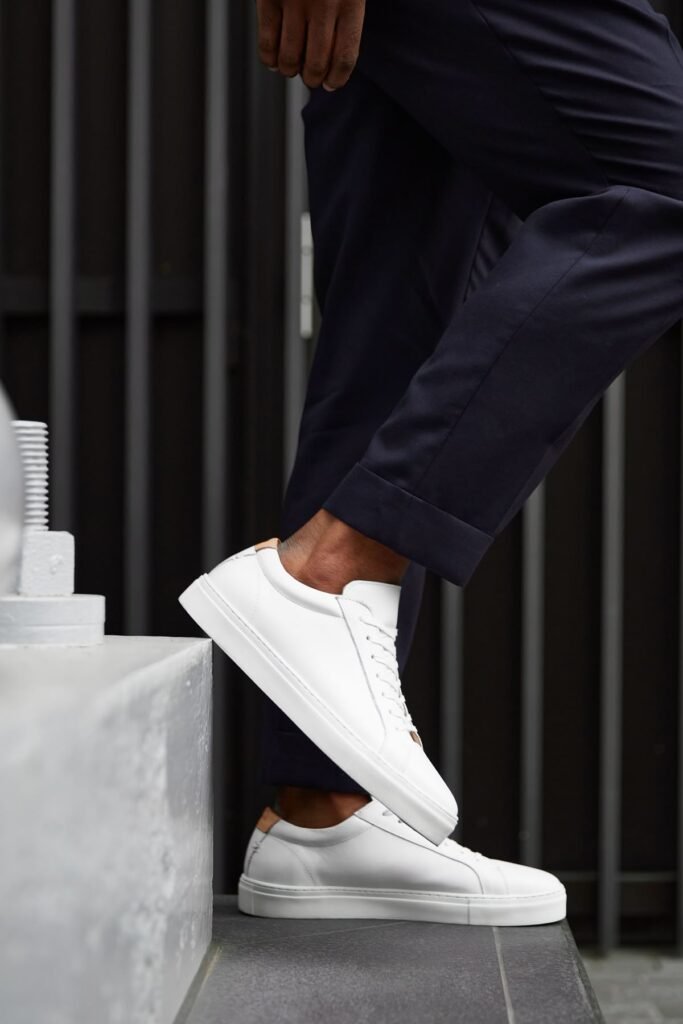
What it is: A low-profile sneaker, usually in white or a neutral tone, made from smooth leather or premium leather-look material, with minimal branding, stitching detail, and a slim sole — think the opposite of a chunky running shoe or a logo-heavy basketball sneaker.
Why it matters: This is the single most versatile shoe a beginner can own. Unlike athletic sneakers, which are designed for performance and read as sporty no matter what you pair them with, a minimal leather sneaker is designed to look intentional — clean lines, understated details, and a shape that works with everything from jeans to tailored trousers.
Why beginners often overlook it: Most beginners default to the sneakers they already own — usually a running shoe or a heavily branded athletic style — because they associate “sneaker” with one category rather than realizing there’s a specific subcategory built for versatility.
Common mistakes:
- Choosing a sneaker with a thick, chunky sole that visually competes with tailored or slim-fitting clothing.
- Picking a heavily logoed or multi-colored pair, which limits how many outfits it actually pairs with.
- Wearing them well past the point of visible wear — a minimal sneaker’s whole appeal disappears once it’s scuffed or yellowed.
How to wear it correctly:
- Pair with dark jeans or chinos and a plain t-shirt or button-up for a clean smart-casual look.
- Keep the rest of the outfit relatively simple — this shoe is meant to blend in seamlessly, not compete for attention.
- No-show or low-cut socks work best with this style to maintain the clean line at the ankle.
Budget-friendly alternative: A quality synthetic or leather-look sneaker in a simple white or off-white colorway performs almost identically at a fraction of the price of premium leather options — the silhouette and cleanliness matter far more than the material cost.
Stylist Tip: Buy this shoe in white or a very light neutral first. It’s the most versatile color and the easiest to keep looking sharp with regular cleaning — a darker sneaker hides less dirt but also blends into fewer outfits.
Situations where it works best: Weekend outings, casual Fridays, coffee dates, university, and any smart-casual setting that doesn’t call for a suit.
Situations where it may not work: Formal events, weddings with a strict dress code, and business settings that require traditional dress shoes.
Example outfit: Dark straight-leg jeans, a plain white or navy t-shirt, an open overshirt, and clean white leather sneakers — an outfit that works for nearly any casual daytime setting without a second thought.
Key takeaway: A single clean, minimal sneaker does more work for a beginner’s wardrobe than five flashy or heavily branded pairs combined.
2. The Leather Derby or Oxford
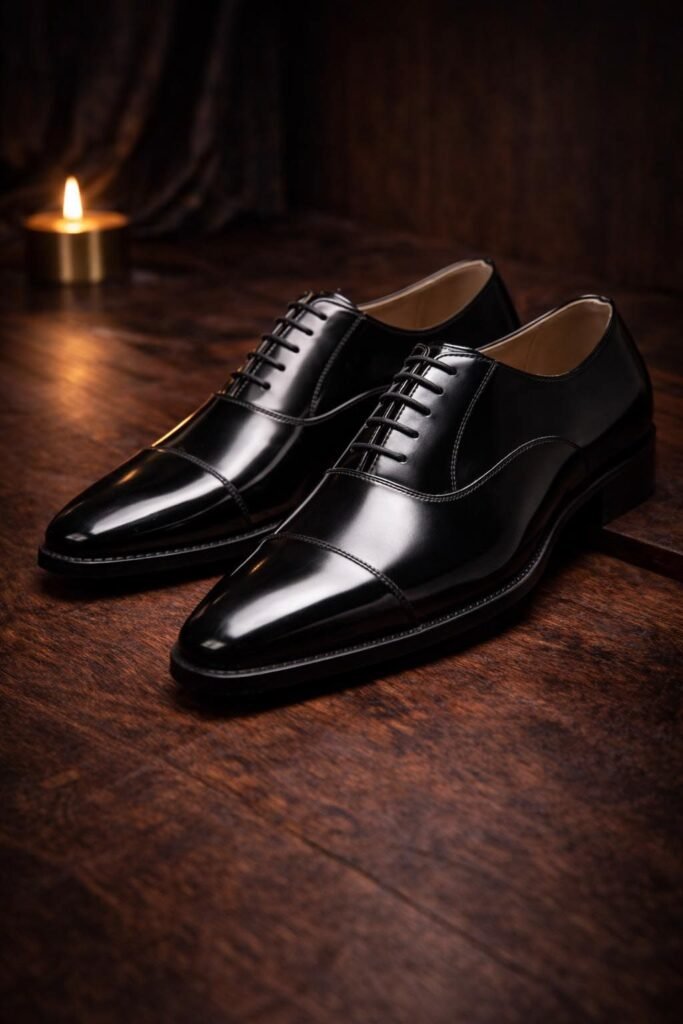
What it is: A classic lace-up leather dress shoe. Oxfords have a closed lacing system (the eyelets are stitched underneath the front of the shoe, creating a sleeker, more formal look), while derbies have an open lacing system (the eyelets sit on top, giving slightly more room and a marginally less formal appearance). Both are built on a structured leather sole and upper.
Why it matters: This is the shoe that carries you through the moments where the sneaker can’t — interviews, weddings, formal dinners, and any business environment with a real dress code. Owning at least one solid pair means you’re never scrambling last minute or showing up underdressed at the feet.
Why beginners often overlook it: Dress shoes feel like a purchase reserved for “someday” — a wedding invitation you don’t have yet, a job you don’t have yet — so many beginners delay buying a pair until they’re caught without one under time pressure, often settling for a rushed, poor-fitting choice.
Common mistakes:
- Buying an overly shiny, patent-style shoe meant for black-tie events and wearing it to everyday business settings, where it looks out of place.
- Never conditioning or polishing the leather, which causes premature cracking and a dull, tired appearance.
- Pairing a very formal oxford with casual trousers like distressed jeans, creating a mismatched formality level.
How to wear it correctly:
- Oxfords pair best with suits and the most formal end of business wear.
- Derbies are slightly more flexible and can work with tailored trousers or even dark, clean jeans in a business casual setting.
- Match the belt to the same leather tone — black shoes with a black belt, brown with brown.
Oxford vs. Derby
| Oxford | Derby | |
|---|---|---|
| Lacing style | Closed (sleeker) | Open (roomier) |
| Formality | Highest | Slightly more relaxed |
| Best for | Suits, formal events | Business casual, smart casual |
| Beginner-friendliness | Requires more precise pairing | More forgiving, easier to style |
Budget-friendly alternative: A well-constructed derby in a matte black or medium brown leather from a mid-range brand will serve a beginner just as reliably as a premium option — the construction quality and proper care matter more than the price tag at this stage.
Shopping Tip: When buying your first pair, choose black or a mid-to-dark brown — both work across the widest range of suits and trousers, unlike lighter or more unusual leather tones that limit your pairing options.
Situations where it works best: Job interviews, weddings, funerals, business meetings, and any setting requiring a suit or a high level of formality.
Situations where it may not work: Casual weekend outings, gym or athletic settings, and hot, humid climates where the closed leather structure feels impractical.
Example outfit: A charcoal suit, white dress shirt, and black leather oxfords for an interview; or tailored navy trousers, a light button-up, and brown derbies for a business casual office day.
Key takeaway: One well-maintained pair of leather dress shoes removes the stress of scrambling for formal footwear every time life calls for it.
3. The Chelsea Boot
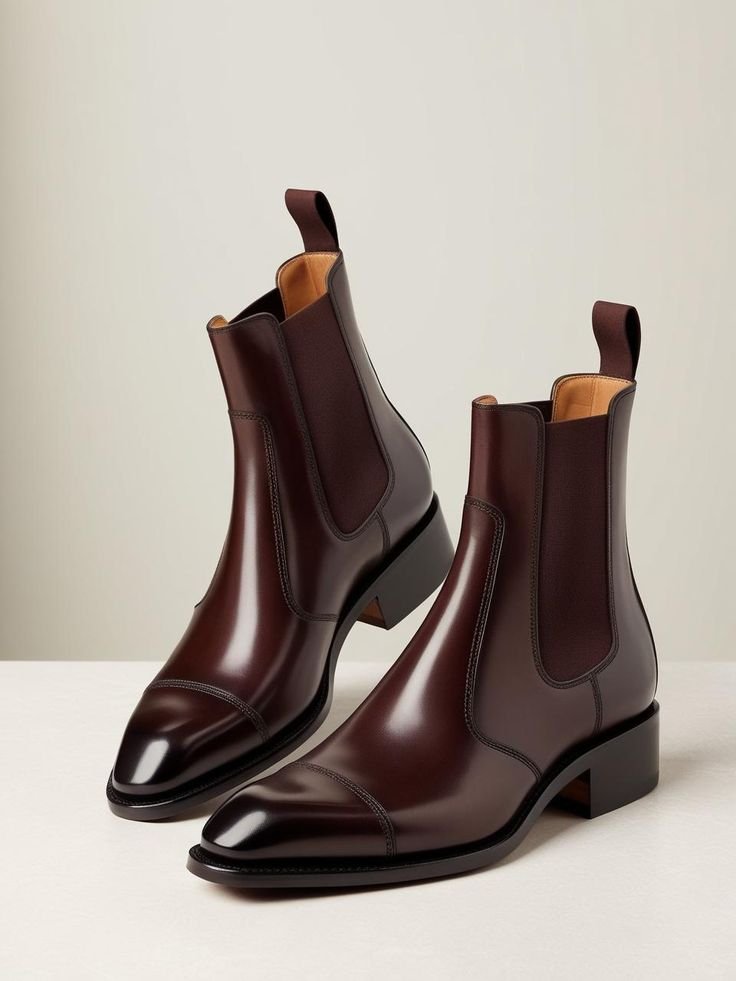
What it is: An ankle-height boot with no laces, typically featuring an elastic side panel and a pull tab at the back for easy on-and-off wear. Usually made from smooth or slightly textured leather.
Why it matters: The Chelsea boot occupies a rare middle ground — dressier than a sneaker, more relaxed than a formal oxford, and versatile enough to bridge casual and business casual settings without looking out of place in either. It’s also one of the few shoe styles that transitions well between seasons, particularly in cooler weather.
Why beginners often overlook it: Chelsea boots can feel intimidating at first because they look “dressier” than sneakers, and beginners aren’t always sure how casual they can go while still looking intentional rather than mismatched.
Common mistakes:
- Assuming Chelsea boots only work with formal outfits, when they actually pair well with jeans and casual layers too.
- Buying a pair with a chunky, overly rugged sole meant for outdoor or work settings and wearing it with tailored clothing, creating a mismatched silhouette.
- Wearing them with shorts or in very warm weather, where the closed boot structure looks and feels out of place.
How to wear it correctly:
- With jeans: cuff the jean hem slightly so it sits just above the boot, avoiding excess fabric pooling over the top.
- With trousers: let the trouser hem break cleanly right at the top of the boot for a streamlined look.
- Stick to a slim, low-profile sole for the widest range of outfit pairings; save chunkier lug soles for deliberately rugged, casual looks.
Seasonal Tip: Chelsea boots are especially useful in fall and winter, when sneakers feel too light and dress shoes feel too formal for everyday wear — they fill exactly that gap.
Budget-friendly alternative: A quality suede or leather Chelsea boot from a mid-range retailer holds up well with basic care; suede versions are often more affordable and still look sharp, though they require slightly more maintenance around moisture and staining.
Situations where it works best: Business casual offices, dinner dates, travel days, and cooler-weather casual outings.
Situations where it may not work: Formal black-tie events, very hot climates, and highly casual settings like the beach or gym.
Example outfit: Dark slim jeans, a fitted crewneck sweater, a wool overcoat, and black leather Chelsea boots — a clean, cold-weather outfit that works for both a date and a casual office day.
Key takeaway: Chelsea boots quietly do more cross-season, cross-occasion work than almost any other shoe style in a beginner’s rotation.
4. The Loafer
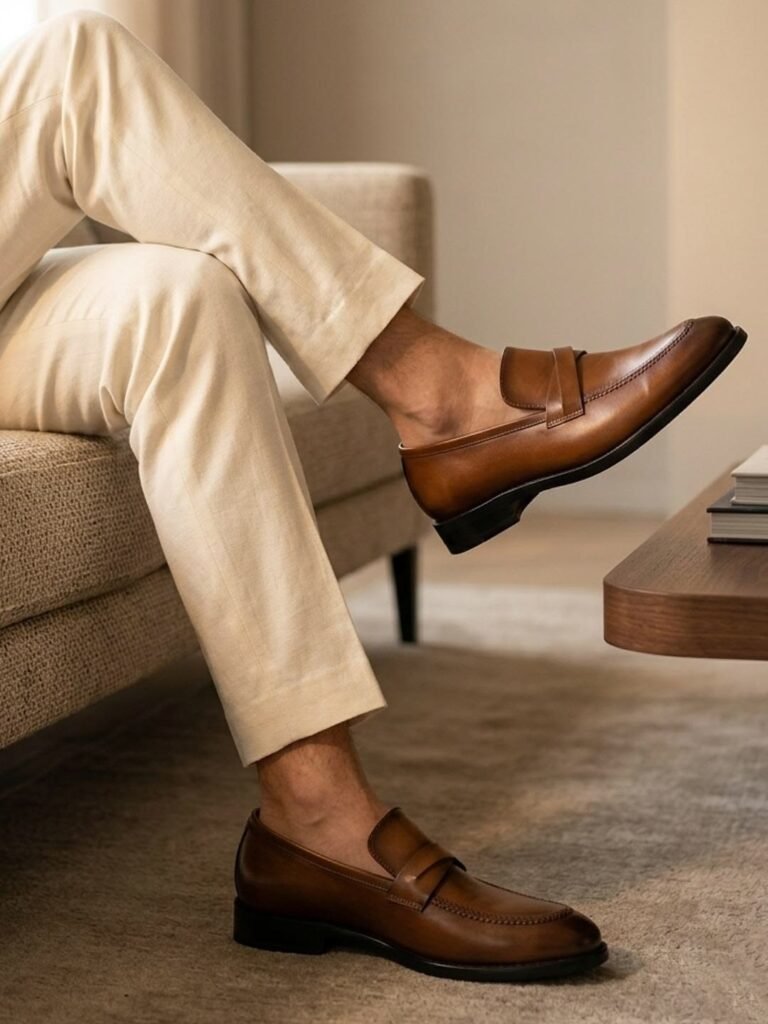
What it is: A slip-on leather shoe with no laces, often featuring a moccasin-style construction. Common variations include the penny loafer (with a small strap and cutout across the front) and the plain-toe or tassel loafer.
Why it matters: Loafers solve a specific problem: they’re dressier and more polished-looking than a sneaker, but far more comfortable and easier to wear in warm weather than a closed lace-up dress shoe. They’re an easy way to look sharp in business casual and smart casual settings without the formality (or the socks-optional discomfort) of a full dress shoe.
Why beginners often overlook it: Loafers can feel like an “older generation” shoe or overly formal to men who haven’t worn them before, so they get skipped in favor of sneakers by default, even in settings where a loafer would actually look more appropriate and comfortable.
Common mistakes:
- Wearing loafers with thick athletic socks, which ruins the sleek silhouette the shoe is designed to create.
- Choosing an overly bulky or clunky loafer style that looks closer to a slipper than a genuine dress shoe.
- Wearing loafers with very casual, baggy clothing, where the shoe’s refined shape clashes with the outfit’s overall relaxed feel.
How to wear it correctly:
- Pair with no-show socks or, in warmer settings, go sockless with a shoe specifically designed for it (look for a breathable, moisture-managing lining if wearing without socks regularly).
- Works especially well with tailored chinos, lightweight suits, and rolled or cropped trousers that show a bit of ankle.
- Keep the rest of the outfit slightly more refined — a plain button-up or polo rather than a graphic tee — to match the shoe’s polish.
Fit Tip: Loafers should fit snugly through the heel with minimal slipping when you walk, since there’s no lace to adjust the fit — a loose-fitting loafer will feel unstable and look sloppy in motion.
Budget-friendly alternative: A leather or leather-look penny loafer from a mid-range brand offers the same silhouette and versatility as a premium option; the key is choosing a slim, classic shape over a bulky or overly trend-driven design.
Situations where it works best: Warm-weather business casual offices, summer dinners, smart casual travel days, and semi-formal outdoor events.
Situations where it may not work: Cold, wet weather, formal black-tie events, and highly athletic or rugged casual settings.
Example outfit: Lightweight tan trousers, a short-sleeve linen-blend shirt, and brown leather penny loafers worn sockless — a clean, warm-weather smart casual look for dinner or travel.
Key takeaway: Loafers give you a dressier silhouette than sneakers without the discomfort or heaviness of a full lace-up dress shoe, especially in warmer months.
5. The Clean Canvas or Casual Leather Sneaker
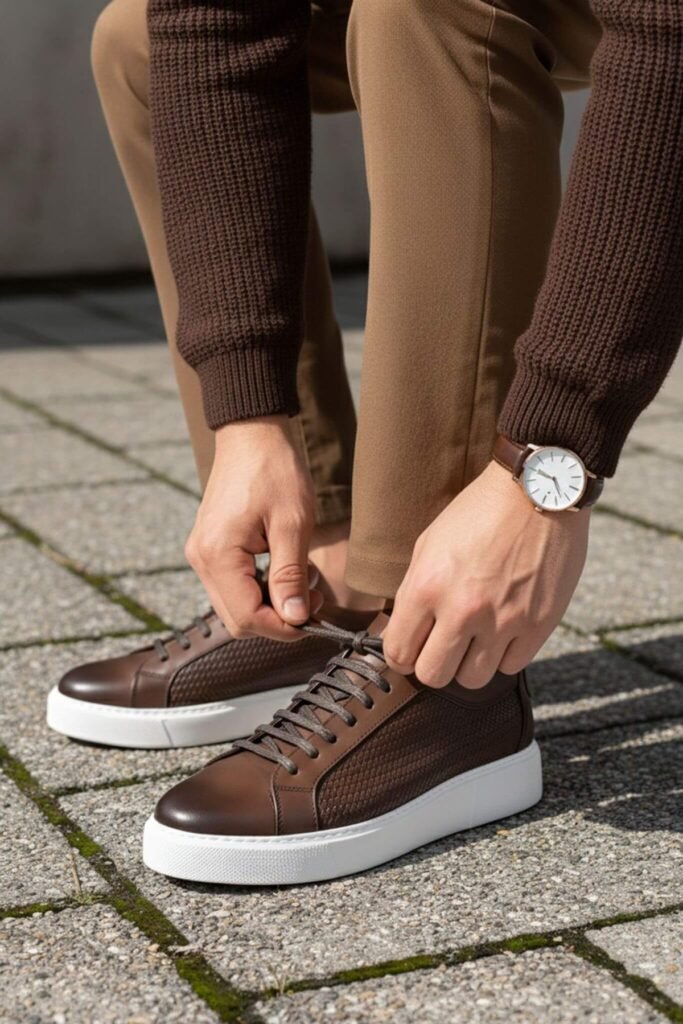
What it is: A relaxed, everyday sneaker — canvas or soft leather, simple silhouette, minimal hardware — distinct from the more polished “minimal leather sneaker” in style #1 in that it leans more casual and sporty, while still avoiding heavy branding or an overly athletic look.
Why it matters: Not every situation calls for even a smart-casual sneaker. Errands, casual university days, and relaxed weekend hangouts call for something comfortable and low-maintenance that still looks put-together rather than sloppy. This shoe fills that specific gap without overdressing for genuinely casual moments.
Why beginners often overlook it: Beginners often assume their dressier minimal sneaker (style #1) should be worn for literally everything, which causes it to wear out faster and lose its “put-together” impact through overuse in situations that didn’t actually call for it.
Common mistakes:
- Wearing a genuinely worn-out, dirty pair well past the point of looking presentable, simply because “it’s just casual.”
- Choosing overly flashy colorways or heavy branding that limits how many outfits the shoe pairs with.
- Treating this as an excuse to ignore fit and coordination entirely, when even the most casual outfit still benefits from basic color coordination.
How to wear it correctly:
- Keep the rest of the outfit relaxed to match — jeans or joggers, a comfortable t-shirt or hoodie, minimal accessories.
- Stick to neutral tones (white, gray, navy, tan) so the shoe pairs easily with whatever casual pieces you already own.
- Clean regularly — canvas sneakers especially show dirt quickly and lose their “fresh” look fast without upkeep.
Maintenance Tip: Canvas sneakers can often be machine washed on a gentle cycle (check care labels first), while leather casual sneakers should be wiped down regularly and conditioned occasionally to prevent cracking.
Budget-friendly alternative: This is the easiest shoe on the list to buy affordably — a simple canvas sneaker in a neutral color from almost any retailer will do the job well, since the appeal here is casual comfort rather than refined materials.
Situations where it works best: Weekend errands, university, casual hangouts with friends, and relaxed travel days.
Situations where it may not work: Business settings, dates that call for a slightly elevated look, and any event with a stated dress code above “casual.”
Example outfit: Relaxed joggers or straight-leg jeans, a plain hoodie or crewneck, and clean gray or white canvas sneakers — comfortable, low-effort, but still clearly intentional rather than thrown together.
Key takeaway: Reserving your most casual sneaker for genuinely casual moments keeps your dressier sneaker looking sharper for longer, and keeps every outfit appropriately matched to the occasion.
How These 5 Shoes Work Together as a System
The real power of this list isn’t any single shoe — it’s how the five work together to cover almost every situation without redundancy:
| Occasion | Recommended Shoe |
|---|---|
| Job interview | Leather oxford |
| Business casual office | Derby or loafer |
| First date (casual dinner) | Minimal leather sneaker or loafer |
| Weekend outing | Casual canvas or leather sneaker |
| Wedding guest | Leather oxford or derby |
| Funeral | Black leather oxford |
| Travel | Minimal leather sneaker or Chelsea boot |
| University | Casual canvas sneaker |
| Cool-weather date night | Chelsea boot |
| Casual Friday | Minimal leather sneaker or loafer |
You don’t need to own all five at once. Most beginners can start with just two — a minimal leather sneaker for everyday versatility and a leather derby or oxford for formal occasions — and add the remaining three gradually as budget and need allow.
Budget Strategy: Where to Spend and Where to Save
Where spending more makes sense: Leather dress shoes (oxfords and derbies) tend to reward higher-quality construction — better leather ages more gracefully, resoling extends their life significantly, and the formal settings they’re worn in tend to be closely scrutinized.
Where it’s fine to save: Casual canvas sneakers and trend-driven sneaker colorways wear out or go out of style faster regardless of price, so there’s less benefit to overspending here. A well-chosen mid-range option performs nearly as well as a premium one for genuinely casual use.
How to maximize cost per wear: Buy neutral colors first (black, brown, white, navy) across all five categories before experimenting with anything bolder or more seasonal. Neutral shoes pair with dramatically more outfits, which means more wears per dollar spent.
Common Mistake: Buying several trendy, statement-color sneakers before owning a single reliable pair of leather dress shoes — leaving a wardrobe well-equipped for casual weekends but completely unprepared for an unexpected interview, wedding, or formal dinner.
Shoe Care Basics Every Beginner Should Know
Owning the right shoes only matters if you keep them looking the part. A few basics go a long way:
- Rotate your shoes. Wearing the same pair two days in a row doesn’t give the material (especially leather) time to fully dry out and recover its shape, which shortens lifespan significantly.
- Use shoe trees for leather shoes. They help maintain shape and absorb moisture between wears — a small investment that noticeably extends the life of dress shoes and boots.
- Clean regularly, not just when visibly dirty. A quick wipe-down after a few wears prevents dirt and oils from settling into the material long-term.
- Condition leather periodically. Leather dries out and cracks over time without occasional conditioning, especially in colder or drier climates.
- Address scuffs and stains immediately. They’re far easier to treat fresh than after they’ve set into the material.
Maintenance Tip: Keep a basic shoe care kit at home — a brush, a neutral polish or conditioner, and a couple of microfiber cloths. It costs very little and extends the life of every leather shoe you own by a meaningful margin.
Frequently Asked Questions
1. What’s the single most important shoe for a beginner to buy first? A minimal leather sneaker in a neutral color like white. It covers the widest range of casual and smart-casual situations and works with almost everything already in a typical beginner’s closet.
2. Do I really need five different pairs of shoes? Not immediately. Two — a versatile sneaker and a formal leather shoe — cover most day-to-day and important-event needs. The other three fill specific gaps (cold weather, warm-weather business casual, and highly casual settings) as your wardrobe grows.
3. Are Chelsea boots too formal for everyday wear? No. While they read as dressier than a sneaker, Chelsea boots pair comfortably with jeans and casual sweaters, making them appropriate for a wide range of everyday cool-weather outfits, not just formal occasions.
4. Can I wear loafers without socks? Yes, especially in warm weather, though it’s worth choosing a loafer specifically designed for sockless wear (often with a moisture-managing lining) to keep the shoe comfortable and in good condition over time.
5. What color dress shoe should I buy first — black or brown? Black is generally the safer first choice since it pairs with the widest range of suit colors and formal settings, though a mid-to-dark brown is a close second and slightly more versatile for business casual settings.
6. How do I know if a shoe is too casual for my office? If your office has an explicit dress code, follow it directly. If it’s unclear, a leather derby or loafer is a safe middle ground — dressier than a sneaker but not as formal as a full oxford.
7. How often should sneakers be replaced? Once the sole shows visible wear, the color has yellowed or dulled significantly despite cleaning, or the shape has noticeably broken down, it’s time to replace them — continuing to wear visibly worn sneakers undercuts even a well-put-together outfit.
8. Is it okay to wear sneakers with a suit? In very casual or fashion-forward settings, a minimal leather sneaker can work with a relaxed, unstructured suit. For traditional business or formal settings, however, a leather dress shoe remains the safer and more appropriate choice.
9. What’s the difference between an oxford and a derby, practically speaking? Oxfords have a closed lacing system and read as more formal, making them ideal for suits and black-tie-adjacent events. Derbies have an open lacing system, are slightly more relaxed, and pair more easily with business casual trousers.
10. Do I need real leather, or is leather-look material fine for beginners? Leather-look or synthetic materials are a completely reasonable starting point, especially on a budget. As your wardrobe and budget grow, genuine leather generally ages better and can be resoled, extending its lifespan considerably.
11. How many pairs of shoes should a beginner own in total? Two to three well-chosen pairs covering different formality levels will serve most beginners better than five or six impulse purchases that don’t coordinate with the rest of the wardrobe.
12. What’s the biggest shoe mistake beginners make? Wearing one pair of shoes for every occasion, regardless of fit for the setting — usually an athletic sneaker worn to both casual outings and situations that actually call for something dressier.
Final Thoughts
Shoes are one of the fastest ways to instantly upgrade how put-together an outfit looks, precisely because most beginners underinvest in thinking about them. You don’t need a large collection — you need a small, intentional rotation where each pair has a clear job.
Start with a minimal leather sneaker and a solid pair of leather dress shoes. Add a Chelsea boot, a loafer, and a casual sneaker as your wardrobe and budget allow. Keep them clean, rotate them properly, and match each pair to the occasion it was actually designed for — and you’ll notice the upgrade in how your whole outfit reads, not just your feet.
Read also: