5 Watch Styles Every Beginner Should Know Before Buying One
You’ve decided you want a watch. Maybe your phone has been doing the job fine, but you’re ready for something that actually finishes an outfit — the way a good pair of shoes or a well-fitted blazer does.
So you start browsing, and within about ten minutes, you’re drowning in terms you’ve never heard before: bezel, complication, lume, movement, water resistance ratings that mean nothing to you.
You close the tab more confused than when you opened it.
Here’s the good news: you don’t need to understand everything about watchmaking to buy a watch you’ll actually wear for years. You need to understand five core styles — what each one is built for, how it looks on the wrist, and which situations it works in.
Once you know these five categories, every watch you encounter online or in a store will make immediate sense, and you’ll know exactly which one (or two) actually belongs in your collection.
This guide breaks down the 5 watch styles every beginner should understand before spending a dollar — what makes each one distinct, who it suits, and how to avoid the most common first-watch mistakes.
Quick Answer: The 5 essential watch styles are the dress watch, the field watch, the dive watch, the chronograph, and the GMT/pilot watch. For most beginners, a versatile field watch or a simple dress watch makes the best first purchase, since both pair with the widest range of outfits and occasions.
Why Watch Style Matters More Than Watch Brand
New watch buyers often start by researching brands — which is understandable, since brand names are what get talked about most. But brand doesn’t determine whether a watch actually works with your wardrobe and lifestyle. Style does.
A beautifully made dive watch will still look wrong under a suit jacket at a wedding. A delicate dress watch won’t survive a weekend of hiking and swimming. Understanding style first means you’ll shop for the right category before ever worrying about which specific brand or model within that category deserves your money.
Read also: 11 Accessories That Make a Basic Outfit Look Intentional
1. The Dress Watch
What It Is
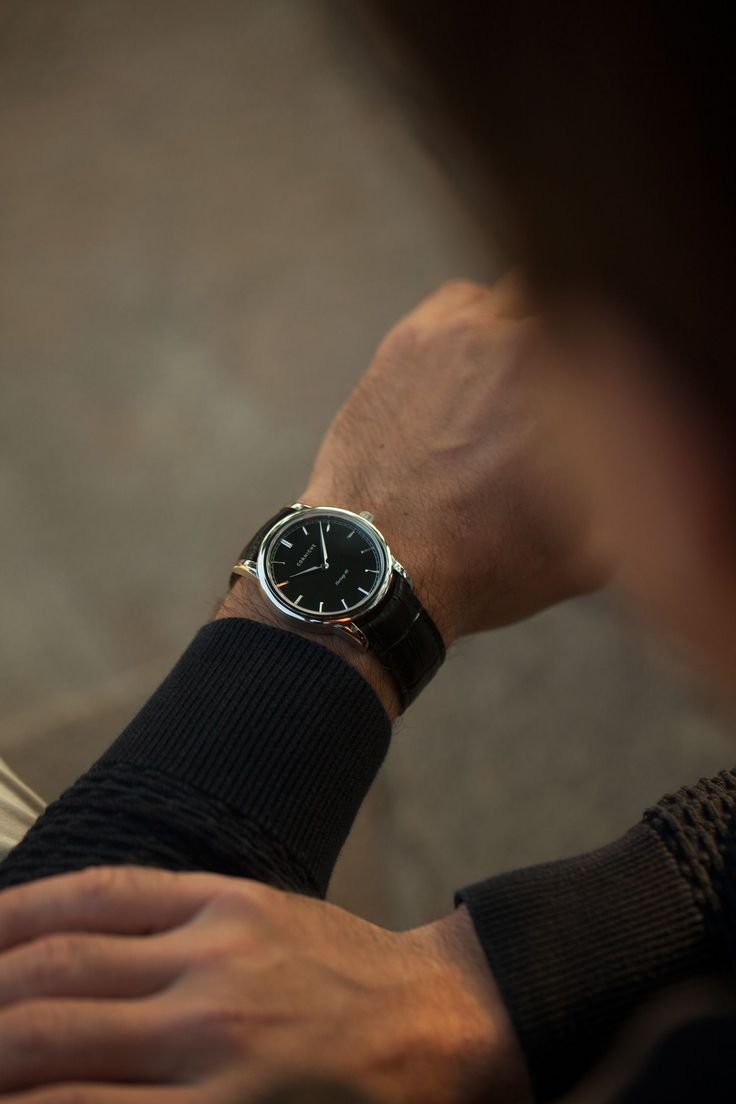
A thin, minimalist watch with a simple dial (often just hour markers, sometimes without a second hand), a leather strap, and little to no extra functionality beyond telling time.
Why It Matters
The dress watch is designed to disappear under a shirt cuff rather than draw attention to itself — its entire purpose is to look refined and understated in formal or professional settings where a bulky sports watch would feel out of place.
Why Beginners Overlook It
Dress watches can feel “boring” compared to flashier sports watches with visible complications and chunky cases, so beginners often skip straight to something more eye-catching without considering how often formal or professional settings actually come up.
Common Mistakes
- Buying an oversized case (over 40mm) for a dress watch, which undercuts its intended understated look
- Choosing a bracelet (metal band) instead of leather, which reads more casual and less refined
- Wearing a dress watch during physical activity or water exposure, since most aren’t built to withstand either
How to Wear It Correctly
Pair with a suit, blazer, or dress shirt. Look for a case size between 36–40mm and a slim profile that slides easily under a cuff. A simple leather strap in black or brown is the most versatile choice.
Shopping Tip: A dress watch is meant to be understated — resist the urge to buy one with a busy dial or an oversized case, both of which work against its intended purpose.
Budget-Friendly Alternatives
Quartz-movement dress watches (versus mechanical) are significantly more affordable while still delivering the same refined look — an excellent starting point for a first dress watch.
Situations Where It Works Best
Job interviews, weddings, formal dinners, business settings, funerals.
Situations Where It May Not Work
Casual weekend outings, athletic activities, swimming — the delicate build and minimal water resistance make it a poor match for anything physical.
Example Pairing
A slim black leather dress watch + navy blazer + white dress shirt + charcoal trousers = a refined, cohesive formal outfit.
Key Takeaway: A dress watch’s value is in its restraint — the less it draws attention to itself, the better it’s doing its job.
2. The Field Watch
What It Is
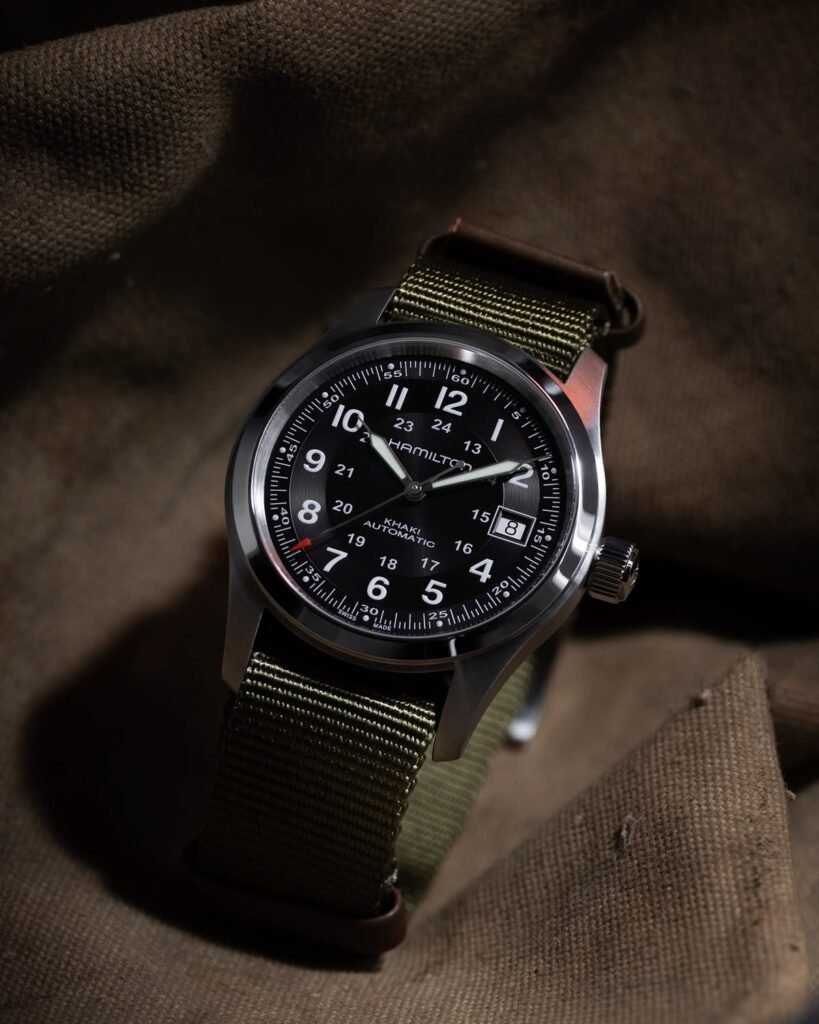
A simple, rugged, highly legible watch originally designed for military use — typically featuring a matte dial, bold numerals, a durable case, and a canvas or leather strap.
Why It Matters
The field watch is arguably the most versatile watch style available. Its simple, no-frills design pairs with both casual and business casual outfits, and its rugged build means it can handle daily wear without excessive care.
Why Beginners Overlook It
Because field watches don’t have the flash of a chronograph or the outdoor cachet of a dive watch, beginners sometimes assume they’re less interesting — missing how much day-to-day versatility this simplicity actually provides.
Common Mistakes
- Overpaying for unnecessary complications when the appeal of a field watch is specifically its simplicity
- Choosing a metal bracelet over canvas or leather, which shifts the watch away from its intended rugged, casual character
- Assuming field watches are too casual for business settings, when a clean, simple version works well in business casual contexts
How to Wear It Correctly
Pair with casual and business casual outfits alike — jeans and a tee, or chinos and a button-up. A canvas NATO strap or simple leather band keeps the look authentic to the style’s utilitarian roots.
Confidence Tip: If you can only own one watch, a field watch is one of the safest choices — it works in more everyday contexts than any other style on this list.
Budget-Friendly Alternatives
Field watches are one of the most affordable watch categories overall, since their design intentionally avoids expensive complications or materials.
Situations Where It Works Best
Casual outings, business casual offices, travel, everyday wear, weekend activities.
Situations Where It May Not Work
Formal weddings or black-tie events, where its casual, utilitarian design feels mismatched with the occasion’s formality.
Example Pairing
A canvas-strap field watch + white t-shirt + dark jeans + white sneakers = an easy, versatile weekend outfit.
Key Takeaway: The field watch’s simplicity is exactly what makes it the most all-purpose option for a beginner’s first watch.
3. The Dive Watch
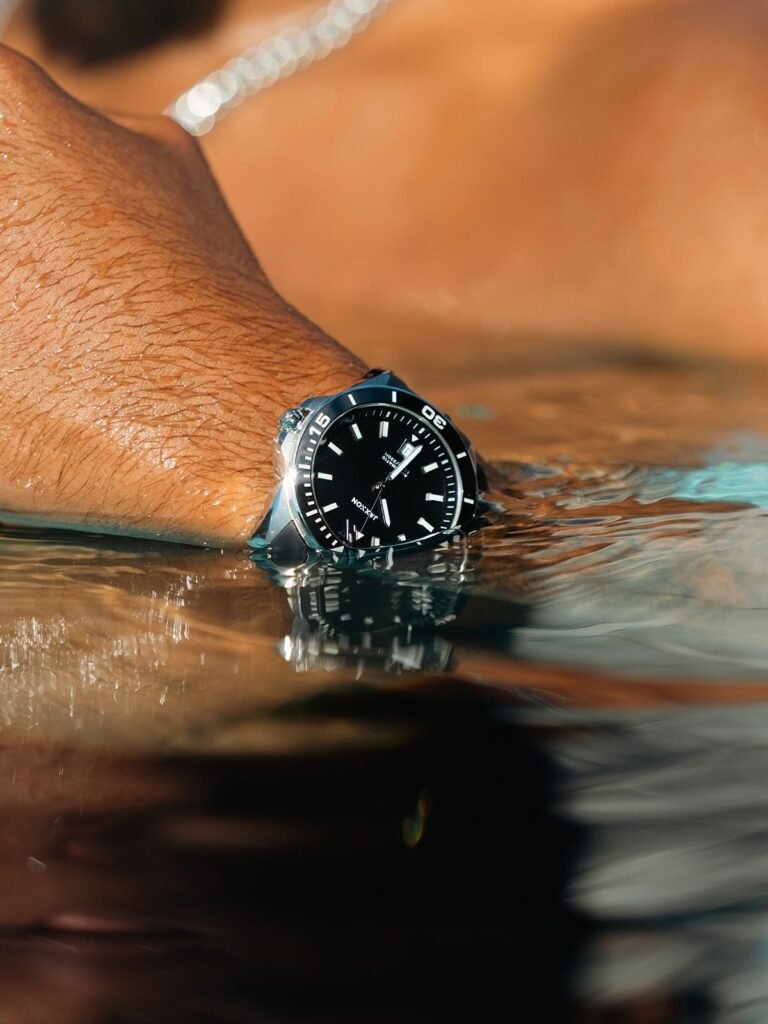
What It Is
A robust, water-resistant sports watch originally designed for underwater use, typically featuring a rotating bezel, bold luminous markers, and a thicker case built to withstand impact and pressure.
Why It Matters
Dive watches are built for durability and high visibility, making them excellent everyday and travel watches even if you never actually dive — their rugged construction handles daily wear and tear better than most other styles.
Why Beginners Overlook It
Some beginners assume dive watches are only appropriate for people who actually dive or swim regularly, missing how popular and versatile this style has become for general everyday wear.
Common Mistakes
- Assuming a “dive watch” claim on a product listing guarantees genuine water resistance without checking the actual rating
- Choosing an oversized case (over 44mm) that overwhelms a smaller wrist
- Wearing a dive watch with formal attire, where its bulk and sporty design clash with tailored pieces
How to Wear It Correctly
Pair with casual outfits, outdoor activities, and travel days. A stainless steel bracelet or rubber strap suits its rugged character better than leather.
Shopping Tip: Check the actual water resistance rating (measured in meters or ATM) rather than assuming all watches marketed as “dive watches” meet true diving standards — genuine dive-rated watches typically start around 200 meters.
Budget-Friendly Alternatives
Quartz dive watches from established affordable brands offer the same rugged design and water resistance as premium mechanical versions, at a fraction of the price.
Situations Where It Works Best
Casual outings, travel, outdoor activities, everyday rugged wear.
Situations Where It May Not Work
Formal business settings, weddings, black-tie events — its bulk and sporty design read as mismatched with tailored formal wear.
Example Pairing
A steel dive watch + navy overshirt + dark jeans + white sneakers = a rugged, casual everyday look with a durable, practical watch.
Key Takeaway: A dive watch’s durability makes it an excellent everyday option, even for men who’ll never actually use it underwater.
4. The Chronograph
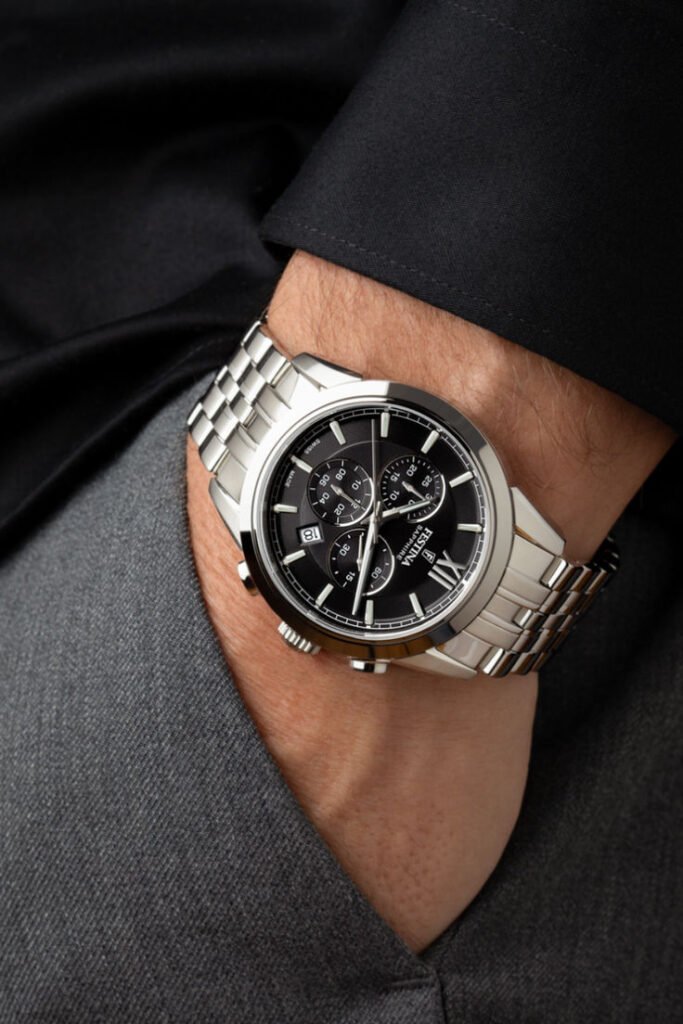
What It Is
A watch that includes a built-in stopwatch function, typically identifiable by additional sub-dials on the watch face used to track elapsed time.
Why It Matters
Chronographs offer genuine visual complexity and a sporty, technical look that appeals to men who want a watch with more visual presence than a simple field or dress watch, without going as rugged as a dedicated dive watch.
Why Beginners Overlook It
The additional sub-dials and pushers (buttons used to operate the stopwatch) can look intimidating or overly complicated to someone just starting to learn about watches, leading beginners to assume it requires more expertise to use or style correctly.
Common Mistakes
- Buying a chronograph purely for its look without ever using the stopwatch function, missing that simpler styles can offer similar visual interest with less complexity
- Pairing an oversized, busy chronograph with formal attire, where the extra dial complexity can clash with a minimalist dress code
- Assuming all chronographs are equally casual or equally formal, when the specific design (dial color, case material, strap) shifts this significantly
How to Wear It Correctly
A steel-bracelet chronograph pairs well with business casual and smart casual outfits. A leather-strap version in a muted color can even work with certain business formal settings, depending on the dial’s complexity.
Fit Tip: If you’re new to chronographs, choose a version with a simpler dial layout (two sub-dials rather than three or more) for a cleaner, more versatile look.
Budget-Friendly Alternatives
Quartz chronographs are widely available at accessible price points and offer the same visual complexity and stopwatch functionality as more expensive mechanical versions.
Situations Where It Works Best
Business casual, smart casual, everyday wear with a bit more visual presence than a basic field watch.
Situations Where It May Not Work
Very formal black-tie events, where the busier dial can clash with the minimalism expected of formal dress watches.
Example Pairing
A steel chronograph + light blue dress shirt + grey trousers + brown shoes = a business casual outfit with a watch that adds visual interest without overwhelming the outfit.
Key Takeaway: A chronograph offers a middle ground between the simplicity of a field watch and the boldness of a dedicated sports watch.
5. The GMT / Pilot Watch
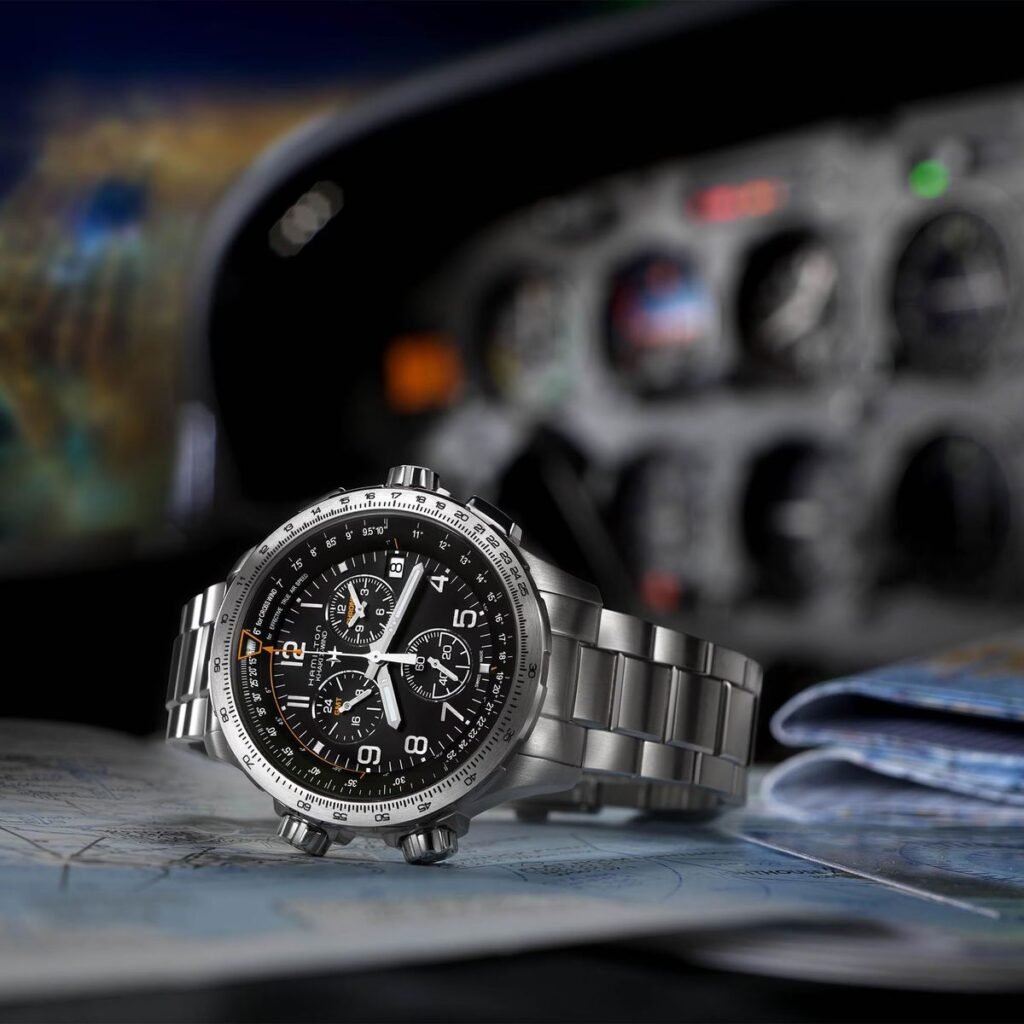
What It Is
A watch designed to track multiple time zones (GMT) or originally built for aviation use (pilot watch) — typically featuring a large, highly legible dial, and in GMT versions, an additional hand or bezel marking a second time zone.
Why It Matters
GMT and pilot watches combine bold, statement-making design with genuine function for frequent travelers, making them a strong choice for men who want a watch with real personality and practical use for tracking time across regions.
Why Beginners Overlook It
The dual time zone functionality can feel unnecessary for beginners who don’t travel frequently, leading them to overlook how much visual character these watches offer even without ever using the GMT function.
Common Mistakes
- Buying a GMT watch purely for the feature without ever needing to track a second time zone, when a similarly bold pilot watch without the added complexity might suit lifestyle needs better
- Choosing an oversized case (many pilot watches historically run large, some 44mm+), which can overwhelm smaller wrists
- Assuming all GMT and pilot watches are equally casual, when strap and case material shift this significantly
How to Wear It Correctly
Pair with casual and business casual outfits. A leather strap softens the watch’s bold, technical look for smart casual settings, while a steel bracelet leans more overtly sporty and casual.
Seasonal Tip: GMT watches are a strong choice for frequent travelers specifically — the added function has genuine, daily practical value if you regularly cross time zones.
Budget-Friendly Alternatives
Simpler pilot watches without a true GMT complication (just the bold dial design) offer a similar aesthetic at a lower price point if the dual time zone function isn’t a priority for you.
Situations Where It Works Best
Travel, business casual, casual outings, everyday wear with bold visual presence.
Situations Where It May Not Work
Formal black-tie events, where the large case and bold dial clash with the expected minimalism of formal dress.
Example Pairing
A leather-strap pilot watch + olive overshirt + dark jeans + white sneakers = a casual outfit with a bold, statement watch as the focal point.
Key Takeaway: A GMT or pilot watch adds genuine personality and, for frequent travelers, real practical function beyond just telling time.
Comparison Table: Which Watch Style Fits Which Occasion
| Style | Best For | Avoid For | Typical Strap |
|---|---|---|---|
| Dress Watch | Interviews, weddings, formal dinners | Athletic activity, swimming | Leather |
| Field Watch | Everyday wear, business casual, travel | Black-tie formal events | Canvas or leather |
| Dive Watch | Casual outings, travel, outdoor activity | Formal business settings | Steel bracelet or rubber |
| Chronograph | Business casual, smart casual | Very formal black-tie events | Steel bracelet or leather |
| GMT/Pilot Watch | Travel, casual and business casual wear | Formal black-tie events | Leather or steel bracelet |
Comparison Table: Dress Watch vs. Sports Watch
| Factor | Dress Watch | Sports Watch (Dive, Chronograph, GMT) |
|---|---|---|
| Case thickness | Thin, slides under a cuff | Thicker, more substantial on the wrist |
| Water resistance | Minimal | Moderate to high |
| Dial complexity | Simple, minimal | Often includes sub-dials, bezels, or extra hands |
| Strap material | Leather | Steel bracelet, rubber, or canvas |
| Best occasions | Formal, professional settings | Casual, business casual, outdoor activities |
Budget vs. Premium: Where to Spend on a First Watch
| Factor | Budget Watch | Premium Watch |
|---|---|---|
| Movement | Quartz (battery-powered, highly accurate) | Often mechanical (automatic or manual) |
| Cost | Lower, widely accessible | Significantly higher |
| Maintenance | Battery replacement every 1–2 years | Regular servicing recommended for mechanical movements |
| Best for beginners | Yes — lower risk while learning your preferences | Better suited once you know your preferred style |
Body Type and Wrist Size Considerations
Watch sizing isn’t about your overall body type so much as your wrist size specifically, but it’s worth understanding the adjustment:
Smaller wrists (under 6.5 inches): Look for case sizes in the 36–40mm range across any style — oversized cases (44mm+) can look disproportionate and uncomfortable.
Average wrists (6.5–7.5 inches): Most standard case sizes (38–42mm) will work well across all five styles discussed here.
Larger wrists (7.5 inches+): Larger case sizes (42–46mm) tend to look proportionate, and styles like dive watches, chronographs, and pilot watches — which often run larger by design — tend to suit this wrist size especially well.
Common Mistakes When Buying Your First Watch
Mistake 1: Buying Based on Looks Alone Without Considering Lifestyle
A striking dive watch is a poor choice if you work in a formal office and rarely dress casually.
Fix: Match the watch style to the contexts you’ll actually wear it in most often.
Mistake 2: Starting With a Complicated, Expensive Mechanical Watch
Beginners sometimes jump straight to an expensive automatic watch without understanding maintenance needs (regular servicing, accuracy drift).
Fix: Start with a reliable quartz movement while you learn your preferences, then consider mechanical watches later if that interests you.
Mistake 3: Ignoring Case Size Relative to Wrist Size
An oversized watch on a smaller wrist (or vice versa) looks disproportionate regardless of style or price.
Fix: Measure your wrist and check the specific case size in millimeters before buying, rather than relying on photos alone.
Mistake 4: Buying Multiple Watches Before Understanding What You Actually Wear
Some beginners buy 3–4 watches upfront, unsure which styles they’ll actually reach for.
Fix: Start with one versatile style (field watch or simple dress watch) and expand once you understand your actual habits.
Mistake 5: Overlooking Strap Versatility
Assuming a watch’s included strap is permanent, without realizing most straps can be swapped for a different look.
Fix: Consider a watch with an easily interchangeable strap (quick-release spring bars), letting one watch head serve multiple style needs.
Budget Strategy for Building a Watch Collection
Where to save money: Your first watch, especially while you’re still learning which style you actually reach for most often — a quality quartz watch in a versatile style is a smart, low-risk starting point.
Where to spend more: A second or third watch, once you know your genuine preferences (for example, if you regularly attend formal events and would benefit from a nicer dress watch).
How to build gradually: Start with one versatile style — a field watch or a simple dress watch — and wear it for several months before considering a second piece. This ensures your next purchase fills an actual gap rather than duplicating what you already own.
Maximizing cost per wear: A single versatile watch, worn daily across multiple contexts, delivers far more value than several watches split across narrow, occasion-specific use cases.
Budget Tip: A field watch with an interchangeable strap can functionally cover both casual and semi-formal needs with a simple strap swap, delaying the need for a second watch entirely.
Real-Life Scenarios: Choosing the Right Watch
Job interview: A slim dress watch or a simple field watch with a leather strap — both read as professional and understated.
First date: A field watch or chronograph, depending on the outfit’s formality — both add a touch of polish without overdressing.
Business casual office: A field watch or chronograph on a leather strap works well across a full week of varied outfits.
Weekend outing: A field watch or dive watch on a canvas or rubber strap — durable, casual, and low-maintenance.
Wedding guest: A dress watch, or a simple field watch on a leather strap if a full dress watch isn’t yet part of your collection.
Travel: A GMT watch if you cross time zones frequently, or a rugged dive watch for its durability and water resistance.
Frequently Asked Questions
1. What’s the best first watch for a true beginner? A field watch or a simple dress watch — both are versatile, affordable, and work across the widest range of everyday and semi-formal situations.
2. Do I need a mechanical watch, or is quartz fine? Quartz is genuinely fine, especially as a first watch. It’s more accurate, requires less maintenance, and is significantly more affordable than mechanical movements.
3. How much should a beginner spend on their first watch? There’s no strict rule, but many beginners start well within a modest budget to test their preferences before investing more in a specific style later.
4. Can one watch really cover most situations, or do I need several? A single versatile style, particularly a field watch, can genuinely cover casual and business casual situations. You’ll likely want a second watch eventually for formal events or specific activities, but it’s not necessary to start with multiple.
5. What size watch case should I look for? Match the case size to your wrist: 36–40mm for smaller wrists, 38–42mm for average wrists, and 42–46mm for larger wrists, adjusting based on the specific style’s typical proportions.
6. Is a dive watch overkill if I never plan to actually dive? Not at all — many men wear dive watches purely for their rugged, everyday durability and bold design, regardless of whether they ever use the actual diving functionality.
7. What’s the difference between a chronograph and a regular watch? A chronograph includes a built-in stopwatch function, identifiable by additional sub-dials on the watch face, while a regular watch simply displays the time.
8. Should my watch strap match my belt and shoes? It’s a nice detail but not a strict rule — a brown leather strap paired with brown shoes and belt creates a cohesive look, though steel bracelets and canvas straps are more neutral and flexible across outfits.
9. How often does a quartz watch need maintenance? Primarily just battery replacement, typically every 1–2 years, along with occasional cleaning — quartz movements require far less maintenance than mechanical ones.
10. Is it okay to wear a sports watch (dive, chronograph, GMT) with business casual outfits? Yes, especially on a leather strap rather than a bulky steel bracelet, which softens the look enough to fit comfortably into most business casual settings.
11. What should I avoid in my very first watch purchase? Avoid overly niche or highly specialized watches (very technical dive watches, complicated multi-function pieces) until you understand your actual daily needs and preferences.
12. Can I resize a watch strap myself, or do I need a professional? Metal bracelets often require simple tools (a small pin pusher) that many beginners can use at home, while leather straps with quick-release spring bars can typically be swapped without any tools at all.
Final Thoughts: Understand the Style, Then Shop the Brand
A watch is one of the few accessories that genuinely finishes an outfit, but only if the style actually matches how and where you’ll wear it. Before falling down a rabbit hole of specific brands and models, get clear on which of these five styles fits your actual lifestyle — a dress watch for formal settings, a field watch for daily versatility, a dive watch for rugged durability, a chronograph for a bit of technical flair, or a GMT for genuine travel function.
Once you understand the style that fits your life, shopping for a specific watch becomes far less overwhelming — and far more likely to result in something you’ll actually wear for years, not something that ends up sitting in a drawer.
Read also: