9 Denim Rules Every Man Should Learn in His 20s
There’s a good chance your relationship with jeans started somewhere in your teens with whatever was on the clearance rack, and it hasn’t really evolved since.
Most guys wear jeans almost every week of their lives and still can’t tell you the difference between a straight and a slim-straight fit, or explain why one pair looks sharp with a blazer, and another looks like it belongs exclusively at a barbecue.
That gap matters more than it seems. Jeans are probably the single most-worn item in the average man’s closet, which means small mistakes in fit, wash, or pairing get repeated constantly — day after day, outfit after outfit.
Learning denim properly in your 20s isn’t about becoming a denim obsessive who knows every mill in Japan. It’s about understanding a handful of rules that instantly upgrade how every pair of jeans you own actually looks and functions.
Here are the 9 denim rules worth learning now, while you’re still building the habits that’ll carry into the rest of your wardrobe.
Quick Answer: The 9 core denim rules are: prioritize fit over trends, understand wash versatility, know your rise, size for the waist and get the length hemmed, avoid excessive distressing for versatility, invest in one great dark wash pair before anything else, learn what denim pairs with (and what it doesn’t), rotate wears to extend lifespan, and wash jeans far less often than you think. Master these, and every pair of jeans you own will work harder for you.
Why Denim Deserves More Attention Than It Gets
Jeans feel like a “solved” category — you know your size, you grab a pair, you move on. But because jeans get worn so frequently, small mistakes compound fast.
A slightly wrong fit doesn’t just affect one outfit; it affects every single outfit built around those jeans, week after week. Getting denim right is one of the highest-leverage upgrades available in a man’s wardrobe, precisely because of how often it gets worn.
1. Fit Beats Everything — Including Brand and Price
What It Is
The single most important denim decision is the cut — straight, slim-straight, tapered, or relaxed — chosen based on your actual body proportions rather than whatever’s currently trending.
Why It Matters
A $300 pair of jeans in the wrong fit will always look worse than a $60 pair in the right one. Fit determines silhouette, and silhouette is what people actually notice, long before they register brand or price.
Why Beginners Overlook It
Many men buy jeans the way they bought them at 18 — grabbing a familiar size and style without reassessing whether that cut still matches their current build or the current silhouette that reads as modern.
Common Mistakes
- Sticking with skinny fits well past the point where they suit your build or the current style landscape
- Buying based on a single measurement (waist) without considering the taper through the leg
- Assuming “regular fit” means the same thing across every brand
How to Get It Right
A straight or slim-straight cut works for the widest range of body types and remains the most versatile choice for pairing with different shoe styles, from sneakers to boots to dress shoes.
Fit Tip: Stand naturally and check the fabric at your thigh and calf — there should be a slight taper, not excess bagginess or compression.
Key Takeaway: Chase the right fit for your body first — brand and price are secondary considerations.
2. Dark Wash Is the Most Versatile — Learn Why
What It Is
A uniform, dark indigo wash with minimal fading or contrast, as opposed to lighter, more distressed, or heavily faded washes.
Why It Matters
Dark wash denim reads dressier and pairs with more shoe and shirt combinations than any other wash — from sneakers and a t-shirt to a blazer and dress shoes. It’s the closest thing denim has to a neutral.
Why Beginners Overlook It
Light wash and heavily distressed denim often dominate casual shopping displays, making dark wash feel like the “boring” option — when it’s actually the most functional.
Common Mistakes
- Owning only light or heavily faded washes limits how dressed-up an outfit can go
- Assuming all dark washes look the same, when subtle differences in tone (blue-black vs. deep indigo) affect versatility
- Wearing dark-wash denim with an already dark, monochrome outfit without any contrast
How to Get It Right
Make your first (or primary) pair of jeans a dark, minimally faded wash. Add lighter or more distressed washes later, once your dark pair is already handling most of your denim needs.
Shopping Tip: A dark wash pair with no visible whiskering or fading at the thighs will look sharp in both casual and smart casual contexts.
Key Takeaway: If you own only one pair of jeans, it should be a dark, clean wash.
3. Know Your Rise Before You Know Your Size
What It Is
“Rise” refers to where the waistband of the jeans sits — low, mid, or high — measured from the crotch seam to the top of the waistband.
Why It Matters
Rise affects both comfort and silhouette dramatically. A rise that’s wrong for your torso length or proportions can create an unflattering gap at the back, excessive bunching at the front, or general discomfort that no amount of correct waist sizing will fix.
Why Beginners Overlook It
Most men only check waist and length measurements, never realizing rise is a separate, equally important variable that varies significantly between brands and even between cuts within the same brand.
Common Mistakes
- Buying based on waist size alone, ignoring how the rise interacts with your torso
- Assuming “mid-rise” means the same measurement across every brand
- Sizing down in the waist to compensate for a rise that’s actually too low, creating discomfort rather than solving the fit issue
How to Get It Right
A mid-rise generally suits the widest range of body types and looks proportionate with both tucked and untucked shirts. If you notice consistent gapping at the back waistband, try a slightly higher rise in that brand’s next size up.
Fit Tip: Sit down while trying on jeans — a rise that’s correct will remain comfortable, while an incorrect one will either dig in uncomfortably or leave a visible gap.
Key Takeaway: Rise is just as important as waist size — don’t skip checking it.
4. Get the Length Hemmed — Don’t Just “Make It Work”
What It Is
Adjusting the inseam length of your jeans through hemming, rather than accepting excess fabric pooling at the ankle or jeans that stop short of your shoe.
Why It Matters
Incorrect length is one of the most visually obvious denim mistakes — excess fabric bunching at the ankle instantly reads as sloppy, regardless of how well the rest of the jeans fit.
Why Beginners Overlook It
Hemming feels like an unnecessary extra step for a “casual” item like jeans, so many men skip it entirely, assuming length only matters for suits and dress trousers.
Common Mistakes
- Buying jeans several inches too long and rolling the excess instead of getting them properly hemmed
- Not accounting for shoe height when judging length — the same jeans will look different with sneakers versus boots
- Hemming too short, removing the natural break that gives denim a more relaxed, intentional look
How to Get It Right
Aim for a slight break at the shoe — enough fabric to create one soft fold at the ankle, without excess pooling. Try jeans on with the shoes you’ll actually wear them with most often before deciding on the final length.
Budget Tip: A basic denim hem typically costs far less than the price of the jeans themselves and dramatically improves how the pair looks in every outfit.
Key Takeaway: Hemming is one of the cheapest, highest-impact adjustments you can make to any pair of jeans.
5. Save Heavy Distressing for Casual, Low-Stakes Contexts
What It Is
Rips, frays, and heavy fading concentrated in specific areas (knees, thighs), as opposed to a clean, undistressed denim surface.
Why It Matters
Distressed denim reads as deliberately casual — appropriate for weekends and low-stakes hangouts, but visually mismatched in business casual or more polished settings where a cleaner denim surface is expected.
Why Beginners Overlook It
Distressed jeans are heavily marketed and widely available, so many men default to them without thinking through how the specific level of distressing limits where the jeans can actually be worn.
Common Mistakes
- Wearing heavily ripped jeans to work or client-facing situations, misjudging the room
- Assuming any denim counts as denim regardless of distressing level, when the visual message changes significantly
- Layering distressed jeans with otherwise formal pieces, creating a mismatched combination
How to Get It Right
Reserve heavily distressed denim for genuinely casual contexts. For business casual or smart casual outfits, choose a clean, minimally distressed pair instead.
Common Mistake: Assuming a slightly worn-in look (minor fading) reads the same as visible rips and heavy distressing — they communicate very different levels of formality.
Key Takeaway: Distressing level should match the formality of where you’re actually wearing the jeans.
6. Buy One Great Pair Before Buying Five Mediocre Ones
What It Is
Prioritizing a single, well-fitted, quality pair of jeans over multiple cheaper pairs that don’t fit as well or wear out quickly.
Why It Matters
Jeans get worn constantly, which means fit and construction quality directly affect both how often you reach for them and how long they last. A single excellent pair, worn regularly, delivers more value and better looks than several mediocre pairs, splitting the wear.
Why Beginners Overlook It
It can feel more practical to buy multiple affordable pairs “for variety,” without realizing that a poor fit undercuts the value of owning more than one pair in the first place.
Common Mistakes
- Buying multiple pairs in the same mediocre fit rather than investing in one that’s genuinely well-fitted
- Assuming a higher price always means a better fit, without actually trying pairs on and comparing
- Neglecting proper care (washing habits, storage) on a quality pair, shortens its lifespan unnecessarily
How to Get It Right
Start with one dark wash, well-fitted pair before expanding your denim collection. Once that pair is dialed in, use it as your fit reference for future purchases.
Budget Tip: A quality pair of jeans, worn 100+ times over a year or two, has a far lower cost per wear than several cheaper pairs replaced every few months.
Key Takeaway: One great pair outperforms several average ones — both in appearance and long-term value.
7. Learn What Denim Pairs With — And What It Doesn’t
What It Is
Understanding which shirts, shoes, and outerwear genuinely complement denim, versus combinations that clash or feel mismatched.
Why It Matters
Denim is versatile, but not infinitely so — pairing it thoughtlessly with the wrong pieces (an overly formal dress shirt, for example, or shoes with clashing color tones) can undercut an otherwise solid outfit.
Why Beginners Overlook It
Because jeans feel like a “safe default,” many men don’t think carefully about what they’re pairing them with, assuming any shirt or shoe will work equally well.
Common Mistakes
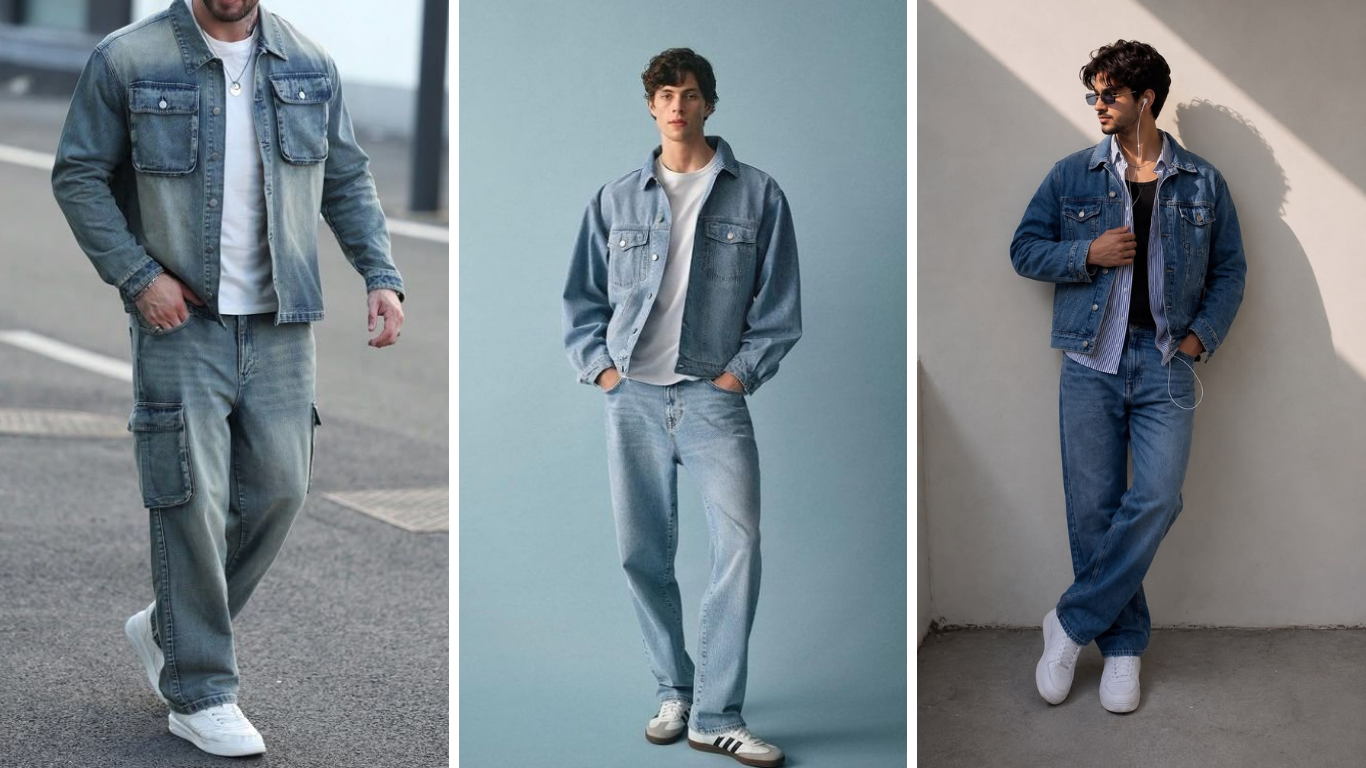
- Wearing two different denim washes together (a light jacket over dark jeans, for example) without enough contrast, creating an accidental “double denim” mismatch
- Pairing dark jeans with black dress shoes and a full suit jacket, which can look mismatched rather than intentionally styled
- Ignoring color coordination between jeans and shoes, defaulting to whatever’s convenient
How to Get It Right
Dark jeans pair well with white sneakers, brown leather boots or derbies, and most casual to smart casual tops. If wearing denim with any other denim piece, ensure a visible contrast in wash to avoid a mismatched double-denim look.
Stylist Tip: Dark jeans, a white tee, and a navy blazer is one of the most reliable “elevated casual” combinations available — a great one to have in your back pocket.
Key Takeaway: Denim is versatile, but still benefits from intentional pairing rather than default combinations.
8. Wash Jeans Far Less Often Than You Think
What It Is
Reducing wash frequency for denim compared to other clothing items — many jeans can go 5–10 wears (sometimes more) between washes, depending on activity level.
Why It Matters
Frequent washing breaks down denim fibers faster, fades color prematurely, and can distort fit over time. Over-washing is one of the most common ways men unknowingly shorten the lifespan of their jeans.
Why Beginners Overlook It
Habits carried over from other clothing categories (washing every wear, like a t-shirt) get applied to denim without realizing jeans behave differently and don’t need the same frequency.
Common Mistakes
- Washing jeans after every single wear, accelerating fading and fiber breakdown
- Using hot water and high heat drying, both of which damage denim fibers and can shrink fit over time
- Assuming odor always means a wash is needed, when spot-cleaning or airing out often solves the issue without a full wash
How to Get It Right
Wash dark jeans every 5–10 wears (more or less depending on activity and personal preference), using cold water and hanging to dry rather than machine drying, which helps preserve both color and fit.
Maintenance Tip: Spot-clean small stains or odors between washes rather than running a full wash cycle for a single mark.
Key Takeaway: Less frequent washing, done correctly, actually extends the life and appearance of your jeans.
9. Rotate Your Jeans to Extend Their Lifespan
What It Is
Alternating between at least two pairs of jeans in regular rotation, rather than wearing a single pair on repeat every day.
Why It Matters
Denim fibers need time to recover between wears — constant wear without breaks accelerates stretching, fading, and general wear, shortening the effective lifespan of any single pair.
Why Beginners Overlook It
When a man finds one pair of jeans that fits well, the instinct is often to wear that exact pair constantly, not realizing this actually shortens how long that favorite pair will last.
Common Mistakes
- Wearing the same pair of jeans every single day, accelerating wear at high-friction points (knees, seat, pockets)
- Not allowing jeans to fully “rest” and recover shape between wears
- Assuming rotation only matters for expensive denim, when it benefits any quality pair regardless of price
How to Get It Right
Once you have two well-fitted pairs (ideally in slightly different washes for added versatility), alternate between them regularly rather than defaulting to a single favorite every day.
Budget Tip: Rotating between two mid-range pairs often outlasts wearing a single premium pair daily without any rest between wears.
Key Takeaway: Owning a second pair isn’t excess — it’s what actually extends the lifespan of both.
Comparison Table: Slim Fit vs. Straight Fit Denim
| Factor | Slim Fit | Straight Fit |
|---|---|---|
| Leg silhouette | Close to the leg throughout | Consistent width from thigh to ankle |
| Best for | Leaner or athletic builds | Most body types, especially broader builds |
| Versatility | Pairs well with boots and dress shoes | Pairs well with nearly all shoe styles |
| Common mistake | Sizing too tight through the thigh | Sizing too loose, losing shape entirely |
| Modern styling | Reads more tailored and current | Reads slightly more relaxed and classic |
Comparison Table: Dark Wash vs. Light Wash
| Factor | Dark Wash | Light Wash |
|---|---|---|
| Formality | Dressier, pairs with blazers and dress shoes | More casual, best with sneakers and relaxed tops |
| Versatility | Highest — works across nearly every context | More limited to casual settings |
| Staining visibility | Hides minor stains and wear well | Shows stains and fading more visibly |
| Seasonal fit | Works year-round | Leans more toward spring and summer |
Quality Fabric vs. Cheap Denim
| Signal | Quality Denim | Cheap Denim |
|---|---|---|
| Weight | Substantial, holds its shape | Thin, loses shape quickly |
| Stretch recovery | Bounces back after wear | Stretches out and stays loose |
| Fading pattern | Fades evenly and gracefully over time | Fades unevenly or looks worn out fast |
| Stitching | Even, reinforced at stress points | Loose or inconsistent stitching |
| Longevity | Multiple years of regular wear | Noticeable wear within months |
Body Type Considerations for Denim
Slim men: A slim-straight (not skinny) fit adds just enough structure without appearing baggy — avoid fits with excessive room through the thigh.
Athletic men: Look specifically for “athletic fit” denim, cut fuller through the thigh and tapered at the ankle, solving the common problem of needing extra room in the leg without excess bagginess elsewhere.
Broad men: A straight fit with a slightly higher rise creates a cleaner line than a low-rise or overly slim cut, which can emphasize rather than balance a broader frame.
Tall men: Seek out “long” or “tall” sizing specifically, since standard inseams often run short — a properly proportioned length avoids the need for excessive hemming or awkward high-water fits.
Short men: A slightly higher rise and a slim or slim-straight fit create a longer leg line — avoid excess length that requires heavy cuffing or bunching at the ankle.
Plus-size men: A relaxed or straight fit with a comfortable, well-fitted waistband (not sitting too low or digging in) creates a cleaner overall silhouette than an overly tight or overly baggy cut.
Common Denim Mistakes (And How to Fix Them)
Mistake 1: Buying Based on Old Sizing Habits
Body proportions and preferred fits change over the years, but many men keep buying the same size and cut they wore in their teens.
Fix: Reassess your fit every couple of years, especially if your body or the current fit landscape has shifted.
Mistake 2: Ignoring the Difference Between Denim and Dress Pant Rules
Some men either over-dress or under-dress jeans, not realizing denim occupies a specific middle ground in formality.
Fix: Treat dark, clean denim as smart casual, and reserve distressed or light denim strictly for casual contexts.
Mistake 3: Never Getting Jeans Properly Hemmed
Excess length is one of the most common, most fixable denim mistakes.
Fix: Get every new pair hemmed to the correct length for the shoes you’ll wear them with most.
Mistake 4: Over-Washing and Damaging Fit or Color
Frequent washing fades denim faster and can distort fit over time.
Fix: Wash every 5–10 wears using cold water, and hang to dry rather than machine drying.
Mistake 5: Wearing the Same Pair Every Single Day
This accelerates wear and shortens the lifespan of an otherwise great-fitting pair.
Fix: Rotate between at least two pairs to let each one recover between wears.
Read also: 20 Denim Jacket Outfit Ideas for Men to Copy This Season
Budget Strategy for Building a Denim Collection
Where to save money: A second or third pair for casual rotation, once your primary dark wash pair is dialed in — mid-range denim performs well here.
Where to spend more: Your primary, most-worn pair — since this jean will see the most use, quality construction and a great fit pay off significantly over time.
How to build gradually: Start with one dark wash, well-fitted pair. Add a second pair (different wash or slightly different fit) once the first is established as your go-to. Introduce more distressed or lighter washes later, once your foundation is solid.
Maximizing cost per wear: A well-fitted, properly cared-for pair of jeans can realistically be worn 100+ times over a couple of years — factoring hemming and proper washing into that cost only strengthens the value further.
Budget Tip: Spending slightly more upfront on a well-constructed dark wash pair, then properly hemming and caring for it, will almost always outperform cycling through several cheap pairs replaced every few months.
Real-Life Scenarios: Denim Rules in Action
Job interview: Skip jeans entirely in most cases, but if business casual denim is acceptable, choose a clean, dark, unhemmed, error-free pair with a blazer and dress shoes.
First date: Dark, well-fitted jeans with a white tee and a navy blazer, or a button-up shirt and clean sneakers.
Business casual office: Dark, minimally distressed denim paired with a collared shirt and leather shoes or clean sneakers, depending on the office’s specific dress code.
Weekend outing: Any wash, any distressing level — this is where denim’s most casual expressions genuinely shine.
Travel: Dark, comfortable, well-broken-in denim — durable enough for a full day of travel while still looking presentable on arrival.
Frequently Asked Questions
1. What’s the single most important denim rule for beginners? Fit above everything else. A well-fitted pair in a mid-range price will always outperform an expensive pair in the wrong cut.
2. How many pairs of jeans does a man really need? Two is a solid starting point — one primary dark wash pair for versatility, and a second for casual rotation, which also helps extend the lifespan of both.
3. How often should jeans actually be washed? Every 5–10 wears for most dark denim, using cold water and air drying, rather than washing after every single wear.
4. Is it worth getting jeans hemmed, or is that overkill for casual wear? It’s genuinely worth it — length is one of the most visually obvious fit issues, and hemming is an affordable, high-impact fix.
5. What wash should a beginner buy first? A dark, minimally faded wash — it’s the most versatile option, pairing with the widest range of shirts, shoes, and formality levels.
6. Can jeans ever be worn in a business casual office? Often yes, depending on the specific office culture — a clean, dark, well-fitted pair paired with a collared shirt and leather shoes typically reads as business casual appropriate.
7. Is distressed denim ever a good choice? Yes, for genuinely casual, low-stakes settings — just avoid it in business casual or more polished contexts, where a cleaner wash reads more appropriately.
8. How do I know if my jean’s rise is wrong for my body? Watch for consistent gapping at the back waistband (rise too low) or discomfort when sitting (rise too high) — both signal it’s worth trying a different rise in your next size.
9. Should I size up in jeans for comfort? Generally, no — sizing up creates excess fabric and a shapeless silhouette. If comfort is a concern, look for denim with a small percentage of stretch instead.
10. How long should a quality pair of jeans actually last? With proper care (moderate washing, rotation between pairs), a well-made pair of jeans can realistically last several years of regular wear.
11. Is “double denim” (jean jacket with jeans) ever acceptable? Yes, when there’s clear contrast between the two washes — pairing similarly toned denim pieces is what typically creates an accidental, mismatched look.
12. What’s the biggest denim mistake most men make in their 20s? Sticking with outdated fits or wash preferences from their teenage years without reassessing whether that style still suits their current body and the current style landscape.
Final Thoughts: Denim Rewards Small, Consistent Attention
Jeans might be the most-worn, least-thought-about item in most men’s closets — which is exactly why small improvements here pay off so consistently. Get the fit and rise right. Hem the length properly. Keep one dark, clean-wash pair as your anchor. Wash less often than you think you should, and rotate between at least two pairs.
None of these nine rules requires a big budget or a denim obsession. They just require paying the same level of attention to your jeans that you’d naturally give to a blazer or a pair of dress shoes — and the payoff shows up in nearly every outfit you build for the rest of your 20s and beyond.
Read also: